




Seven everyday habits that can help keep your car in good condition
A little attention between services can make car ownership less stressful. You do not need a workshop at home or a deep knowledge of engines to notice a tyre that looks damaged, a warning light that has appeared or a service that is approaching.
These habits do not replace a professional inspection or the maintenance schedule in your handbook. They help you notice changes early and arrive at the workshop with useful information. Always follow the instructions for your particular vehicle and ask a qualified technician if you are unsure.
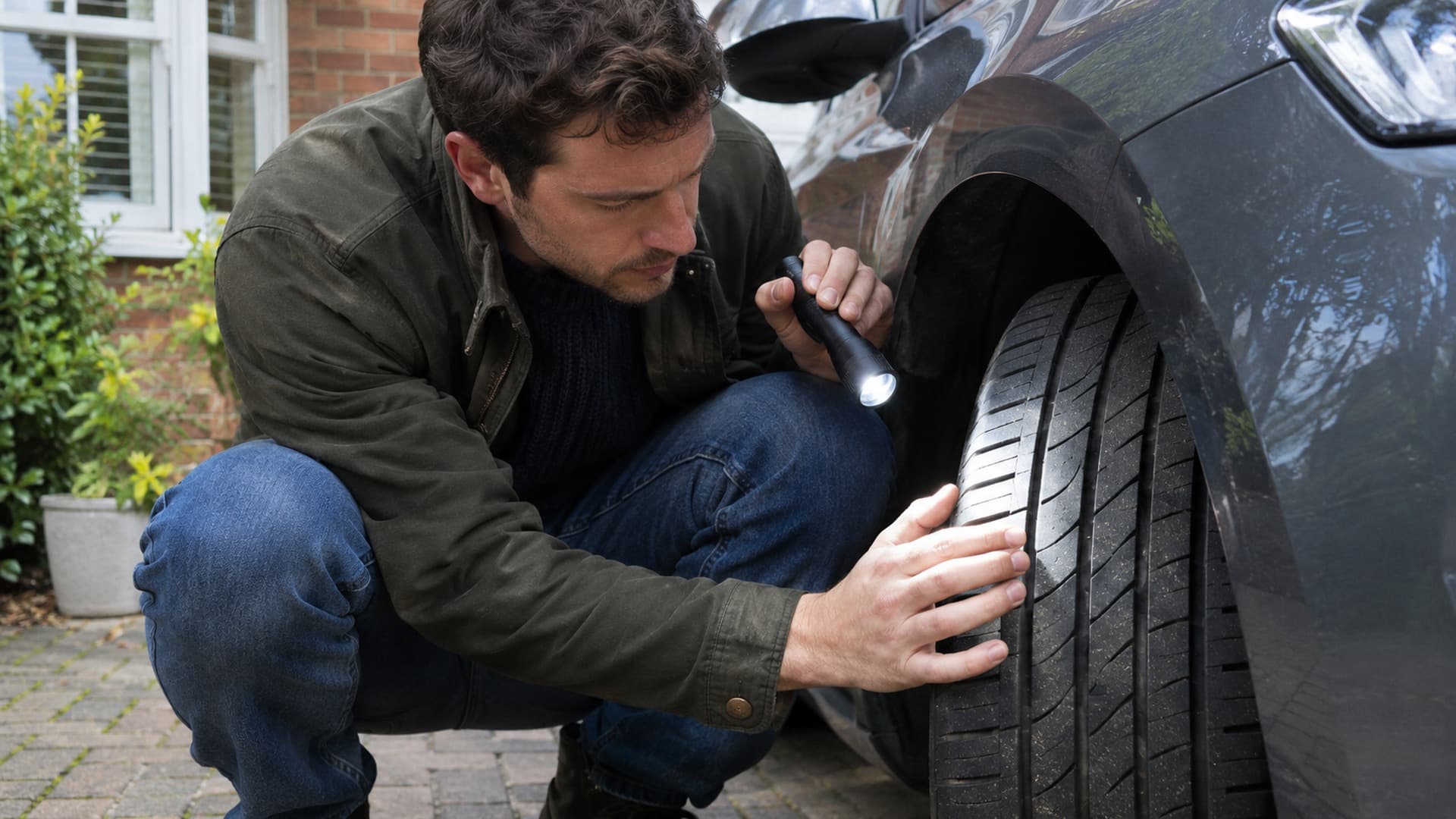
1. Check tyres when they are cold
Look at your tyres regularly, including the spare if your vehicle carries one. Check for visible cuts, bulges, objects embedded in the tread and uneven wear. If a tyre is damaged or keeps losing pressure, have it inspected by a tyre professional rather than guessing whether it is safe.
Use an accurate gauge to check pressures when the tyres are cold, following the vehicle manufacturer's instructions. The recommended figures are usually in the handbook or on a label on the car. Front, rear and fully loaded pressures can differ. The number on the tyre sidewall is not necessarily the pressure specified for your vehicle.
The TyreSafe pressure guide explains how incorrect pressure can affect grip, wear and control. Check tread condition as well: pressure alone does not tell you whether a tyre needs attention.
2. Make warning lights a priority
When you start the car, some dashboard lights illuminate briefly as part of normal checks. A light that stays on or appears during a journey deserves attention. Look up its meaning in the owner's handbook, as colours and instructions can vary by vehicle.
If the handbook tells you to stop, pull over when it is safe and follow its instructions. Do not continue driving simply because the car still moves. For other warnings, arrange the recommended inspection promptly and tell the workshop exactly when the light appeared.
A photograph of the dashboard can help record the message, but take it only when safely parked. Mention related symptoms such as a new noise, vibration or change in braking. These details can help a technician investigate without encouraging you to diagnose a fault yourself.
3. Keep up with the service schedule
Vehicles usually have service intervals based on time, distance or both. Check the handbook and the service record for the applicable schedule. A car that covers little distance can still reach a time-based service, so do not rely on the odometer alone.
Ask the workshop what the scheduled service includes and what would cost extra. Keep invoices and records together, including work done between scheduled visits. This gives you a clearer picture of what has been maintained and what may be due next.
If your car has a warranty or service plan, read its conditions and confirm the requirements before booking. A service plan, maintenance plan and warranty can cover different things; the Automobile Association of South Africa outlines the distinctions. Check your own contract rather than assuming every repair is included.
4. Notice changes in the way it drives
An unfamiliar squeal, a persistent vibration or a steering pull may be an early sign that something needs attention. Note when it happens: while braking, turning, accelerating or travelling at a particular speed. Do not try to reproduce a concerning symptom through unsafe driving.
Arrange an inspection and describe what you observed. If braking, steering or another safety-critical function feels seriously impaired, stop driving when safe and seek professional assistance. A small issue is easier to discuss when you can explain the circumstances clearly.
5. Keep your view clear
Clean the inside and outside of the windscreen, mirrors, lights and camera lenses using products appropriate for those surfaces. Replace worn wiper blades when they leave persistent streaks, and check washer fluid according to the handbook. Avoid operating the wipers on a dry, dusty windscreen if the manual advises against it.
Give special attention to glare after dark or in low sun. A film on the inside of the glass can make visibility worse even when the outside looks clean. Make sure loose objects on the dashboard do not obstruct the driver's view.
6. Drive smoothly and remove unnecessary weight
Gentle acceleration and anticipating traffic can help reduce unnecessary fuel use. Avoid carrying heavy items you do not need, and remove roof equipment when it is no longer required if it is practical to do so. Driving conditions, vehicle design and maintenance all affect the result, so do not expect the same saving on every trip.
The AA's fuel-saving advice includes proper maintenance and tyre pressure. A sudden change in fuel consumption is also worth discussing with a workshop, especially if it comes with another symptom.
7. Keep a simple record
Set a reminder for the next service and licence renewal, and note when tyres, wipers and the battery were inspected or replaced. Store the information where you can find it, whether that is a notebook or a folder on your phone.
You do not need to inspect everything on every drive. A regular routine, a clear service history and prompt attention to changes are a practical foundation for looking after your car between professional visits.
Comments
Newest firstLoading comments…