

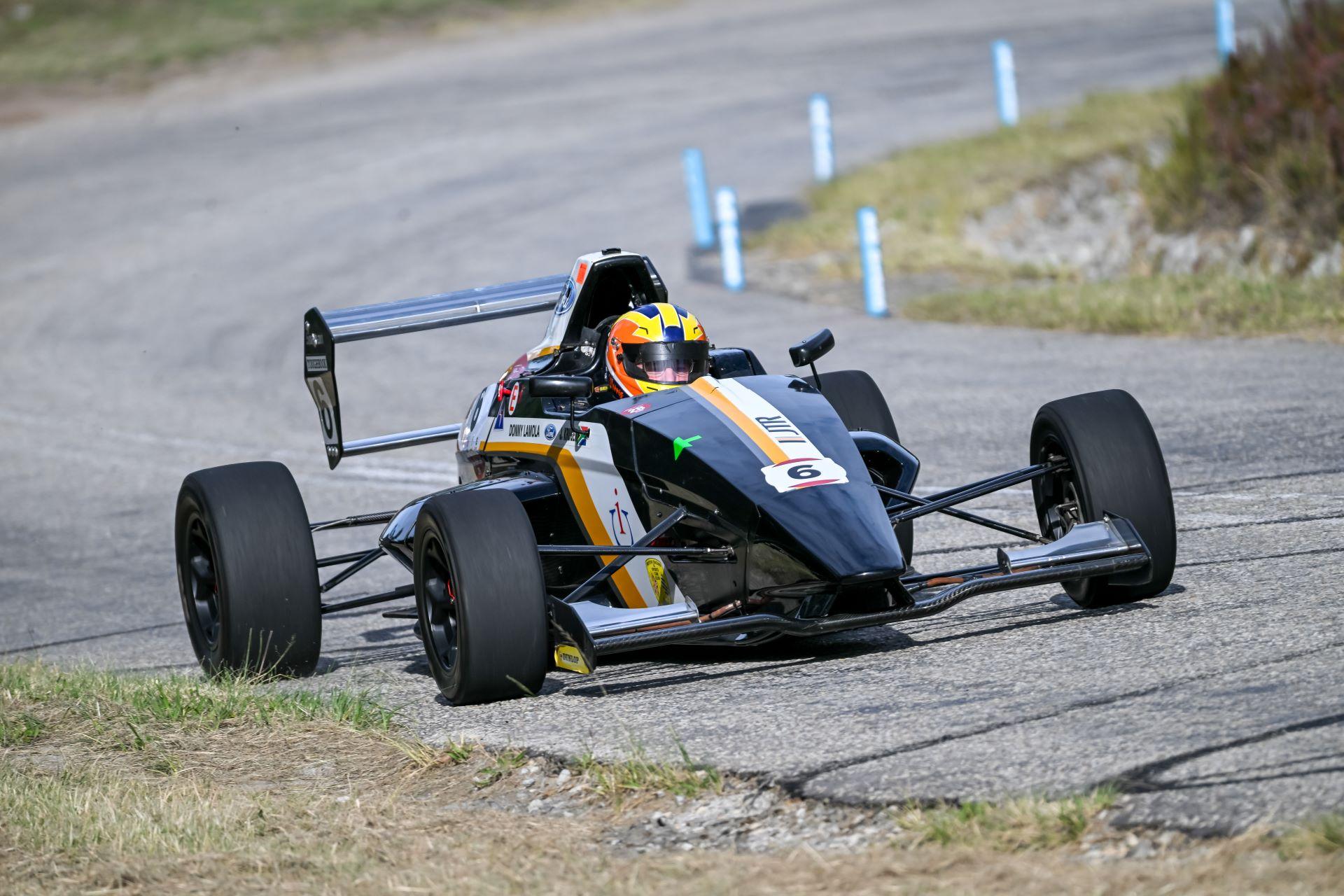
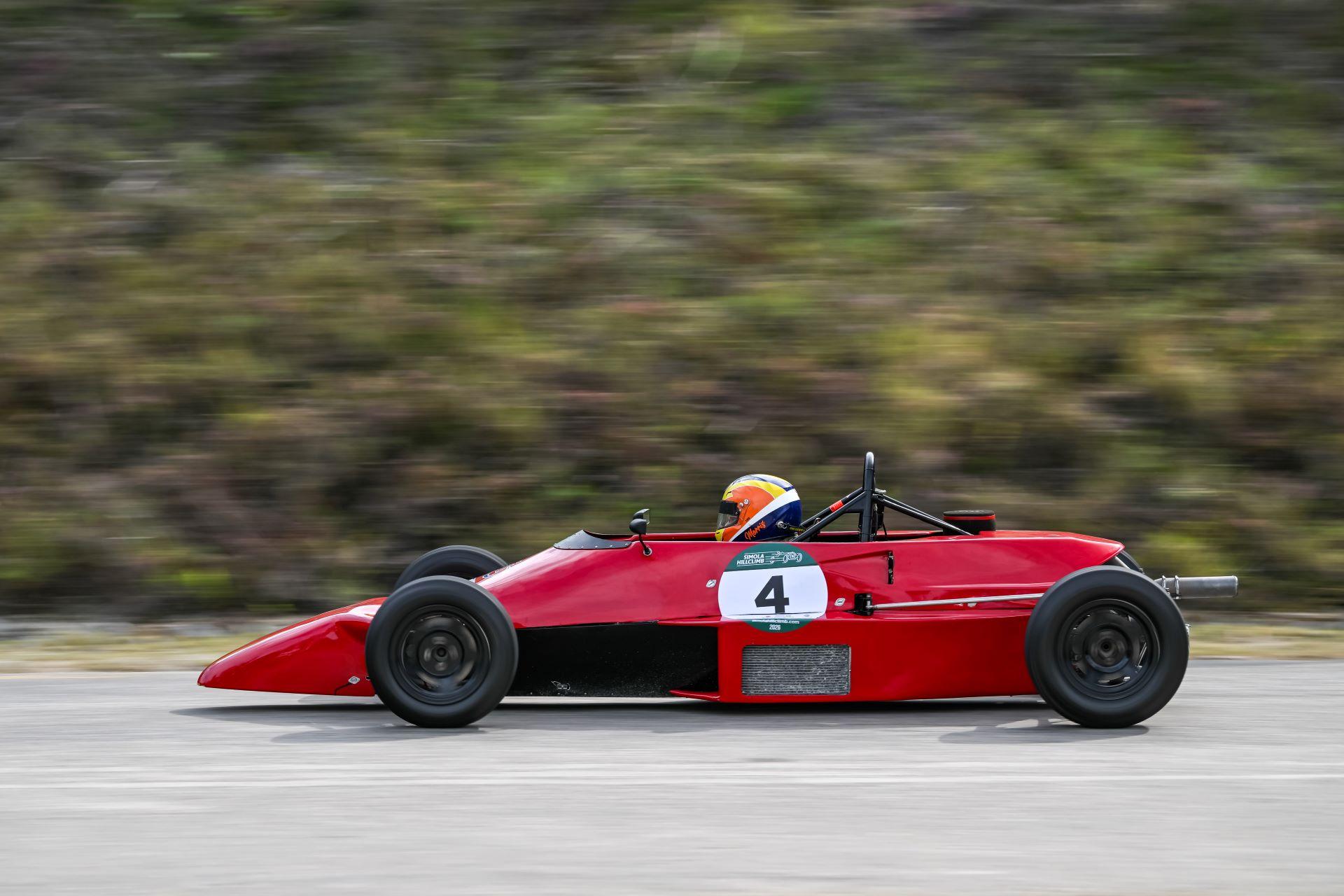
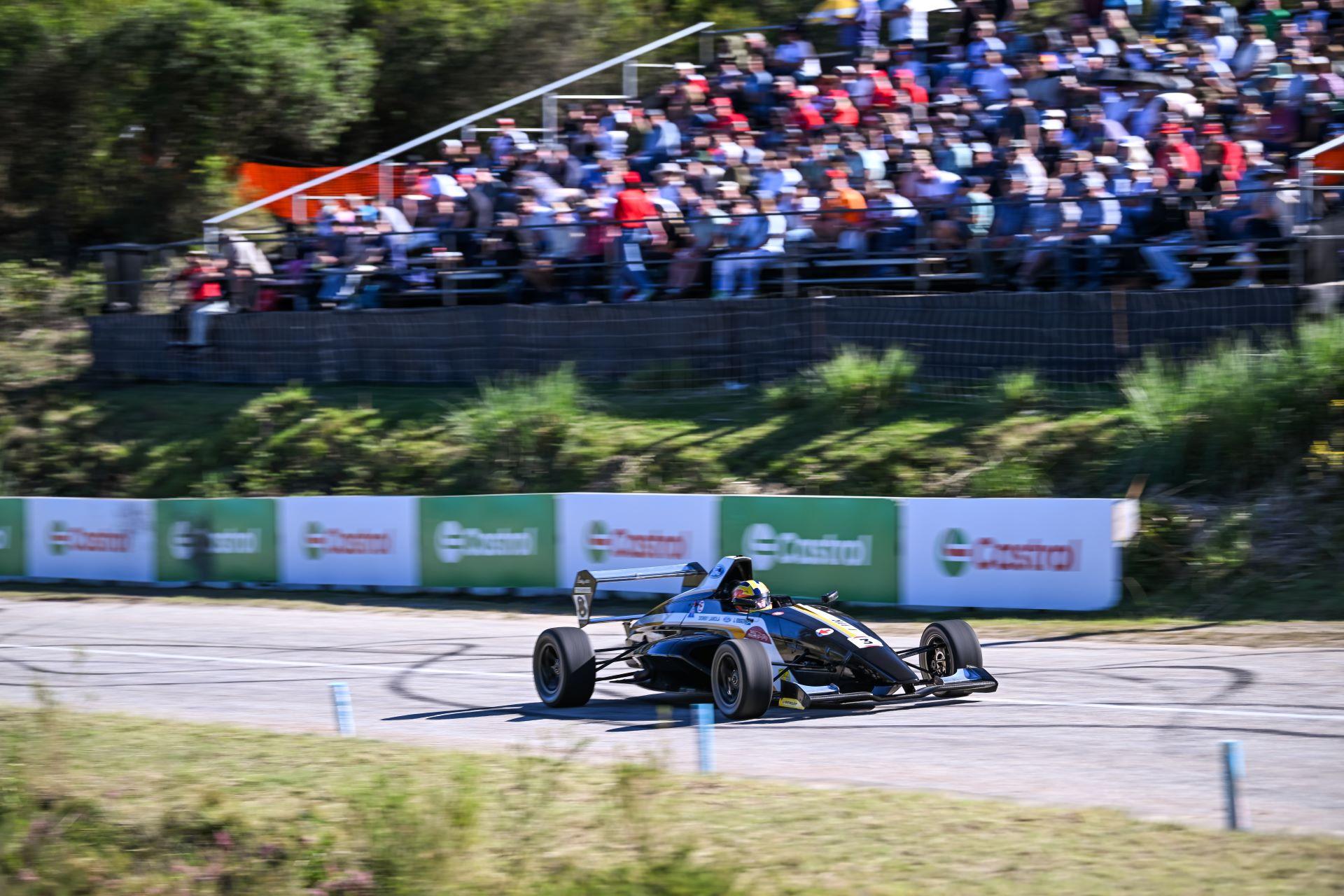
Knysna, South Africa, has a way of turning engines into echoes and memories into something almost tangible, especially during the Simola Hillclimb, where precision is measured in fractions and courage is tested in seconds.
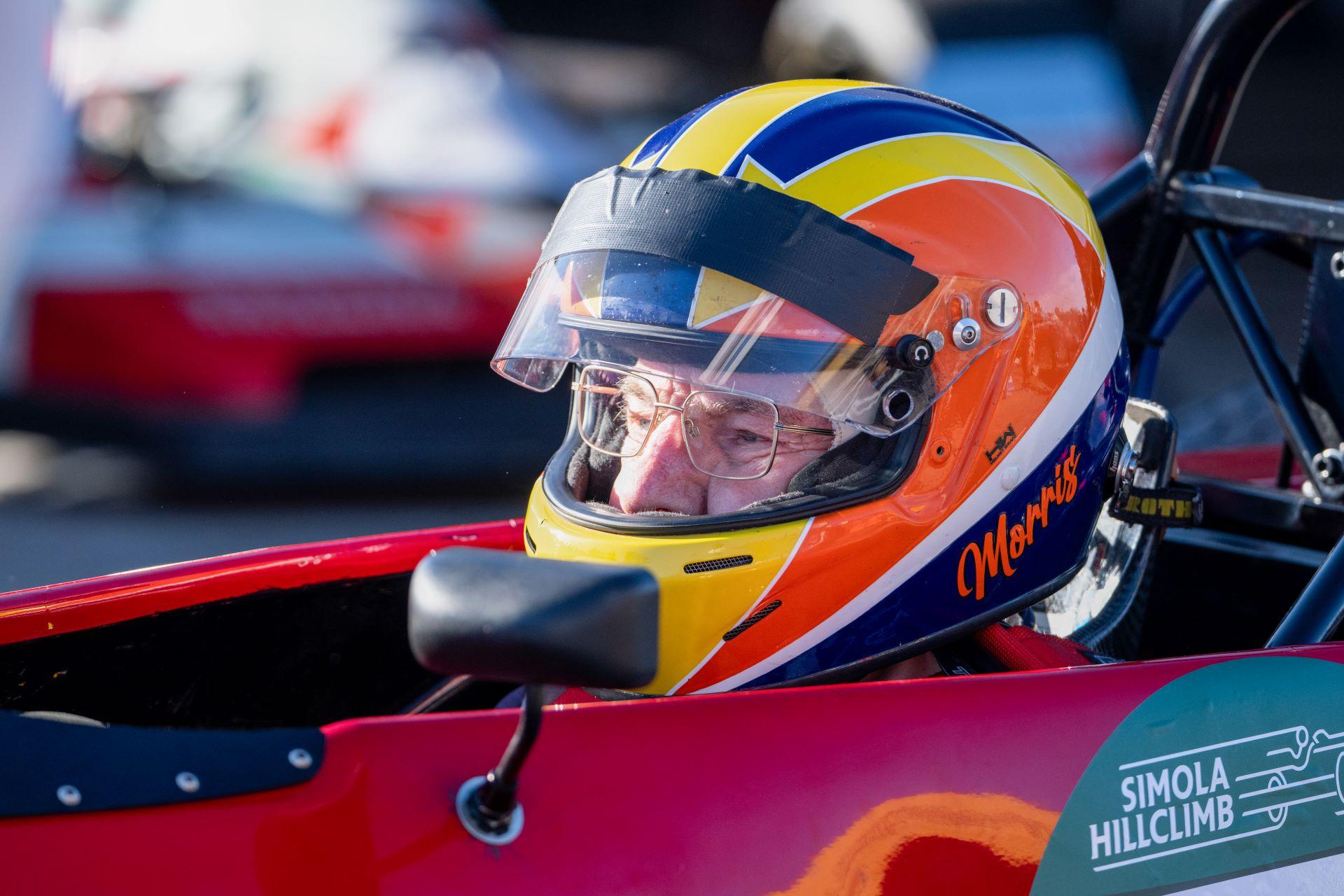
Into this demanding stage returns British racing veteran Rick Morris, a driver whose career spans 55 years and whose story threads through some of the most competitive eras of Formula Ford racing.
At 79, Morris continues to compete with a focus and consistency that defies both age and expectation. Based in Hertford, England, he has remained active in motorsport across decades, continents, and evolving generations of racing machinery, still finding himself on grids alongside far younger competitors.
His presence at Simola marks a continued connection with South Africa’s premier hillclimb event, where he has become a familiar figure in both Classic Car Friday and King of the Hill categories.
Morris’ reputation, however, was forged long before Simola. His early steps in Formula Ford 1600 in the early 1970s were defined by limited funding but considerable natural pace. A breakthrough fastest lap at Thruxton in 1972 brought him into the orbit of Hawke Racing Cars’ Dave Lazenby, opening doors that would place him in increasingly competitive machinery.
By the mid-1970s, he had progressed into professional team environments, racing alongside drivers such as Derek Daly and Bernard Devaney, both of whom would go on to establish careers at higher levels of international motorsport. Daly would eventually reach Formula 1, while Devaney moved into Formula 3, underlining the calibre of the environment Morris was operating within.
The British Formula Ford Festival became a defining arena for Morris, a proving ground known for revealing future champions. Across multiple appearances, he collected a series of podium finishes that reflected both consistency and resilience in a field that regularly reshaped itself with new talent.
That same stage would also launch names such as Johnny Herbert, Eddie Irvine, Jenson Button, Mark Webber, and others who would go on to define Formula 1 eras. Within that ecosystem, Morris was not a background participant but a persistent front-runner, often embedded in the sharp end of competition.
One of the most discussed chapters of his career came in the early 1980s, when he raced in British Formula Ford 1600 against a young Ayrton Senna. At the time, Senna was still building the foundation of the intensity and precision that would later define his Formula 1 legacy.
Racing in works Royale machinery against factory Van Diemen entries, Morris found himself in direct competition with Senna, Alfonso Toledano, and Enrique Mansilla. The 1981 season became a tightly contested battle across multiple circuits.
Morris achieved notable victories that year at venues such as Thruxton, Silverstone, and Brands Hatch, often finishing ahead of Senna in individual races. Senna ultimately secured the championship, but Morris had led large portions of the season before a major crash cost him crucial points.
Their rivalry was intense and uncompromising. Morris himself recalls a relationship defined by friction as much as respect, with both drivers pushing each other to extremes in pursuit of victory.
Senna would move on to Formula Ford 2000 in 1982, while Morris remained in Formula Ford 1600, where he went on to win the BRDC Formula Ford 1600 championship in a Royale RP31M.
From there, Morris’ career continued in varied form, spanning Formula Ford, sports cars, and occasional Formula 3 entries, alongside racing commitments in both the United Kingdom and South Africa.
His connection to South African motorsport deepened from 2005 onwards, after an invitation from Ian Schofield brought him back into competition locally. Since then, he has continued racing across multiple disciplines, including modern Formula Ford machinery.
A cycling accident in 2016 resulted in serious injuries, including broken ribs, a fractured shoulder blade, spinal damage, and a punctured lung. The setback forced a pause, but not an end, and he eventually returned to competition.
Today, Morris remains active in British Formula Ford, still running near the front of the field in classic machinery and maintaining a competitive presence despite his age.
His Simola Hillclimb debut last year added another chapter to his long and varied career. Competing in both classic and modern Formula Ford machinery, he quickly adapted to the unique demands of the hillclimb format, where learning time is minimal and precision is everything.
The Simola Hillclimb, widely regarded as South Africa’s fastest and most demanding hillclimb event, has become a particular favourite of his, offering a challenge unlike traditional circuit racing.
In recent editions, Morris has delivered strong performances across both Classic Car Friday and King of the Hill categories, including competitive class results and shootout appearances in single-seater machinery.
He has also shown versatility in newer-generation turbocharged Formula Ford machinery, achieving class victories and podium contention in tightly fought categories.
For Morris, the appeal lies not only in competition but in the purity of the challenge itself, where every run demands immediate adaptation and absolute commitment.
As he approaches his 80th birthday, he shows no signs of stepping away from racing entirely. Instead, he continues to compete whenever possible, driven by a lifelong connection to speed, machinery, and the discipline of motorsport.
For now, Simola remains part of that ongoing journey, a place where history, skill, and courage continue to meet on a steep stretch of South African road.