




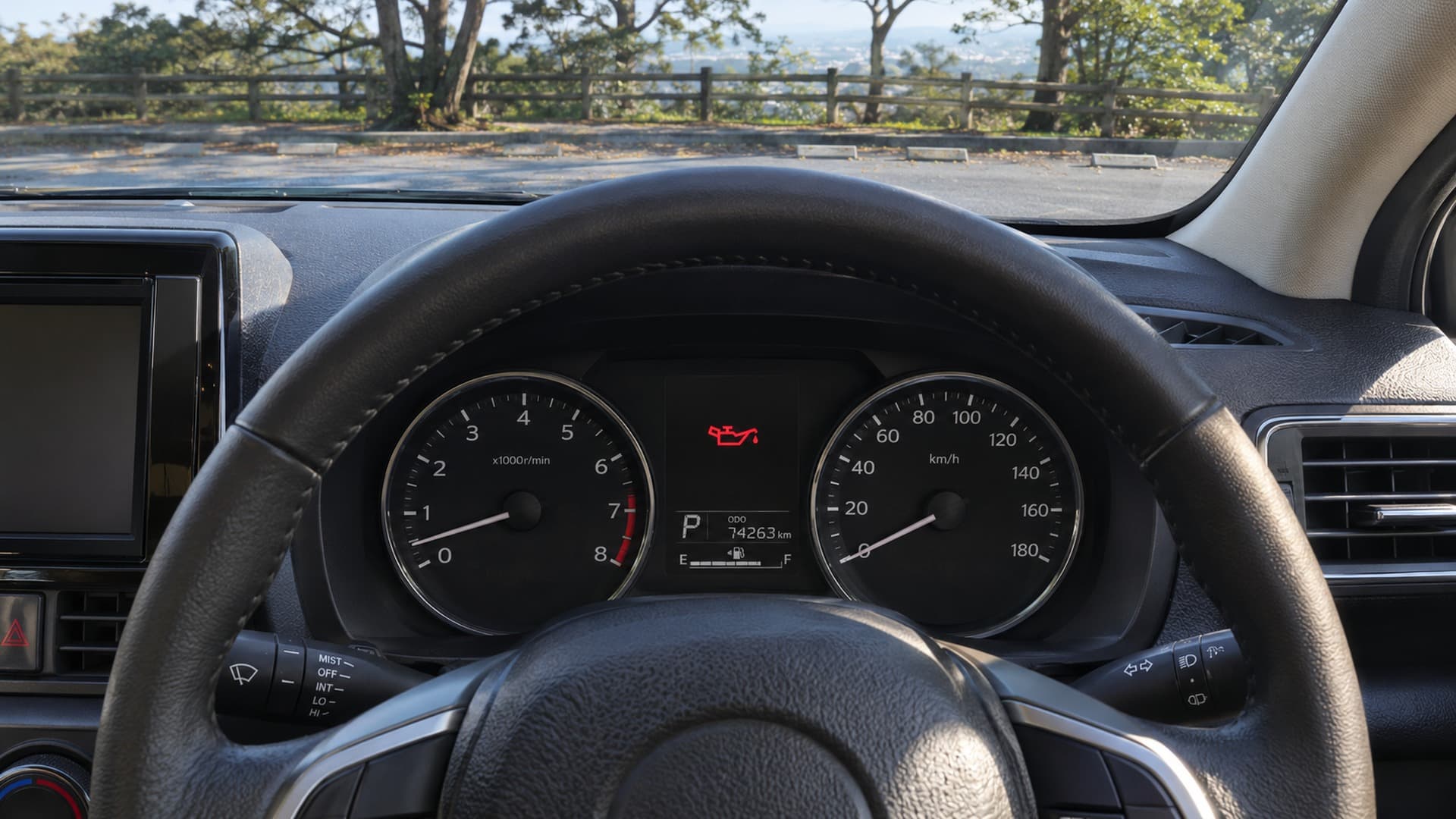
Red oil pressure warning light: when to switch off the engine
A red oil-can symbol that appears while the engine is running calls for a safe stop and an engine shutdown. If it comes on in traffic, concentrate on getting clear of moving vehicles before investigating. A warning that disappears when you accelerate, then comes back at the next robot, deserves the same attention as one that stays on. The engine needs oil pressure at idle as well as at higher speeds.
The symbol often comes on briefly when the ignition is switched on and the engine is still stopped. That can be part of the vehicle’s normal warning-lamp check. A lamp that stays on after starting, reappears while driving or comes with a low-pressure message is a different situation. Use the handbook to identify the exact symbol and any message alongside it. Ford’s handbook gives an example of the stop-and-shut-down instruction for low pressure. Ford owner’s handbook
What the oil-can warning is measuring
Oil sits in a reservoir at the bottom of many engines. The pump draws it in and sends it under pressure through narrow passages that feed moving parts. The oil level tells you roughly how much is available. The pressure warning tells you something about whether it is being delivered through that system. A low level can cause a drop in pressure, but a car can also have a normal level on the dipstick and still have a pressure problem.
Some cars separately report a low oil level or a service reminder. Those messages may use a similar icon with different wording or a different colour. An oil-change reminder is based on the vehicle’s maintenance logic. It is a poor clue to what is happening to the oil supply at that moment. Give a red warning displayed while running priority over whatever mileage remains until the next service.
When it’s safe to check the dipstick
On level ground, with the engine off and the car secured, follow the handbook’s procedure for checking the level. Many cars need a short wait for oil to drain back into the sump. If your car uses a dipstick, wipe it, fully reinsert it and withdraw it again to read the fresh oil mark against the minimum and maximum. Some vehicles use an electronic level reading with its own conditions. If the car needs a running engine to complete that routine, leave it off and ask for assistance.
A low mark is useful information to give a technician. If your handbook permits topping up, use the specified oil and add small amounts to avoid overfilling. A correct reading after a top-up still leaves the original loss of pressure unexplained. Follow the handbook and get advice before trying to drive on. On a narrow shoulder, skip the inspection altogether. A photograph of the warning taken when safely stopped can help a recovery operator or workshop identify it.
What to tell the workshop
Describe when the warning appeared. It may have come on first after the engine warmed up, after a service, during a corner, or at a steady speed. Mention any new tapping or knocking, obvious leaks or recent work to the engine. Also say whether you checked the level and added oil. If you noticed the warning with the engine running but it went away just before you pulled over, report that sequence too.
A technician can check whether the engine genuinely has low pressure and investigate the cause. Possible areas of investigation include the pressure sensor or wiring, the oil pickup, the pump, and whether the oil and filter fitted match the engine’s requirements. Those possibilities need different tests. Changing a sensor because the level looks fine can delay the diagnosis of a real lubrication problem. A proper pressure test under the manufacturer’s conditions can help separate a false signal from insufficient pressure.
If the oil level turns out to be unusually high, mention that too. A dipstick reading above the maximum can be as useful to the diagnosis as a low reading, particularly after a recent service. Report the reading and leave the cause to the workshop.
Read the situation before moving the car again
The awkward moment often comes after you get to the shoulder and the cabin goes quiet. The light may have disappeared because the ignition is now off. You still have the information that matters, which is that it appeared while the engine was running. Repeatedly starting the car to see whether the warning returns can expose moving parts to more time with inadequate lubrication.
If you are close to home or a workshop, arrange recovery rather than gambling on the remaining distance. Give the operator your location, the type of warning and whether you were able to move fully off the road. Let them know if the car is on a slope or in a confined parking area so they can plan access. Keep the handbook and service details handy for the workshop. The dipstick can tell you what is available in the sump. Confirming that the engine can circulate it at the required pressure is the job that needs to happen before regular driving resumes.
Comments
Newest firstLoading comments…