




New-car safety features explained: what to check before you buy
A new-car brochure can make a long list of safety features sound reassuring. Yet similar names do not always describe identical capabilities, and a feature advertised for one model may be unavailable on a less expensive derivative. Before comparing screens and trim, establish what the exact car can do and what it cannot.
Safety starts with the vehicle's structure, restraints and the way occupants use them. Driver assistance can add another layer, but it does not replace attentive driving, appropriate speed or a safe following distance.
Start with the exact specification
Ask the dealer for a written equipment list for the model, derivative and model year you intend to buy. Confirm the number and positions of airbags, electronic stability control, seatbelt reminders and child-seat anchorages. Ask which features are standard and which require an optional package.
A photograph in a brochure may show an overseas car or a higher specification. Check that the equipment you value is included in the South African vehicle and in the quotation. If a promised feature depends on an option, have it listed in the sales agreement.
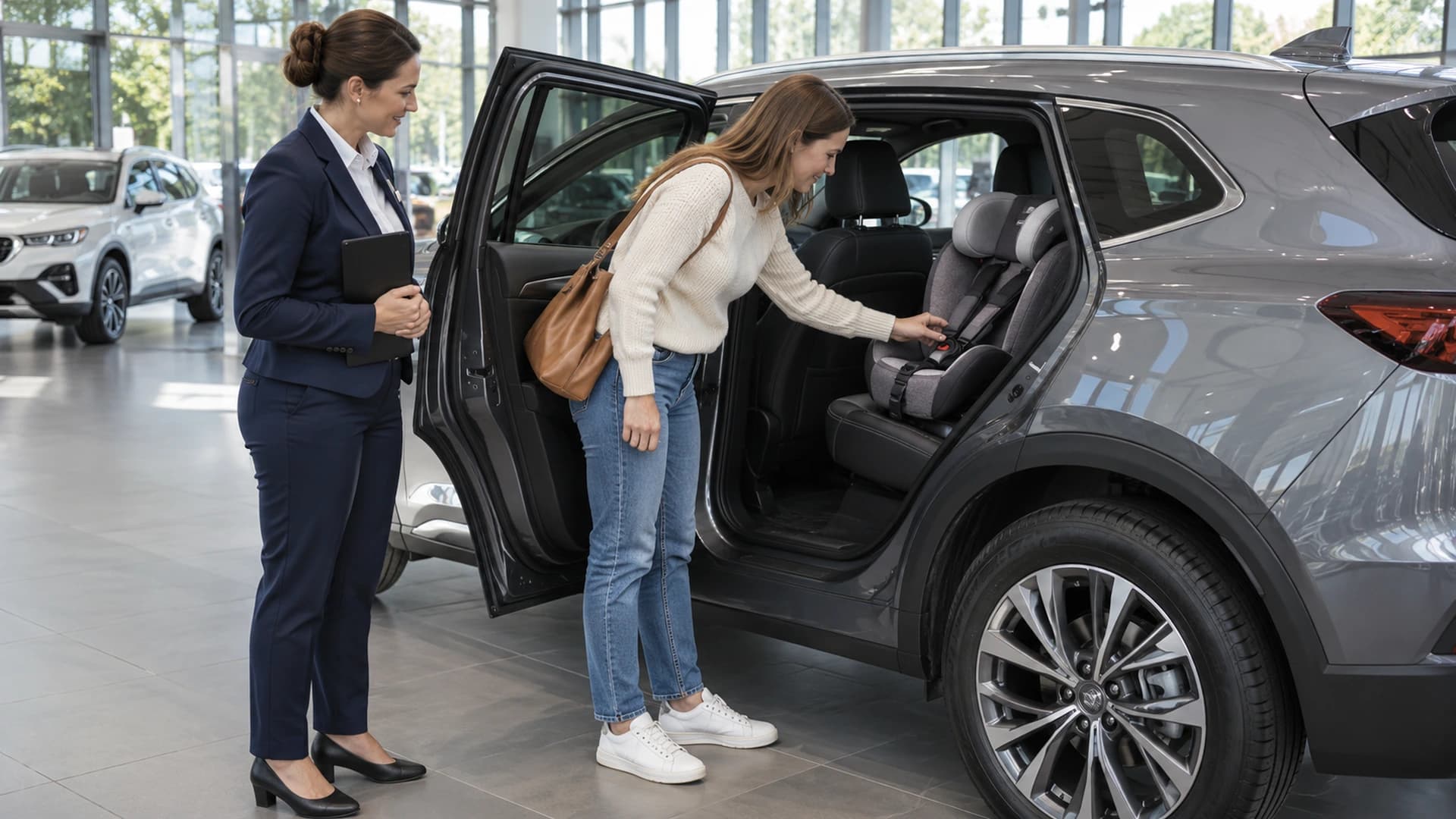
Bring the child seats you expect to use and check their fit in the intended positions. Consult both the car and restraint instructions. A suitable anchorage is important, but it does not guarantee that every restraint fits comfortably in every seating position.
Understand what stability control does
Electronic stability control can help a driver maintain control when the vehicle begins to deviate from the intended direction. Systems can intervene through braking individual wheels and adjusting engine output. The exact response depends on the vehicle and conditions.
It cannot create unlimited grip. Worn tyres, standing water and excessive speed can still overwhelm the available traction. Do not use the presence of stability control as a reason to drive faster or follow another vehicle more closely.
Anti-lock braking is a separate function intended to help prevent wheel lock under braking. Ask the dealer to explain the car's braking and stability systems and consult the handbook for correct operation. Tyre condition and pressure remain essential to the whole system.
Ask what automatic emergency braking detects
Automatic emergency braking, often shortened to AEB, uses sensors to identify certain potential collisions and can apply the brakes if the driver does not respond or, in some systems, assist the driver's braking. The US National Highway Traffic Safety Administration describes these functions as driver assistance, with the driver remaining engaged.
Do not assume every system detects the same objects. Ask whether the specific version can respond to vehicles, pedestrians or cyclists, and under which speed and lighting conditions. Some functions may be optional, limited to particular situations or unavailable in certain derivatives.
Rain, dirt, glare, obstructions and other conditions can affect sensor performance. Read the handbook's limitations and learn how the system reports a fault or unavailable sensor. Never deliberately test AEB by driving towards a person, vehicle or obstacle.
Distinguish warnings from intervention
A lane departure warning may alert the driver when the car approaches a lane marking; lane-keeping assistance may also make a steering correction under certain conditions. Adaptive cruise control can adjust speed relative to a vehicle ahead, depending on the system. These are different functions, even if a manufacturer groups them under a single marketing name.
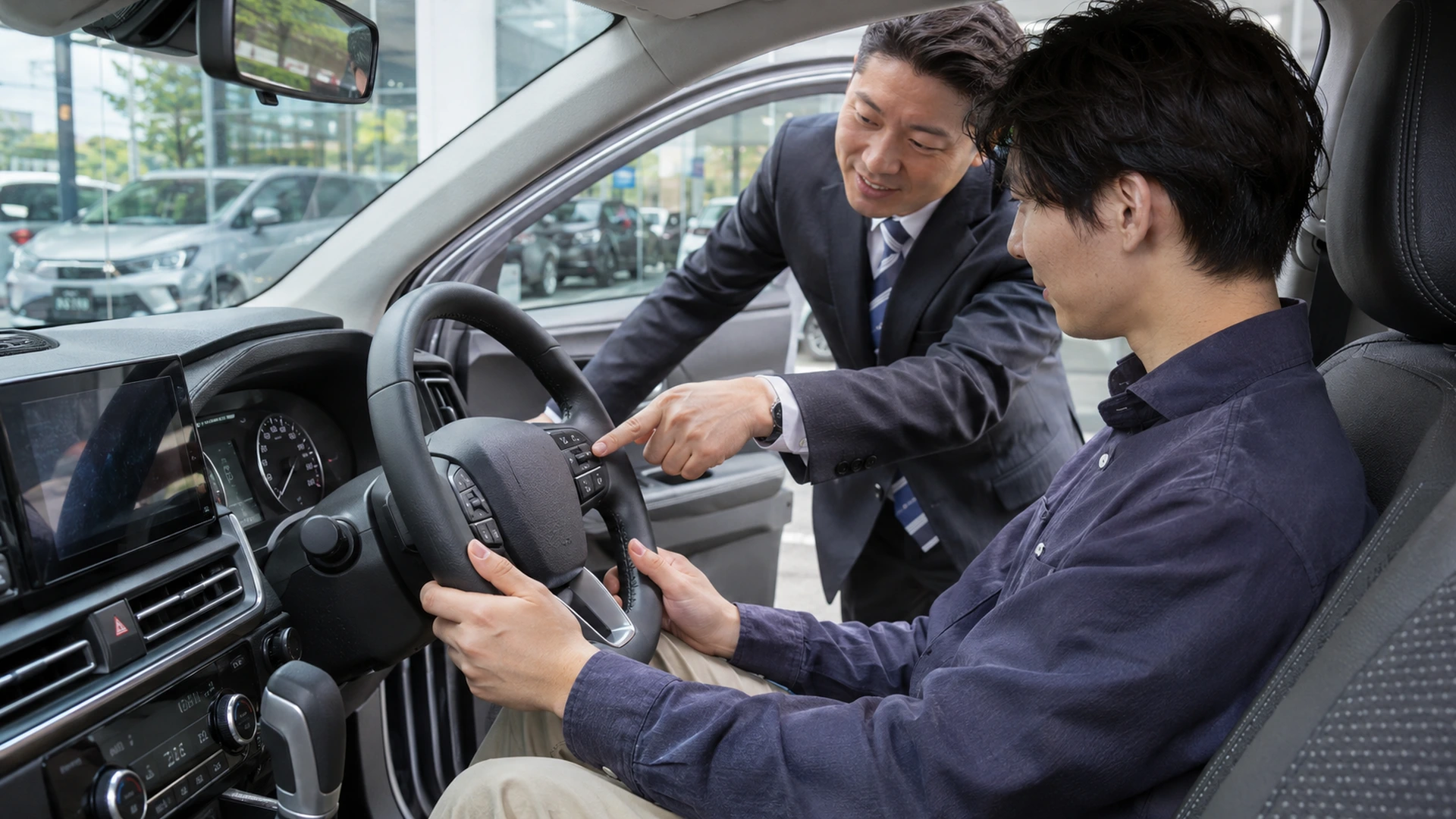
Ask the dealer to demonstrate the controls safely and explain when each function operates, how it alerts the driver and how it can be switched on or off. Lane markings, weather and road layout can affect performance. A feature that works well on a marked motorway may not behave the same way on a narrow or poorly marked road.
Parking sensors and cameras can help reveal nearby obstacles, but their views and detection areas have limits. Check the image and audible warnings during a normal parking manoeuvre, and look around the vehicle yourself. Children, low objects and moving traffic may not be obvious from a screen alone.
Read crash ratings carefully
An independent crash-test rating can add useful evidence to your decision. Check the organisation, test year, model, body style and equipment included in the tested vehicle. Assessment protocols change, so star ratings from different years or programmes are not necessarily directly comparable.
A rating for an apparently similar vehicle sold in another market may not apply to the South African derivative. Equipment, structure or specification can differ. Ask the manufacturer or assessment organisation whether the result covers the exact vehicle you are considering, and read the detailed report as well as the headline stars.
Make the handover count
Before taking delivery, compare the physical car with the written specification. Ask the dealer to show you where the relevant controls and warnings are, how to maintain cameras and sensors, and where to find the limitations in the owner's manual. Keep the handbook accessible and make sure other regular drivers understand the systems too.
A useful comparison is not simply a count of features. It is a clear view of occupant protection, the assistance fitted to the exact car and the driver's continuing responsibilities. Choose the vehicle whose verified safety package and everyday fit best meet your family's needs.
Comments
Newest firstLoading comments…