


Luxurious premium class: Mercedes-Benz 300 SE Coupé and Cabriolet

Luxurious premium class: Mercedes-Benz 300 SE Coupé and Cabriolet

Zenith of Mercedes-Benz’s coupé and cabriolet tradition in the 1960s A combination of the cutting-edge technology of the 300 SE with exclusive bodywork variants The 300 SE was produced as a coupé and as a cabriolet almost three years longer than the tailfin saloon Stuttgart – The premiere that was celebrated for two luxurious premium-class […]

By Ronel Ferreira14 February 20124 min read
  • Zenith of Mercedes-Benz’s coupé and cabriolet tradition in the 1960s
  • A combination of the cutting-edge technology of the 300 SE with exclusive bodywork variants
  • The 300 SE was produced as a coupé and as a cabriolet almost three years longer than the tailfin saloon
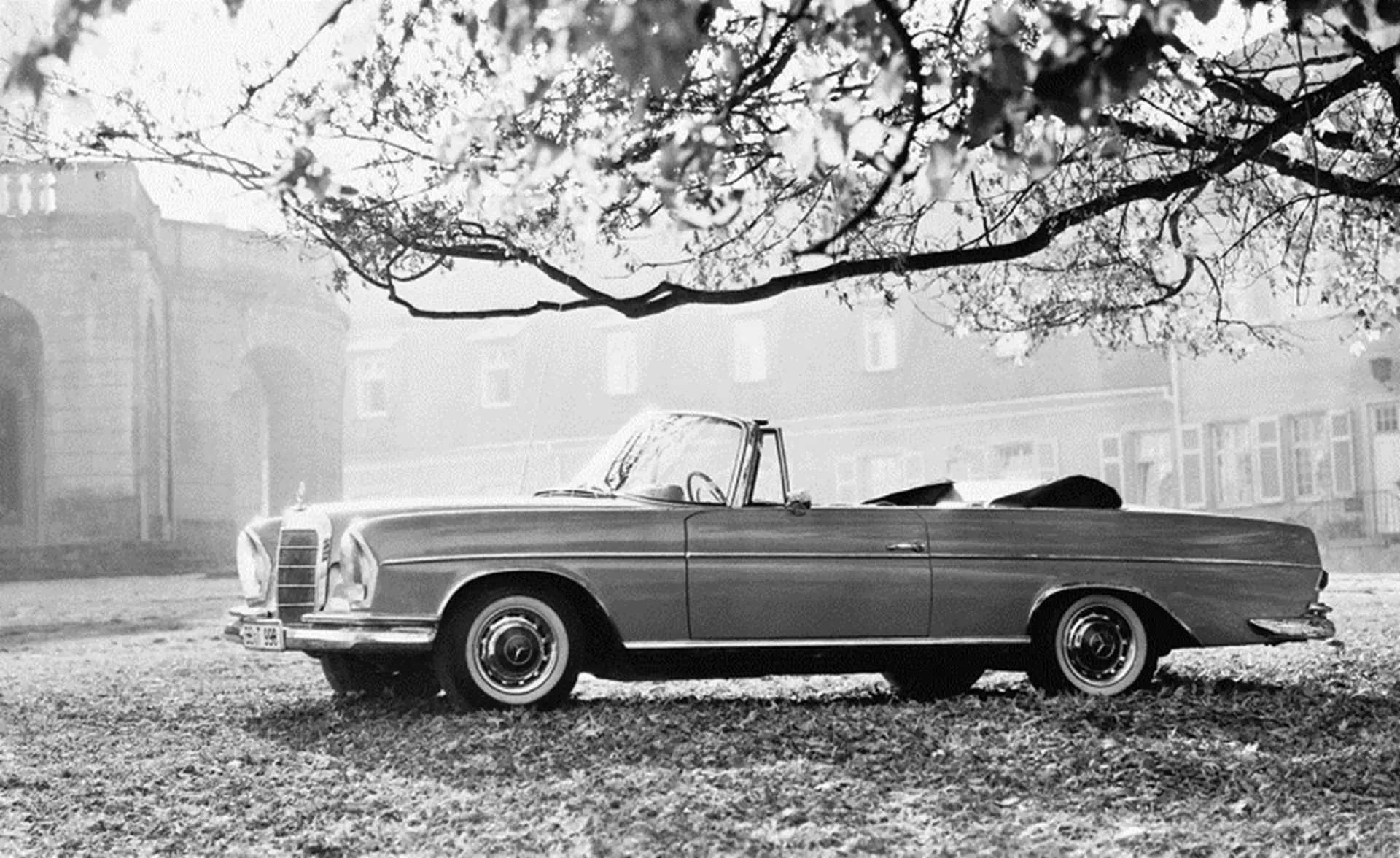
Mercedes-Benz 300 SE Cabriolet

Stuttgart – The premiere that was celebrated for two luxurious premium-class cars from 15 to 25 March 1962 at the 32nd Geneva Motor Show was a brilliant one: Mercedes-Benz presented the 300 SE Coupé and the 300 SE Cabriolet of the W 112 series. Because both these two-door four-seater cars were the result of the consistent combination of technical brilliance, impressive performance and very high standards of style and elegance.

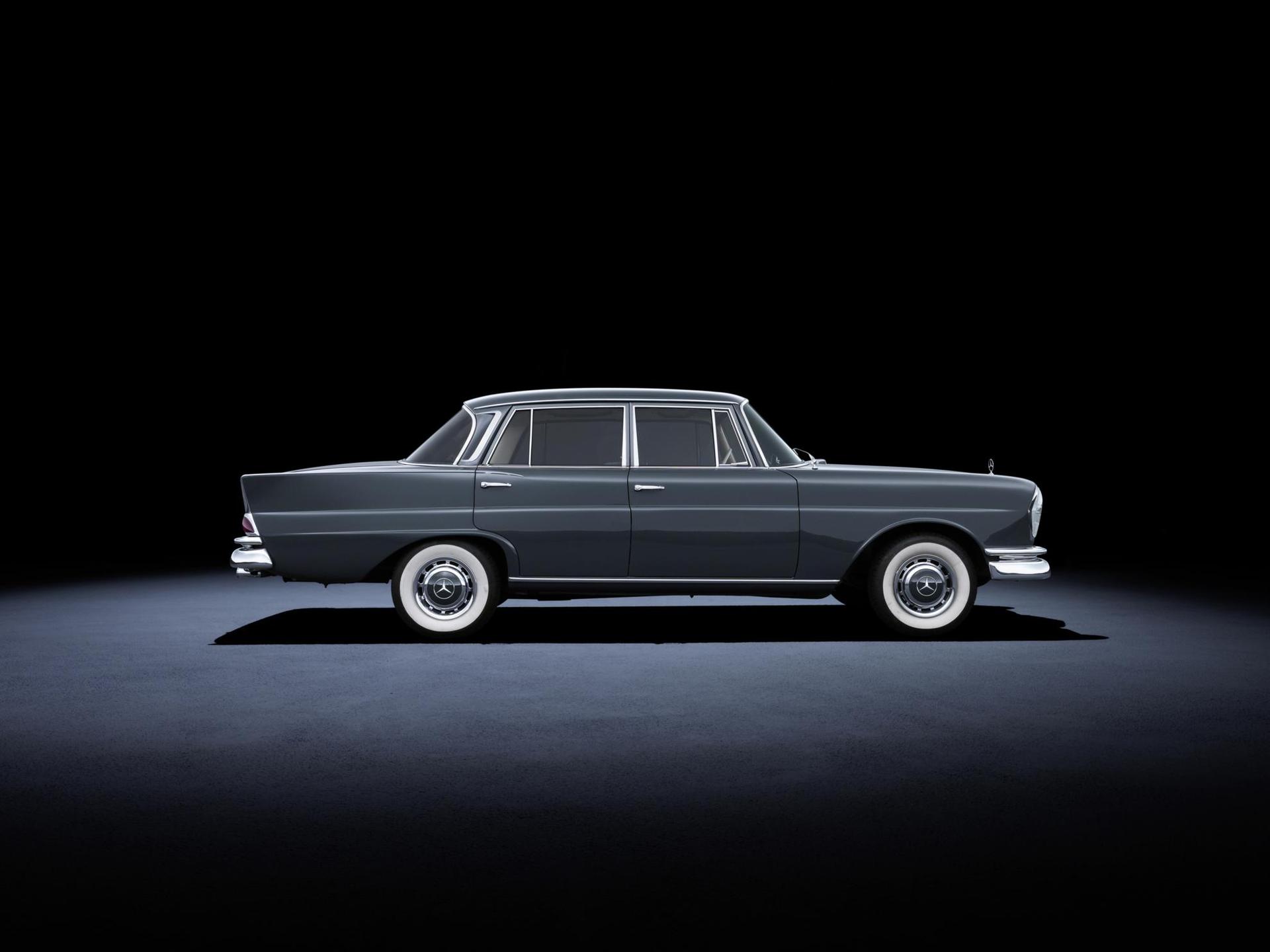
In terms of their style, both coupé and cabriolet were based on the respective variants of the 220 SE (W 111). The full-length floor unit was adopted from the tailfin saloon, underscoring the stately presence of both two-door vehicles with their 2.75-metre wheelbase and overall length of 4.88 metres.

However, the new models did feature trim elements in addition to those of the 2.2-litre-engine model, as well as being equipped with engine and technology of the 300 SE saloon. Initially, the M 189 IV straight-six cylinder light-metal engine delivered 160 bhp (118 kW) at 5000 rpm, having an increased output of 170 bhp (125 kW) at 5400 rpm from 1964 onwards. Depending on the rear-axle ratio and the engine installed, coupé and cabriolet could reach top speeds of between 175 km/h and 195 km/h.

The vehicles’ standard equipment included a four-speed automatic transmission, power steering, pneumatic suspension and a dual-circuit brake system with disc brakes on front and rear wheels. The additional chrome decoration consisted of a continuous trim strip in the longitudinal groove running from the headlamps to the tail lights, and distinctive trim strips on the front and rear wheel arches.

Coupé culture and cabriolet fascination in their purest form

The two new models not only represented the summit of their model series in March 1962. They also set the general standards for two highly exclusive bodywork forms behind each of which a particular interpretation of the fascination for cars stood: the premium-class coupé and the cabriolet.

Driving a luxury-class coupé is an expression of automotive culture that is as exclusive as it is elegant: the two-door, closed touring car combined flowing forms and sporty ambience with powerful drive systems and fine appointments.

The luxury-class cabriolet, on the other hand, open to the sky, breaks down the boundary between passenger compartment and its surroundings. In particular with the top drawn back, this type of vehicle combines originality of automotive travel with distinguished yet sporty motoring. In addition, the sturdy convertible top offers the protection of a coupé if wished.

Luxury-class coupés and cabriolets from Mercedes-Benz realize these special values in an exemplary manner over and over again, for which reason the brand and model culture of Mercedes-Benz has given proof of understanding and appreciation for both vehicle concepts through a large number of models.

Luxury coupés and cabriolets of the Stuttgart-based brand are not just grounded in this great tradition, they always look towards the future as well. In the 1962 300 SE Coupé and 300 SE Cabriolet this particular aspiration found its expression in consonance with its time. This was understood by “auto, motor und sport” magazine in its 7/1962 issue, that hailed the two new 112/3-series cars as the “non-plus-ultra of modern automotive construction”.

Closely related to the “tailfin”, yet independent

For all their technical and stylistic affinity with the saloon, the two-door vehicles were convincing original, independent vehicle designs. Thus Mercedes-Benz did not use a single central body-in-white part from the four-door model for the coupé and cabriolet. And for the design the developers explored their own paths, for instance, the saloon’s tailfins were merely suggested in the coupé and the cabriolet.

On the other hand, the two-door vehicles were closely related to each other: except for the missing roof and the necessary bodywork reinforcements the cabriolet was similar to the coupé in all details. The coupé even offered the potential for further models, as shown by a modified version of a 300 SE Coupé in 1962: for this singular vehicle the Mercedes-Benz research department removed the rear roof edging together with the rear window and installed a retractable folding top, creating a particularly exclusive landaulet (landau). However, this version was never produced in series.

The two 3-litre models were modified in many details in the course of their construction period. For example, from March 1963 a 4-speed manual transmission became available for the 300 SE Coupé and Cabriolet. And January 1964 brought the replacement of the injection system by a 6-plunger injection pump, which increased the engine’s output by 10 bjp (7 kW) to 170 bhp (125 kW).

Already a timeless classic during the time of its manufacture

The luxury-class coupés and cabriolets from Mercedes-Benz already revealed themselves as classics in the 1960s. In the summer of 1965 the W 111 and W 112 “tailfin” saloons were superseded by model series W 108, and only the 230 S model, created by reworking model 220 Sb, continued to be built until 1968, among other things as the 230 S Universal estate saloon. The coupés and cabriolets, on the other hand, remained in the programme: these exclusive two-door cars appeared fresh and elegant, in no way outdated, even when standing next to the saloons of the more recent generation. For the two-door models there were, however, alterations in some details, based on the engineering of the new saloons. In the case of the 300 SE, these included, for example, larger-dimensioned disc brakes and 14-inch wheels.

Production of the 300 SE Coupé and 300 SE Cabriolet was discontinued in Dezember 1967. In September 1969 280 SE 3.5 series Coupé and Cabriolet were ready as their worthy successors, powered by an entirely re-engineered 3.5-litre V8 engine delivering 200 bhp (147 kW). With a total of just 708 units produced, the open version of the 300 SE is the most exclusive variant of all Mercedes-Benz coupés and cabriolets of this luxury class, while 2419 units of the 300 SE series coupé were built from 1962 to 1967.

Comments

Sign in to comment.Sign in

No comments yet. Be the first to share your thoughts.

The Legendary Rubirosa Gullwing: A Star Attraction at Concours of Elegance Germany
30,750
3,089
ArticleJune 12, 2024

The Legendary Rubirosa Gullwing: A Star Attraction at Concours of Elegance Germany

The world-renowned Gullwing, once owned by diplomat, racer, pilot, polo champion, and alleged assassin Porfirio Rubirosa, will be one of the star attractions at the upcoming Concours of Elegance Germany. Rubirosa, who is said to have inspired Ian Fleming’s iconic character, James Bond, owned the car during a life as glamorous and enigmatic as the […]

P1 Fuels Mercedes-Benz Classic
357
0
ArticleJune 20, 2023

P1 Fuels Mercedes-Benz Classic

Brescia, Italy, 20 June 2023 In a historic milestone for the automotive industry and the world of historic car enthusiasts, a Mercedes-Benz SSK, three Mercedes-Benz SL300 Gullwings, an Alfa Romeo 6C Gasogene and a pre-war 4.5-litre Bentley successfully completed the renowned Mille Miglia on 100% synthetic, carbon-neutral fuel supplied by P1 Fuels, without any modifications. […]

Mercedes-Benz Classic at Retromobile 2015
133
0
ArticleJanuary 26, 2015

Mercedes-Benz Classic at Retromobile 2015

The best or nothing: ever since the automobile was invented, the Mercedes-Benz brand’s history has been shaped by strong values and ideas. Mercedes-Benz Classic is demonstrating this with its appearance at this year’s Rétromobile exhibition in Paris between 4 and 8 February 2015. For the 40th edition of this specialist show devoted to classic cars, […]

Highlights of the the Mercedes-Benz 540 K Streamliner
129
15,056
ArticleMay 26, 2014

Highlights of the the Mercedes-Benz 540 K Streamliner

Its history, at a glance Built in the first half of 1938. Delivered in June 1938 to tyre manufacturer Dunlop. Employed for the testing of high-performance tyres for particularly fast and heavy vehicles. Adopted into the collection of the Mercedes-Benz Museum during the 1950s. 2011: Starting signal given for full restoration to original condition at […]

Mercedes-Benz 540 K Streamliner: Ahead of its time
126
0
ArticleMay 26, 2014

Mercedes-Benz 540 K Streamliner: Ahead of its time

The ultimate in aerodynamics Mercedes-Benz 540 Streamliner: awakened to new life Highly complex project from Mercedes-Benz Classic Heralding the days of aerodynamics and high driving speeds Cd = 0.36 – exquisite for a vehicle from the 1930s Mercedes-Benz Classic presents the Mercedes-Benz 540 K Streamliner to the general public – an exceptional vehicle that never […]

Mille Miglia 2014 – Mercedes Benz
124
0
ArticleMay 8, 2014

Mille Miglia 2014 – Mercedes Benz

Mille Miglia 2014: strong showing by Mercedes-Benz Classic pays homage to historic successes in thousand-mile race The Mille Miglia victories of 1931 and 1955 are highlights of 120 years of Mercedes-Benz motorsport history Exclusive compressor-sports car models SS and SSLK and 300 SL racing and production sports cars dominate strong showing of Mercedes-Benz The “Mercedes-Benz […]

Mercedes-Benz Classic Life
123
0
ArticleApril 11, 2014

Mercedes-Benz Classic Life

More than 200 pages of reading matter and photos for fans of the brand A look back at the Classic events of 2013 Music to match: vinyl record with eight jazz tracks is enclosed Stuttgart. – “Mercedes-Benz Classic Life #1” is a new publication which has been created in cooperation with Mercedes-Benz Classic. premiummedia GmbH […]

Mercedes-Benz SL R129 Celebrates 25 Years
120
14,664
ArticleFebruary 28, 2014

Mercedes-Benz SL R129 Celebrates 25 Years

A technological trailblazer celebrates its 25th anniversary: Mercedes-Benz SL, R 129 model series (1989 to 2001 ) Numerous innovations, from the automatic roll-over bar to the integral seat Twelve-cylinder engine made its debut in the SL of the R 129 model series Official AMG versions of the SL became available for the first time The Geneva […]

Mercedes Benz Heritage: The highlights of the S-Class and its predecessors
117
0
ArticleJuly 5, 2013

Mercedes Benz Heritage: The highlights of the S-Class and its predecessors

The Mercedes-Benz S-Class and its predecessors have always stood for innovative automotive engineering. Over the years, they have continually brought new features to the market which have then found widespread acceptance. Here is a brief overview of the special features in each model series.

Jürgen Paul – Mercedes-Benz S-Class pioneer in vehicle safety
129
13,937
ArticleMay 6, 2013

Jürgen Paul – Mercedes-Benz S-Class pioneer in vehicle safety

A key player in the development of the anti-lock braking system (ABS): Jürgen Paul – Born in Berlin-Köpenick on 2 August 1941 Jürgen Paul was one of the engineers behind the anti-lock braking system (ABS), which marked its series deployment and world premiere in the Mercedes-Benz S-Class in 1978. He was also involved in various […]

Frank Knothe Pioneer in Mercedes-Benz S-Class Vehicle Safety
108
19,319
ArticleMay 6, 2013

Frank Knothe Pioneer in Mercedes-Benz S-Class Vehicle Safety

Technical-physical solutions for a perfect vehicle concept: Frank Knothe – Born in Dresden on 24 February 1942 Mercedes-Benz S-Class: pioneer in vehicle safety In his professional career as an engineer, Frank Knothe had a hand in developing numerous Mercedes-Benz passenger car model series. On 1 July 1991, he succeeded the well-known head of testing, Hans […]

Mercedes-Benz S-Class: The shaping force of modern safety engineering: Professor Guntram Huber
120
6,936
ArticleMay 6, 2013

Mercedes-Benz S-Class: The shaping force of modern safety engineering: Professor Guntram Huber

The shaping force of modern safety engineering: Professor Guntram Huber – Born in Landshut on 20 March 1935 In his work as a design engineer, Guntram Huber devoted his entire professional life to Mercedes-Benz brand vehicles, influencing and fashioning countless safety features up to production launch. Alongside bodies developed according to the latest findings in […]