




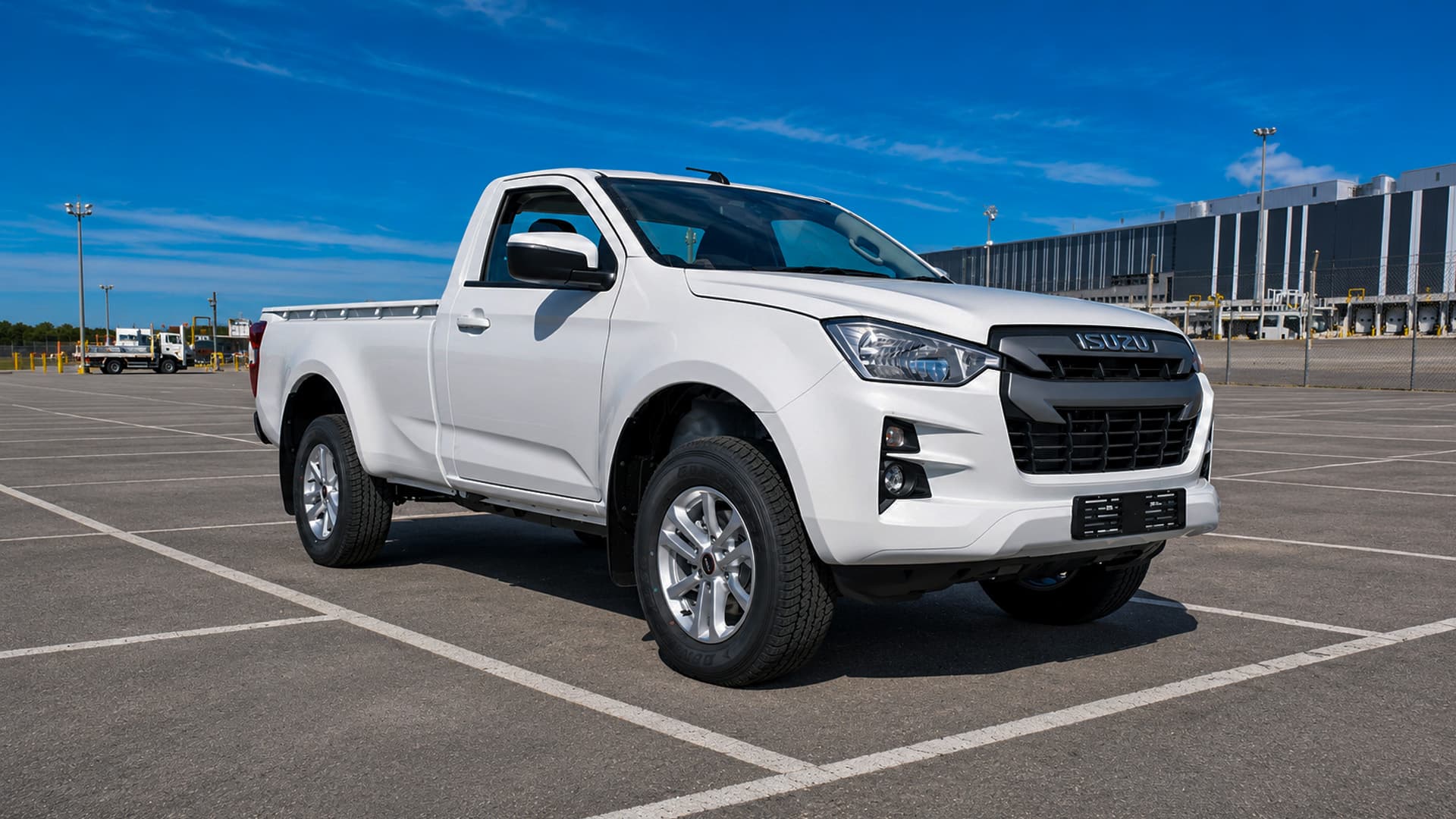
Isuzu D-Max 1.9 single-cab payload: how much can a fitted work bakkie carry?
The payload figure for an Isuzu D-Max single cab belongs to a particular derivative in a specified configuration. A work bakkie with a canopy, drawers and tools already aboard starts the day heavier than the vehicle represented by that figure. What can go into the load box depends on the mass of the bakkie as equipped, who is travelling in it and how the load sits over the axles. If the vehicle carries heavy supplies every week, it is worth measuring those things for the actual bakkie.
Isuzu’s South African single-cab specification booklet illustrates why the derivative matters. In the table covering the 1.9-litre models, listed payloads across the variants range from 1 205 kg to 1 265 kg. The same table lists a 1 910 kg rear axle rating. Those are examples from that booklet. The plate and technical information for your bakkie determine the limits to use, particularly if you are looking across model years or at a modified vehicle. Isuzu D-Max single-cab specification booklet
Start with the bakkie as it works
List what stays in the vehicle. On a maintenance bakkie that may include a steel canopy, drawer system, jack, first-aid kit, toolbox and site equipment. Add any normal passengers. These items can sit in the vehicle so long that people mentally treat them as part of the empty bakkie. Check how the manufacturer defines its published weights before trying to reproduce a brochure figure by subtracting tare from gross vehicle mass. Fuel and other allowances can differ between weight definitions.
A clearer starting point is a weighbridge reading with the vehicle as normally used, including the usual equipment, occupants and fuel level. Ask how the weighbridge operator can provide a whole-vehicle figure and separate axle readings. Write down which people and equipment were aboard. If a crew member joins later or the diesel tank is filled after weighing, account for the change. The purpose is to measure a repeatable operating condition that you can compare with the limits on the vehicle’s plate.
The D-Max single cab’s separate load box is visible behind the cab.
Why the rear axle needs its own check
A vehicle can come in under its gross vehicle mass and still be too heavy on one axle. Cargo mass is only part of the story. Position matters. A dense load placed near the tailgate shifts more of its effect to the rear axle than an otherwise similar load further forward in the bed. A long item overhanging the rear can add to that lever effect. The rear may look fine to the eye, so appearance is a poor proxy for an axle reading.
For a hypothetical example, take a D-Max with a plate showing a 3 000 kg gross vehicle mass and 1 910 kg rear axle limit. A loaded reading of 2 950 kg overall sounds comfortably within the first figure. If the rear axle reads 1 940 kg, however, it is 30 kg over its own rating. Reduce the load or adjust its placement in accordance with the load-restraint guidance, then reweigh and check both axles. Numbers here illustrate the relationship between the limits.
Turn delivery estimates into a usable load plan
Get actual masses from suppliers for materials that come in similar-looking packages. Stacks of paving, tile adhesive and liquid products can differ considerably in weight. Capture pallet and packaging mass if that packaging goes with the materials. Then allow for job-specific equipment you might collect along the way. A vehicle that leaves the depot with an acceptable axle reading can exceed it after a second collection, even if the load box still looks half empty.
Ask anyone who loads the vehicle to use the proper tie-down points and suitable restraints. Follow the vehicle and restraint manufacturers’ instructions. A load that shifts towards the rear under acceleration or sideways through a turn changes what the tyres and suspension must handle. If the job also requires a trailer, check the separate towing, axle and combination limits and account for the load the trailer applies to the towball. The collection schedule may need two runs when the figures are tight.
If you use a canopy, count its own mass and confirm the rating for anything attached to it. A rack rating says how much the rack can support. The axle and vehicle weights also need to allow for that rack and the cargo on it.
Make a dedicated payload record
Keep a copy of the plate’s limits, the weighbridge slip and a short list of what was on board at the time. When a new canopy is fitted or a heavier tool system takes up residence in the bed, update the reading. For regular deliveries, record the configurations that have actually been weighed so the team can recognise when a new request changes the load. Have the tyre pressures checked against manufacturer guidance for the planned operating condition, particularly when the vehicle alternates between light and heavy work.
A brochure narrows the search for a suitable derivative. The fitted bakkie’s recorded operating weight and axle readings tell you how much work it can take on for a particular trip.
Comments
Newest firstLoading comments…