




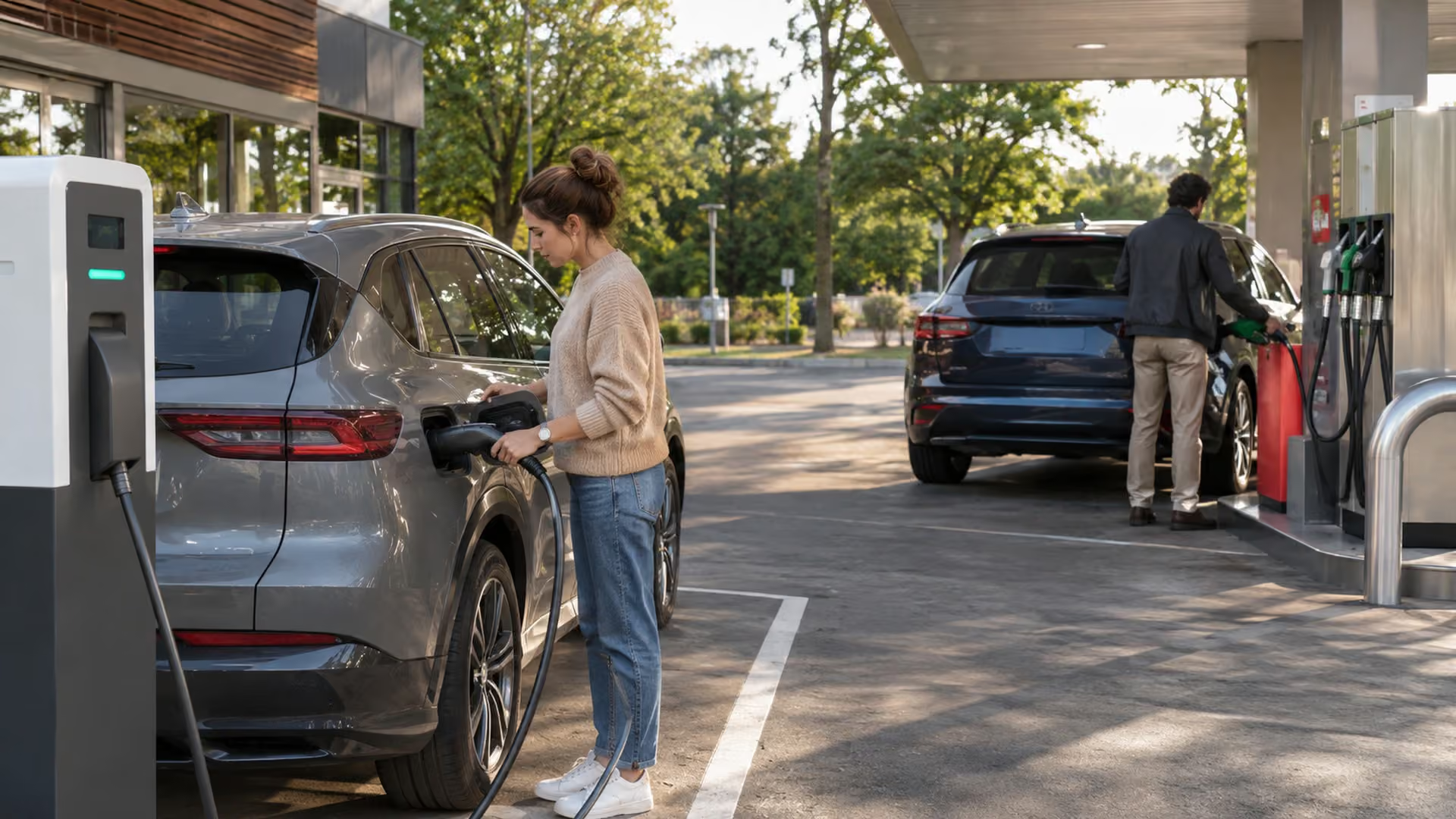
Hybrid or plug-in hybrid: which fits your driving routine?
Hybrid cars combine an engine with electric propulsion, but not all hybrids use electricity in the same way. Some recharge their traction battery while driving; a plug-in hybrid can also draw electricity from an external charger. The distinction matters when you compare costs, parking arrangements and the type of journeys you make.
The best choice depends on the specific vehicle and how you will use it. Begin with your daily distance, access to charging and the frequency of longer trips, then check the manufacturer's specifications for the actual model on your shortlist.
How a conventional hybrid works
A conventional hybrid electric vehicle combines an internal combustion engine, an electric motor and a battery. The system manages how these components work together. It can recover some energy during braking and use the engine as part of its energy management. A conventional hybrid is refuelled with its specified liquid fuel and is not plugged in to charge its traction battery.
The US Department of Energy's hybrid overview explains this basic arrangement. The way a particular car moves between engine and electric assistance differs by design, so consult the manufacturer's description and handbook rather than assuming every hybrid behaves identically.
For someone without reliable charging at home or work, the familiar refuelling routine may be convenient. Actual fuel consumption will still depend on speed, road conditions, temperature, load and driving style. An advertised figure is a comparison point, not a guaranteed result on every route.
What changes with a plug-in hybrid
A plug-in hybrid, commonly called a PHEV, also has an engine and an electric motor. Its battery can be charged from an external electricity source. Depending on the vehicle, its state of charge and driving conditions, it may be able to complete some journeys using electricity before relying more heavily on the engine.
The Department of Energy's PHEV guide describes how these vehicles can draw energy from external charging, the engine and regenerative braking. Electric-only range, charging speed and the way the engine engages vary substantially between models.
If a plug-in hybrid is rarely plugged in, the driver's actual use may differ greatly from the assumptions behind an advertised consumption figure. Ask the seller how the car behaves when the battery is low and compare the cost of electricity and fuel for your own expected journeys.
Consider a normal week
Write down daily distances, including school runs and errands. If most days are short and you have reliable access to a suitable charger, a PHEV's electric capability may be useful. Compare your distance with the car's stated electric range while allowing a practical margin for conditions and battery charge.
If your parking space cannot accommodate charging and public charging would add an inconvenient detour, a conventional hybrid may better suit your routine. That is a practical comparison rather than a universal rule. Some buyers may have dependable workplace charging or another arrangement that changes the calculation.
For longer trips, consider fuel stops, luggage and available driving modes. Ask for a representative test drive.
Check the charging arrangement
Before purchasing a plug-in vehicle, establish where you would park and charge. If installation at home is possible, ask a qualified electrician to assess the supply, the cable route and protective equipment. Obtain a written quotation for the specific property and the equipment recommended for the vehicle.
Renters and complex residents should discuss permissions, metering and costs with the landlord or body corporate. Never use an improvised cable across a walkway.
Check the car's connector, AC charging capability and the equipment supplied. Charging time depends on the car, battery, available power and other conditions. The home-charging guide provides general background; South African installation requirements and electricity tariffs must be confirmed locally.
Compare full ownership costs
Obtain written prices and finance quotations for the exact vehicles, including any charging installation. Add insurance, scheduled services, tyres, fuel and your expected electricity use. A higher purchase price may or may not be offset by running costs over your ownership period; the answer depends on the agreement and your use.
Check warranty terms separately for the vehicle and relevant battery components. Ask about the time and distance limits, exclusions, servicing conditions and transferability to another owner. Do not assume the battery is covered for every circumstance or that a warranty is the same as a service plan.
The engine means a hybrid or plug-in hybrid still has maintenance requirements associated with its combustion system. The Department of Energy's maintenance overview notes that hybrid maintenance needs are similar to conventional vehicles in many respects. Follow the schedule for the exact car.
Test both before deciding
During a test drive, check visibility, passenger space, ride and the controls you use most often. Ask the dealer to demonstrate the available driving modes and, for a PHEV, the charging port and connection procedure. Check what charging equipment is included in the quotation.
Then compare the whole package: the vehicle, the place you can charge, your regular distance and the budget you can sustain. A conventional hybrid offers a no-plug routine; a PHEV adds the option of external charging. The useful choice is the one whose advantages you can actually use.
Comments
Newest firstLoading comments…