




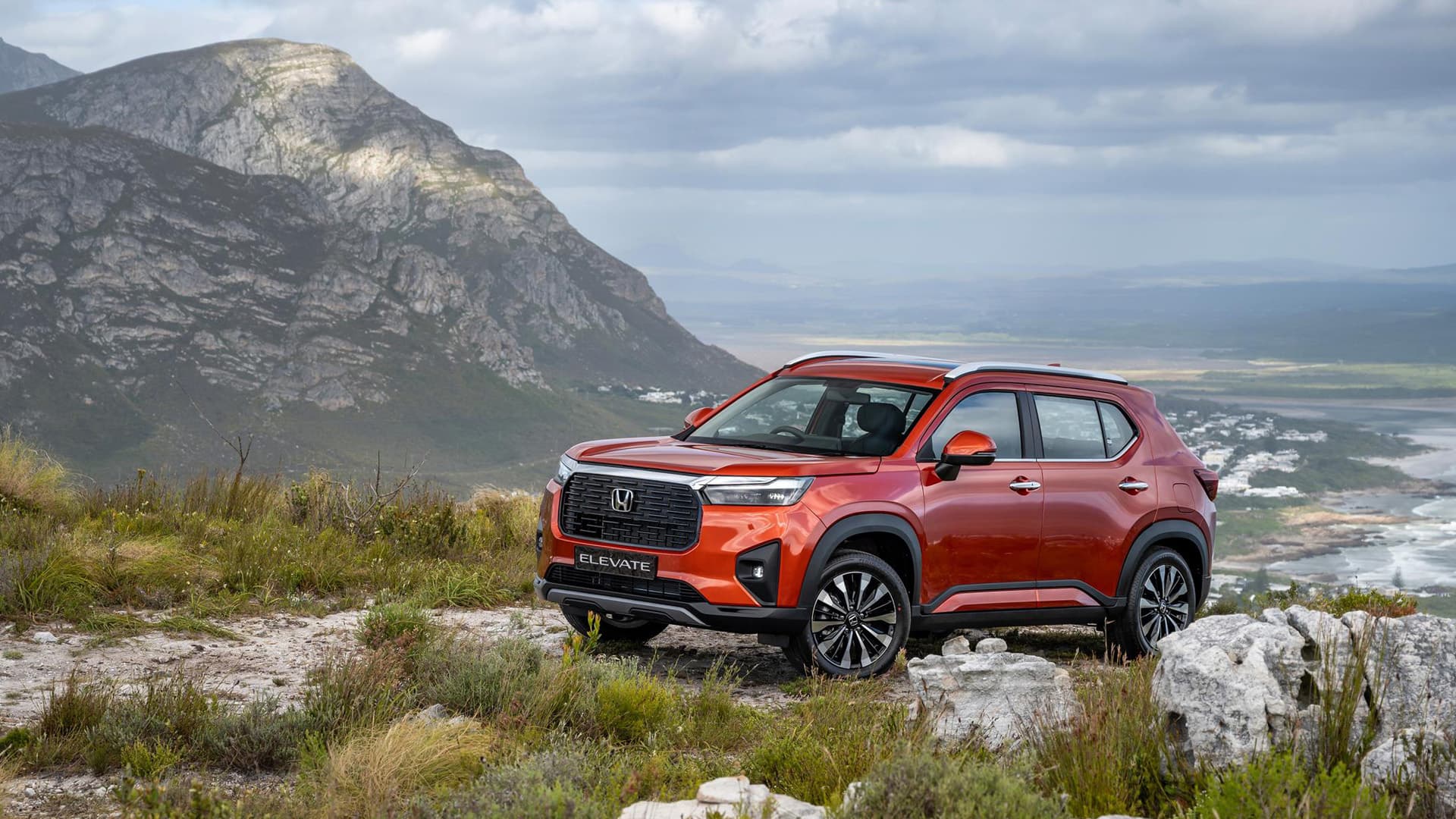
Honda Elevate Comfort manual or Elegance CVT: which should you buy?
The South African Honda Elevate range pairs its Comfort trim with a six-speed manual and its Elegance trim with a continuously variable transmission, or CVT. That bundles your gearbox choice with a change in equipment. A driver who wants a manual gets the simpler trim. Someone shopping for an automatic gets the Elegance’s extra features at the same time. If you want to judge the price difference fairly, decide which of those two changes solves a problem on your daily route.
Honda lists the same 1.5-litre petrol engine in both versions, producing 89 kW and 145 Nm. Both are front-wheel drive. The local specification also lists 199 mm of ground clearance and 458 litres of luggage space under the VDA measurement method for both. A move to the Elegance buys a different driving interface and equipment list while the basic footprint stays the same. Honda South Africa Elevate specification sheet
When the Comfort manual makes sense
Consider the Comfort if most of your driving is on open suburban routes and you like choosing your own gears. A manual gives you direct control over when to change down before a climb or when you want more engine response. In traffic, that also means repeated clutch and gear changes. Drive the car across a few stop streets and up an incline before deciding. How easy it is for you to move off smoothly is more useful than a familiar engine size on the brochure.
In the published comparison, the Comfort uses 16-inch steel wheels with 215/60 R16 tyres. The Elegance has 17-inch alloys with 215/55 R17 tyres. Ask a tyre supplier for prices on suitable replacements in each size and use the prices you can actually get locally. A sidewall profile or wheel material alone cannot predict how the car will feel on your road. Drive both over the same uneven section if ride comfort is a deciding factor.
What the Elegance adds around the driver
A CVT varies its ratio continuously, so it can hold the engine at a relatively steady speed during sustained acceleration. That can sound unfamiliar if you are used to a manual or a stepped automatic. The meaningful test is how smoothly you can manage a parking ramp, filter into faster traffic or pull away uphill without having to think about the gearbox. Let the person who spends the most time driving the car judge that for themselves.
Honda’s published trim list adds alloy wheels, a sunroof, roof rails and automatic headlights on the Elegance. The cabin is also trimmed differently. Sit in the car in daylight and check whether the roof layout suits your seating position. A driver who hardly uses these extras may still value the CVT enough to choose the Elegance. A driver who likes the extra kit but seldom faces traffic should weigh what the features will actually contribute week to week. Have the dealer list the equipment of the car being quoted.
If your preferred parking spot is particularly narrow, check the published dimensions with the mirrors and the room each door needs to open. Both trims share the same basic dimensions, so it is useful to assess the gearbox and side visibility separately from how much space the body takes.
Rear three-quarter view of the Elevate, showing its roof rails and alloy wheels.
How much weight to give the fuel figures
Honda’s combined-cycle figures are 6.7 L/100 km for the Comfort and 6.1 L/100 km for the Elegance. Over a hypothetical 15 000 km, a difference of 0.6 L/100 km represents 90 litres. At an illustrative R23 per litre, that would be R2 070 a year. Those numbers show the scale of the difference if both cars reproduced their published consumption. They are neither a forecast of your bills nor a substitute for two comparable purchase quotes.
Stop-start traffic, speed, load and journey length can move real consumption. The purchase-price difference remains even if your route produces a narrower fuel gap than the test cycle. If you are buying on finance, use each written quote’s total payable as well as its instalment. If you are buying used, a clean inspection and credible service history can carry more weight than the predicted fuel difference between two otherwise similar cars.
Make the choice on a route you recognise
Use the same approach for both drives. Include a tight parking manoeuvre, a section of ordinary stop-start driving and a reasonable uphill stretch. If another member of the household will share the car, let that person do the parking and moving-off tests as well. Compare sightlines and seat comfort from the positions each driver uses. Small differences that affect every trip deserve more weight than a feature you only use occasionally.
Choose the Comfort if you are happy operating a manual on that route and the simpler equipment meets your needs. Choose the Elegance if automatic operation solves a regular inconvenience and the written price works for your budget. The two cars share a great deal underneath. Your decision hinges on the gearbox you will operate at every junction and the features you will use from the driver’s seat.
Comments
Newest firstLoading comments…