




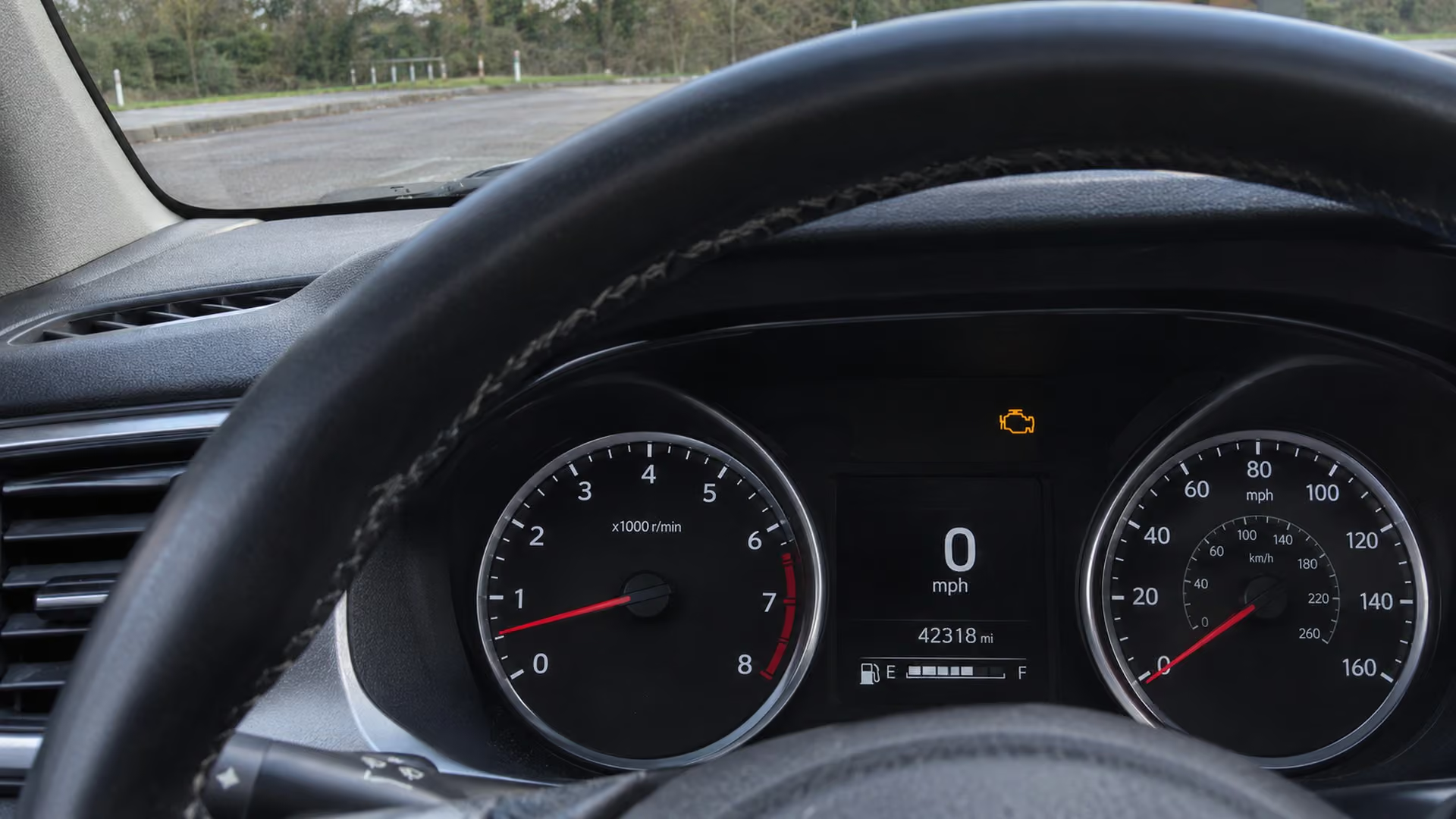
Flashing check-engine light: what to do when the engine starts shaking
A flashing check-engine light while the engine is running calls for prompt attention, especially if the car shakes or loses power. Ease off the accelerator, keep control and move to a safe place clear of traffic. Check your owner’s manual for the warning procedure and call for assistance if the engine continues to run roughly. A car that can still drag itself uphill with the light flashing may be doing damage as it goes.
The amber engine-shaped light is formally called the malfunction indicator lamp in many manuals. Ford and Honda both give examples of it flashing when the engine detects a misfire. It can also come on steadily for detected faults that need diagnosis. A light visible during the normal start-up check has a different meaning from one that begins flashing on the motorway. The car’s manual gives the rule to follow for the exact lamp and any message accompanying it. Ford warning light guide · Honda’s malfunction indicator guidance
Why a misfire matters beyond the engine
In a petrol engine, each cylinder should ignite its air and fuel mixture at the right point in the cycle. A misfire means the expected combustion event was weak or failed. That can feel like a shudder or uneven power delivery. If fuel that should have burnt in the cylinder enters the exhaust, it can overheat the catalytic converter. The warning is one way the car alerts you to a fault with the potential to cause more damage.
A flashing light under load may disappear when you lift off. That gives the technician a valuable clue about the conditions that trigger it. Even if the engine settles at idle, avoid repeating a steep climb or demanding acceleration to see whether you can bring the light back. If you smell fuel or notice smoke, unusual heat or a severe loss of power, switch off once safely stopped and tell the recovery operator what you noticed.
Stop safely before diagnosing anything
Aim for a safe stopping point away from moving traffic, and follow your manual and local road-safety guidance. Use the hazard lights as appropriate. If you see tall dry grass or other easily ignited material where you might pull in, choose a safer surface when you can. Some manufacturers specifically caution against stopping above flammable material when a misfire warning occurs, because the exhaust can become very hot.
Once the car is secured, record whether the flash came with an uphill section, hard acceleration, a cold start or a recent fuel stop. Note the exact wording of any dashboard message and whether other lights came on. These details help a workshop reproduce the operating conditions during a controlled assessment. Leave roadside investigations to the recovery team when there is limited space or traffic is passing close by. You can relay the symptoms even if the car had already switched off before you could take a photo.
How a workshop uses the stored fault
A diagnostic reader can retrieve fault codes and, where available, the recorded conditions at the time the fault was logged. A code can identify a misfire on a particular cylinder or indicate that misfires were detected across cylinders. Those results narrow the investigation. A spark plug, ignition coil, fuel injector, wiring issue or mechanical fault can all produce poor combustion. The technician may compare cylinders or do targeted tests based on what the car stored.
Ask the shop to record the codes before clearing them. A code erased at the roadside may take useful information with it. Likewise, a light that disappears after a restart says little about the underlying cause. If repairs are suggested, ask what test connected the suspected part to the symptom and how the workshop will check its work. That is particularly helpful if the flashing occurred only once or only under a very specific condition.
Intermittent faults can leave behind a pending code even if a warning goes out. Tell the fitter whether anyone used a reader or disconnected the battery before the visit. That helps the shop understand why the recorded vehicle data may be incomplete.
How to handle a steady light afterwards
If the light becomes steady, or if it goes out while the car seems smooth again, keep the original flashing episode in the picture. Follow the instructions for the model and arrange a diagnosis. In particular, a return of shaking, a loss of power or a hot smell warrants another safe stop and professional assistance. Avoid assuming the later steady light reflects a wholly unrelated fault.
Tell the workshop whether the car was towing, climbing or heavily loaded at the time. If it was recently serviced, provide the invoice so the technician can see what was touched. Small clues about timing matter when a warning is intermittent. Once the cause is found and the repair verified, ask which signs should prompt a return visit. A clear account of the first flash is often more useful than several attempts to make it happen again.
Comments
Newest firstLoading comments…