




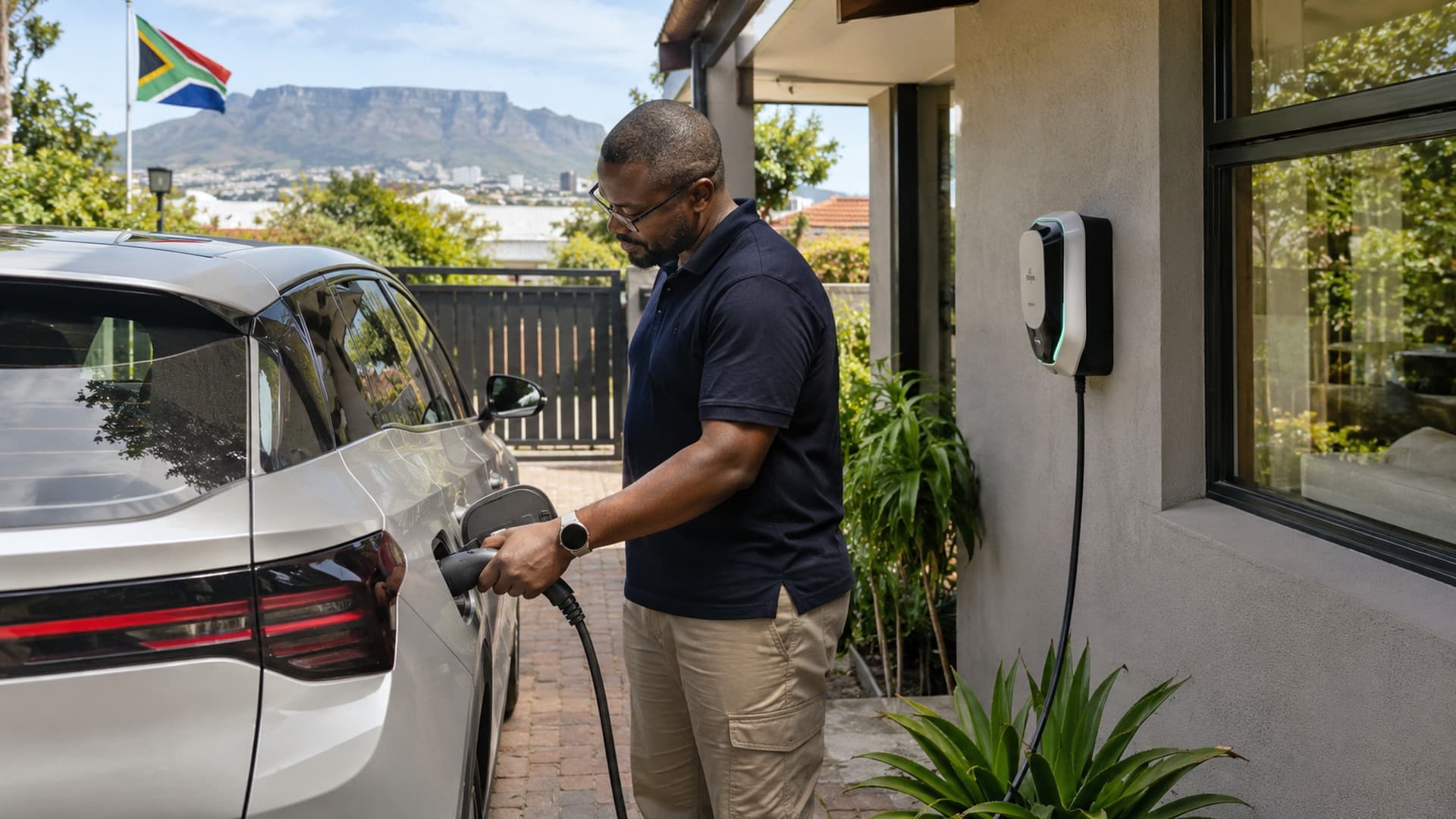
Charging an electric car in South Africa: what to check before you buy
An electric car can fit into everyday life without a daily visit to a filling station, but charging needs a little planning. The key question is not simply how far the car can travel on a full battery. It is whether you can reliably replace the energy you use, where and when you need it.
Start with your normal driving routine, your parking arrangements and the charging options on the routes you actually use. Then compare those needs with the particular vehicle and equipment you are considering.
Work out your daily energy needs
Record a realistic week of driving, including commuting, school runs and errands. Look at the longest regular day as well as the average. Manufacturer range figures are useful for comparing vehicles under a standard test, but actual range changes with speed, terrain, weather, load and driving conditions.
Battery size is usually expressed in kilowatt-hours, or kWh. Energy consumption is often expressed as kWh per 100 kilometres. As an illustration, a car using 18 kWh per 100 kilometres would use roughly 9 kWh over 50 kilometres. This is only an example: charging losses and real conditions mean the electricity drawn from the supply can be higher.
Use your own distance and a conservative consumption estimate when calculating costs. The US Department of Energy's EV overview explains that driving conditions can substantially affect range. A buffer is useful for unexpected detours, disrupted charging or a change in plans.
Check your parking before choosing a charger
Home charging can be convenient if you have a suitable dedicated parking space and permission to install equipment. Before budgeting, ask a qualified electrician to assess the electrical supply, distribution board, cable route and protective equipment required. Get an installation quotation for your property rather than assuming a charger can be connected anywhere.
If you rent or live in a complex, speak to the landlord, managing agent or body corporate early. Establish who can approve the installation, who pays for it, how electricity use will be measured and what happens when you move. Shared parking may require arrangements that a standalone home does not.
Do not run improvised extension leads across a walkway or rely on equipment that has not been assessed for the application. Follow the vehicle and charger manufacturers' instructions and local electrical requirements. The Department of Energy's home-charging guide describes why an electrical capacity assessment matters; installation rules must be checked locally.
Understand AC and DC charging
Many home and destination chargers supply alternating current, or AC. The vehicle's onboard charger converts this to charge the battery, so the car's AC charging capability can limit the rate even when the charging unit can provide more power.
Direct-current fast chargers supply DC to the vehicle. They can be useful on longer journeys, but a charger's advertised maximum is not a promise that every car will charge at that rate throughout a session. The car's own limit, battery temperature and state of charge, among other factors, influence what happens.
Charging power is measured in kilowatts, or kW; battery energy is measured in kWh. As a simple planning estimate, adding 20 kWh at an average 5 kW would take around four hours. Actual time may be longer because charging power changes and losses occur. The Department of Energy lists vehicle capability, battery state and equipment among the factors affecting charging time.
Plan a longer trip
Before a road trip, identify suitable chargers along the route and check the plug compatibility, operating hours, access arrangements and payment method. Look for a practical alternative in case a charger is occupied or unavailable. Allow a margin for detours and do not plan to arrive with an almost empty battery simply because the map suggests it is possible.
Choose stops with suitable facilities and confirm availability before departure, as operating conditions can change.
Public charging costs and billing methods vary. Check whether a provider charges for energy, time or another basis, and whether there are additional fees. Keep a payment method that works with the network and understand how to obtain assistance if a session will not start.
Account for power interruptions
In South Africa, ask how your charging plan would work during an electricity interruption. A home backup system does not automatically have enough capacity to charge a car, and an installer should assess any proposed backup arrangement. Never assume that a public charger or its payment system will remain operational during an outage.
Keep enough charge for essential journeys and identify another accessible, compatible charger. Your buffer should reflect your own needs.
Compare the complete ownership cost
Include the vehicle price, insurance, finance, charging installation and the electricity or public charging you expect to use. Ask about servicing, tyres, battery warranty terms and conditions, and the cost of inspecting or moving charging equipment later. Compare those figures with the actual petrol, diesel or hybrid alternatives on your shortlist.
Finally, test the car and its charging workflow before committing. Ask the dealer to show you the connector, charging controls and information available to the driver. A good choice is one that matches your journeys and gives you a dependable way to charge, not simply the largest advertised range.
Comments
Newest firstLoading comments…