




Buying your first used car in South Africa: a practical checklist
A used car can make a first purchase more affordable, but the price on the windscreen tells only part of the story. A sensible choice starts with what you need the car to do, what it will cost to keep on the road and whether its condition matches the seller's description.
Take the process one step at a time. You do not need to be a mechanic to ask better questions, and a good-looking car is not automatically a good buy.
Work out the real monthly cost
Start with a spending limit that leaves space for ownership expenses. If you plan to finance the car, include the repayment, interest and any contract charges. Ask for a written quotation and compare the total amount payable, not just the monthly instalment.
Then add insurance, fuel, parking, licence renewal, routine services and an allowance for tyres and repairs. Insurance quotes can vary by vehicle, driver and cover, so request one for the actual car before committing. A lower purchase price may make less sense if the car needs major work immediately.
Keep an emergency reserve separate from the deposit if you can. A used vehicle may need attention earlier than expected, even when it has been looked after. The Automobile Association of South Africa recommends looking beyond the initial purchase price and checking a vehicle's service history.
Choose for your everyday journey
Think about the trips you make most often. A compact hatchback may be easier to park in a city, while a family carrying a pram or sports equipment may need more boot space. A long commute makes seating comfort, fuel costs and service access especially relevant.
Write down your non-negotiables before browsing. These might include a safe rear seat for a child restraint, an automatic gearbox or enough room for four adults. Separate those from nice-to-have features such as a larger display or alloy wheels.
Take your usual passengers or bulky items along when viewing, with the seller's agreement. Check whether the boot fits your pram and passengers have enough room.
Check safety on the specific vehicle
Do not assume every version of a model has the same equipment. Ask which airbags and safety systems are fitted to the exact year and variant you are viewing. Check that every passenger position has a usable seat belt and inspect how a child restraint would be installed.
Independent crash-test results can help, but match the test to the model, equipment and market as closely as possible. Results from another country or an older version may not represent the car in front of you. Global NCAP's Safer Cars for Africa results show why equipment and tested specification matter.
Ask the seller to explain any warning light that remains on once the engine is running. Do not accept a promise that a safety warning is harmless without an independent assessment.
Inspect the paperwork and history
Ask to see the registration documents, seller identification and records of services and repairs. Compare the vehicle identification number on the car with the documents. Check whether the person selling has the authority to do so, and ask how any outstanding finance will be settled before ownership changes.
Gaps in a service record do not automatically prove a vehicle is poor, but they make its history harder to verify. Ask for invoices where available and check whether mileage readings are consistent over time. If important information cannot be verified, consider walking away.
The AA also advises buyers to check a used vehicle's origins. A history report does not replace an inspection.
Look closely and arrange an inspection
View the car in daylight when practical. Look for uneven panel gaps, mismatched paint, water stains, worn seats and tyres with uneven wear. These signs can have innocent explanations, but they are worth discussing and investigating. Check that lights, windows, locks and air conditioning operate as expected.
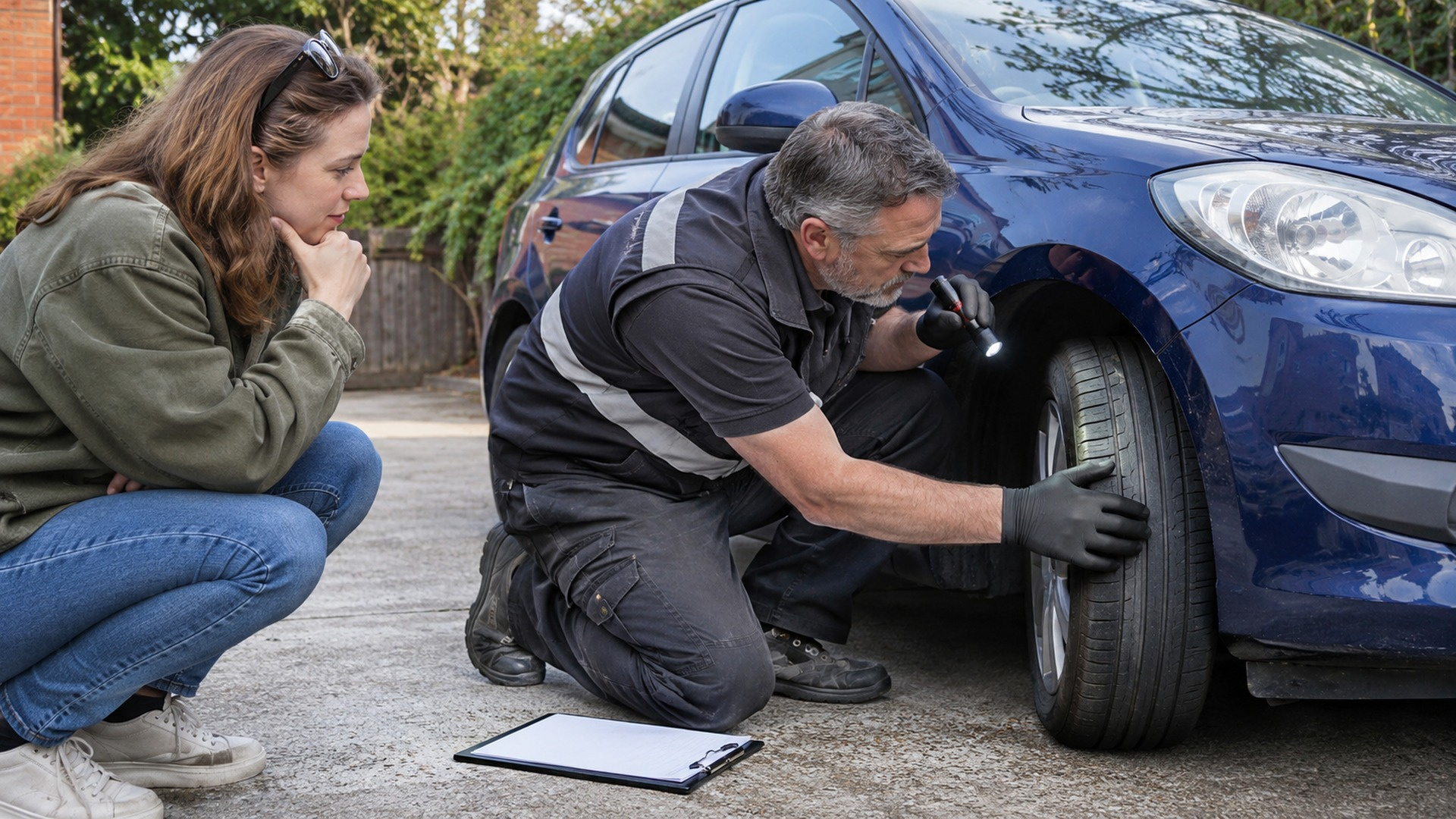
Pay attention to tyre condition as well as appearance. Correct pressure and sufficient tread matter for grip and control; TyreSafe explains what to check. Ask when the tyres were fitted and budget for replacements if needed.
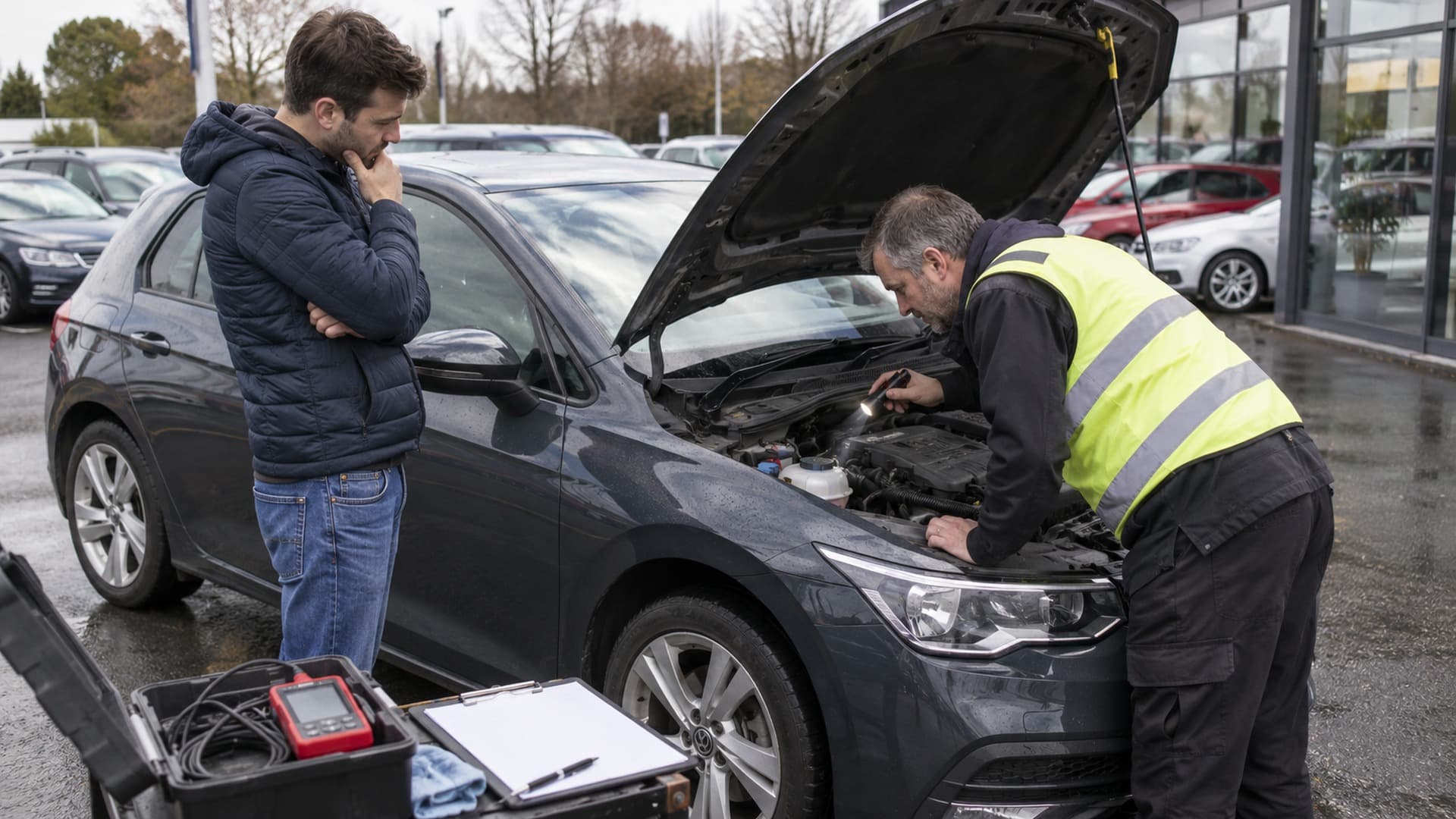
Before paying, arrange an independent inspection by a suitably qualified professional. Agree beforehand who pays and ask for a written report. An inspection can help identify concerns but cannot promise that no fault will develop later.
Make the test drive count
Arrange an insured, lawful test drive with the seller and confirm who may drive. Start from a stationary position, try normal acceleration and braking, and notice whether the car pulls to one side or makes unusual noises. Use a route that includes the conditions you normally encounter, if safe and practical.
Check visibility and comfort when parking. Avoid aggressive manoeuvres. If something feels wrong, ask the inspector to assess it.
Decide without rushing
Compare the inspection findings and total ownership costs with your shortlist. Ask for agreed repairs and the final price in writing, and read the sales agreement before paying. Confirm what is included, which documents you will receive and the steps for transfer.
If the seller refuses reasonable checks or pressures you for an immediate payment, take a step back. The best first car is one that fits your life and budget, with a history and condition you understand well enough to make an informed decision.
Comments
Newest firstLoading comments…