




Buying a family car: how to compare space, safety and running costs
The right family car is not necessarily the biggest vehicle on the showroom floor. It is the one that carries the people and things you use every week, offers safety equipment appropriate to your needs and remains affordable after purchase.
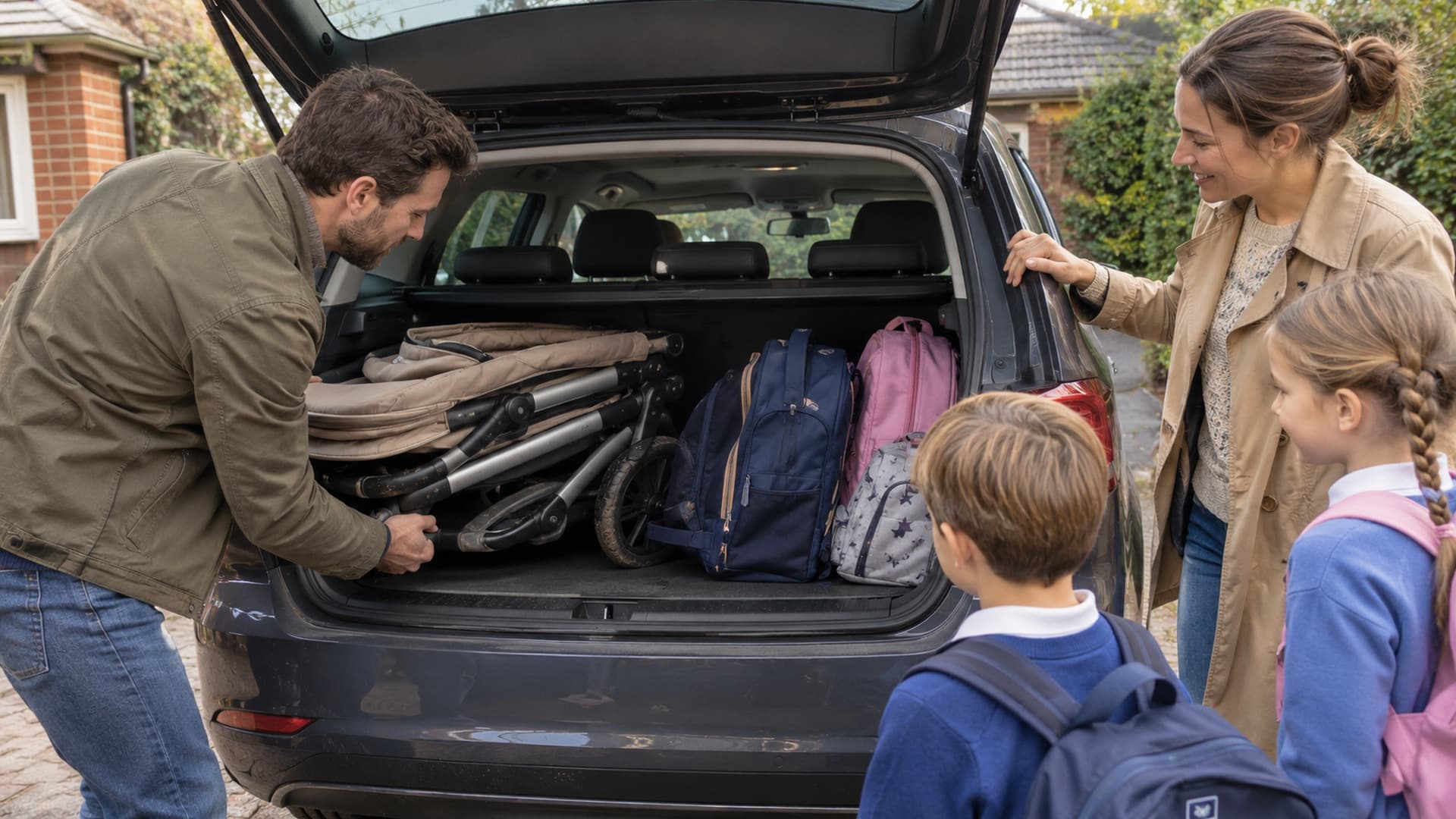
Photographs and advertised boot figures are useful for a shortlist, but they cannot show how easily your child seat fits or whether the school bags and pram fit together. Bring your real requirements to the viewing and test each car in the configuration your family will use.
Start with your actual passengers
Count the people who travel regularly and note how often you need extra seats. A seven-seater may be useful when grandparents or children's friends travel frequently. If those journeys happen only occasionally, compare the additional purchase and running costs with other practical arrangements.
Ask adults and older children to sit in their usual positions. Check legroom, headroom, seat-belt access and how easily passengers enter and leave. If there is a third row, try getting into it with the second row positioned for everyday use. Some seats are practical for short trips but less comfortable over a long distance.
Check that doors can open in a narrow parking bay.
Try the child restraints
If your family uses child seats, take the actual restraints to the viewing when the seller agrees. Check the vehicle handbook and the restraint instructions for approved positions and fitting methods. Confirm that the restraint can be secured correctly and that the belt or attachment points are accessible.
With the child seat installed, check the space left for front passengers and anyone seated alongside it. A wide rear bench does not guarantee that three restraints or two restraints and an adult will fit safely. Ask the restraint manufacturer or an appropriate specialist if compatibility is unclear.
Never improvise an attachment.
Pack the boot before you decide
Bring the items that usually travel together: perhaps a folded pram, shopping bags, school bags or a wheelchair. Check the shape and height of the opening as well as the quoted volume. A high loading lip may make frequent lifting awkward even when the capacity looks generous on paper.
If you need all three rows, put them up before testing luggage space. A vehicle that carries a large load with rear seats folded may offer much less room when every seat is occupied. Check where the parcel shelf, spare wheel or repair kit is stored and whether that arrangement affects usable space.
Look for suitable load-securing points and follow the manufacturer's guidance. Heavy or loose items should not be able to move freely towards passengers during sudden braking. Keep rear visibility and access to emergency equipment in mind.
Compare safety on the specific version
Ask for the South African equipment list for the exact year and derivative. Confirm the airbags and their coverage, seat belts, electronic stability control and child-restraint provisions. Additional driver-assistance features can be useful, but learn what they do and do not assume that a feature advertised on a higher trim is fitted to the car you are buying.
Independent testing can help you compare relevant information. Check the assessed model, market, equipment and test date before applying a result to your choice. The Global NCAP Africa results provide published assessments, but not every locally sold derivative has a directly matching test.
For a used car, ask about damage and repairs and arrange an independent condition inspection. A safety rating describes a tested specification, not the current condition of every example on the second-hand market.
Calculate the family budget
Consider the purchase price or finance repayment alongside insurance, fuel, parking, tyres and scheduled servicing. Request insurance quotes for the vehicles on your shortlist and use your expected annual distance when estimating fuel. A more expensive car can cost more in ways that are not obvious from the instalment alone.
Read the warranty, service-plan and maintenance-plan terms. Ask which work is included, how long cover lasts, what happens when the distance limit is reached and whether a used vehicle's remaining cover can be transferred. The AA's guide to plans and warranties explains why the products should be compared separately.
Set aside a reserve for costs not included in the plan. Tyres, unforeseen repairs and insurance excesses can arrive at inconvenient times, even when routine services are covered.
Take a representative test drive
Drive with the passengers and load you normally carry if the seller permits it and the vehicle is insured for the drive. Use familiar streets, a parking area and, where practical, a road that reflects your longer trips. Check visibility, steering, braking feel and how easily you can use the controls.
Pay attention to the everyday routine: fitting restraints, buckling children in and loading the boot. A short drive without passengers may miss the issues that will matter every morning. Do not perform unsafe manoeuvres to test a car's limits.
Afterwards, compare your notes and the full written quotations. The best family car is the one that handles ordinary journeys comfortably and safely while leaving enough room in the household budget for everything else.
Comments
Newest firstLoading comments…