




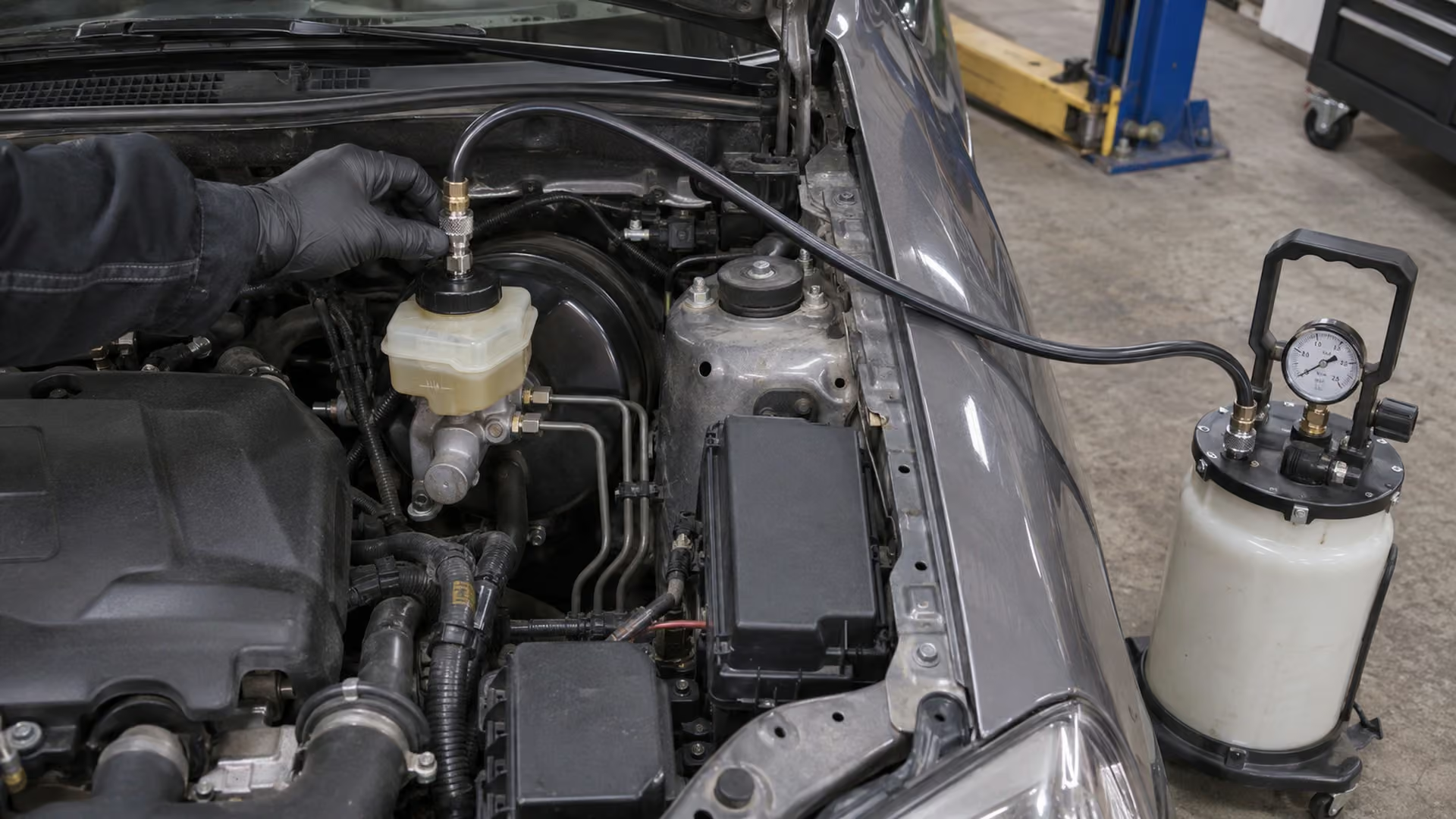
Brake fluid replacement: why time matters even when you drive little
A car that covers only a few thousand kilometres a year can still come due for new brake fluid. That catches out owners who base every service decision on the odometer. The useful number is the date of the last documented fluid change, checked against the schedule for the car and its market. A tick beside “brakes inspected” on an invoice can point to a check of pads, discs or fluid level. Ask what work was actually carried out.
The hydraulic system uses brake fluid to transmit the force from the pedal to the brakes. Most passenger cars use a glycol-based fluid that gradually takes up moisture. The fluid has to perform when it gets hot, so that change matters even if the reservoir looks full and ordinary braking feels consistent. ATE technical information on brake fluid
Why a short trip tells you little about fluid condition
Brake fluid needs to remain liquid across the temperatures it sees in service. Moisture lowers its boiling point. On a demanding descent, for example, repeated braking generates heat around the brakes. If the fluid boils, vapour can form in the hydraulic system. Vapour compresses more easily than liquid, which can reduce the effective transmission of braking force. A gentle drive to the shops may never reproduce the same conditions.
Dark fluid may justify a closer look, but a glance at the reservoir cannot tell you its boiling point. A workshop can use a suitable test where the manufacturer’s service procedure calls for one. Ask which method was used and how the result affects the recommendation. If the official schedule calls for a change by time, a quick visual check does not reset that interval. Conversely, new fluid is a service item, and a quote for it should identify the correct specification and scope of work.
Find the date on the invoice
Some manufacturers list a fluid interval separately from their normal mileage service. Honda, for example, specifies a three-year fluid replacement interval independent of mileage in some owner’s manuals. Use that as an illustration of how a time-based schedule works. Check the handbook or service documentation for your exact car before using that interval. Dealers and workshops can often identify the correct schedule from the vehicle identification number, especially if an older handbook has gone missing. Example Honda maintenance schedule
Imagine a weekend car serviced in 2023 that was driven just 8 000 km over the following three years. The odometer figure alone tells you little about its fluid service. If its schedule says three years and the last itemised replacement was in 2023, that point arrives in 2026. If the only receipt says “brakes checked”, ask the workshop whether it has the job card. With uncertain records, have the next workshop establish what is due and put the date of any completed change on the new invoice.
What to ask when booking a fluid change
Give the workshop the model, year and vehicle identification number so it can select the correct fluid. Brake systems can have different requirements even when the products on the shelf look alike. Ask whether the work includes replacing fluid throughout the hydraulic system and following the manufacturer’s bleeding procedure. Suctioning old fluid from the reservoir and refilling it leaves fluid elsewhere in the system, including near the brakes, where heat is generated.
If you have a motor plan, ask whether the service is covered and how it will be recorded. If you are paying, request a line item that states the fluid specification and whether the quoted price includes the necessary labour. A dated job card makes future decisions easier. It also helps where two workshops have seen the same car and each may assume the other did the job.
If you use more than one workshop, check the jobs after both the regular service and a brake repair. Work that replaces a caliper may involve bleeding part of the system. Ask if it also included a scheduled full fluid exchange before treating the repair date as the new reference point.
When a brake symptom takes priority
A brake warning, a pedal that suddenly feels soft or sinks, or visible fluid loss deserves immediate attention. Find a safe place to stop and get professional help. A scheduled fluid change and a fault diagnosis are different work. Ask the repairer to investigate why the level is low or why the feel changed before relying on a routine service to solve the problem. A low level can have several causes, and adding fluid can hide evidence that would help the diagnosis.
Keep the date and mileage of the last replacement with the car’s records and put the next time-based due point alongside the next routine service. If you buy another low-kilometre car, use that same approach from the start. A service history that records what was changed and when is more informative than one that records only how far the car travelled. That small distinction is what stops a lightly driven car from quietly falling behind on this part of its maintenance.
Comments
Newest firstLoading comments…