-
1985: the first-generation BMW M5 establishes a new category of car – the high-performance sedan.
-
A successful concept: motor sport technology for everyday use.
-
Progress in M mode: engine output almost doubled, weight-to-power ratio consistently reduced.

Whether it was touring cars, rally cars, Formula 2 racers, a super sports car for the newly founded ProCar race series or the engine that powered the Brabham BMW team to the Formula One world title in 1983 – everything BMW Motorsport GmbH sent out onto the race track in its early years seemed hard-wired for success.
The strategy pursued by the overall BMW management following the birth of the subsidiary company in May 1972 had been vindicated quickly and in impressive style. Their idea was to concentrate expertise in the development and production of racing cars within a subsidiary company and to rigorously expand this knowledge base with the aim of adding to the brand’s legendary racing exploits during the pre-war era. This success whetted the appetite for more, and not only within the company’s corridors of power; it was hardly surprising that motor sport enthusiasts among BMW’s clientele repeatedly voiced their desire for more performance on the road as well.
All BMW Motorsport GmbH needed was the green light. The subsidiary had already stepped up the conception, construction and testing of its sports cars through the formation of separate development centres for engines and chassis technology. And its range of products had expanded to include track-oriented accessories and vehicle customisation options. It was time to take the next step, one that led directly to the creation of a series-produced car that would allow customers to experience race track technology on the road. This was the concept underpinning the BMW M5 unveiled to the public for the first time in February 1985 as a “stand-alone new car based on the proven BMW 5 Series”.
A sporting engine, a sedan and a totally new vehicle concept.
The engine under the bonnet of the BMW M5 had indeed paraded its exceptional qualities to impressive effect on the race track. In its slightly modified form, the straight-six powerplant from the mid-engined BMW M1 sports car now produced 210 kW at 6,500 rpm – almost three times the output offered by the entry-level BMW 5 Series model, the BMW 518i. The 3.5-litre four-valve unit developed maximum torque of 340 Newton metres, and the 0–100 km/h sprint was all over 6.5 seconds.
However, the magnetic appeal of the BMW M5 lay not only in its acceleration but also its appearance. Take away the subtle badges on the front and rear of the car and you’d have been hard pushed to tell the M5 apart from a standard BMW 5 Series Sedan. All of which made the performance of the new model – surpassed only by out-and-out sports cars – even more breathtaking. With a top speed of 245 km/h the BMW M5 was the fastest sedan of its day, and it was similarly unrivalled in other respects. A strengthened five-speed gearbox, rear axle differential lock, lowered sports suspension with single-tube gas-filled shock absorbers, high-performance brakes with a retuned anti-lock system, and special tyres whose reinforced sidewalls made them a precursor to today’s runflat items, together made up a harmonious, performance-focused overall concept.
BMW Motorsport GmbH had put in place a set of fundamental characteristics still found in all M cars today – and created an all-new segment in the process. The high-performance sedan was born, and 2,200 hand-built BMW M5s were sold within the space of just three years.
The second generation: even more powerful, even more distinctive.
A passing of the baton to the next generation of BMW 5 Series models also heralded a new version of the BMW M5, duly unveiled in 1988. Subtle modifications to the standard body design and bespoke light-alloy wheels gave the second BMW M5 a distinctive but still understated appearance. A hike in displacement, first to 3.6 litres and in 1992 to 3.8 litres, gave the six-cylinder in-line engine a boost in output to 232 kW and then 250 kW at 6,900 rpm. Peak torque initially stood at 360 Newton metres, rising to a heady 400 Newton metres, and 0–100 km/h took 6.3, later 5.9 seconds. Top speed was now an electronically limited 250 km/h.
The second BMW M5 also boasted bespoke suspension with self-levelling at the rear axle and a differential lock, and in 1992 it gained adaptive suspension with electronically controlled dampers to go with its more powerful engine. In 1994 the engineers at the recently rechristened BMW M GmbH also handed it a six-speed manual gearbox and a newly developed high-performance braking system. Its construction principle, derived from motor sport and still used in the latest compound braking systems today, features radial bearings for the brake discs’ friction rings. These allow the materials to expand freely in the heat generated under heavy loads, without compromising on braking comfort or the life of the discs. By 1995 the second generation of the high-performance sedan, available as an option with an even more tightly honed Nürburgring chassis, had notched up sales of over 11,000 units.
1998: the third BMW M5 – now with an eight-cylinder engine.
The third-generation BMW M5 brought even greater athleticism and individuality to the mix on its arrival in 1998. Powerfully sculpted front and rear aprons, accentuated side skirts, aerodynamically formed M exterior mirrors, 18-inch M light-alloy wheels in double-spoke design and a quartet of exhaust tailpipes were among its identifying features. The two pairs of tailpipes and large air intakes indicated that major changes had been made under the bonnet as well. The new model marked the debut of a V8 engine in a BMW M5, delivering the output and punch it needed to maintain its leading position in a segment since discovered by rival manufacturers.
When it came to output and torque, the 5.0-litre eight-cylinder powerplant appeared to be drinking from a bottomless well. At 6,600 rpm it sent 294 kW/400 horsepower charging through its six-speed-manual gearbox to the rear wheels, while torque hit an imposing 500 Newton metres. The third-generation BMW M5 raced from 0–100 km/h in just 5.3 seconds. Even its success in the marketplace hit new heights, with over 20,000 units sold worldwide up to 2003.
10-cylinder engine, sequential M Drivelogic gearbox: the fourth-generation BMW M5 delivers cutting-edge racing technology.
The principle of using race track technology to generate thrilling driving pleasure on the road was applied with even sharper focus in the fourth-generation BMW M5 presented in 2004. A high-revving V10 engine derived directly from Formula One and developing 373 kW, a seven-speed sequential M Drivelogic gearbox with Launch Control delivering maximum off-the-line acceleration, a variable, engine-speed-sensitive differential lock, and bespoke chassis technology including Electronic Damper Control (EDC) and a compound braking system gave the M5 outstanding performance capability. The premium characteristics of a luxury sedan, meanwhile, were added by features including advanced driver assistance systems such as Adaptive Headlights and the Head-Up Display.
Complete with individual throttle butterflies and Double-Vanos, the 10-cylinder engine powering the fourth-generation BMW M5 developed maximum output at 7,750 rpm and peak torque of 520 Newton metres. This unrivalled pulling power opened the door to acceleration of 0–100 km/h in 4.7 seconds and put smiles on the faces of motor racing fans and professional road testers alike. The V10 finished top of the overall rankings in the 2005 and 2006 Engine of the Year Award. And in the two years that followed, it headed the category for engines with displacement of more than 4.0 litres in this prestigious competition. By the time production of the fourth-generation BMW M5 came to an end in summer 2010, more than 20,500 of its kind had left the factory.
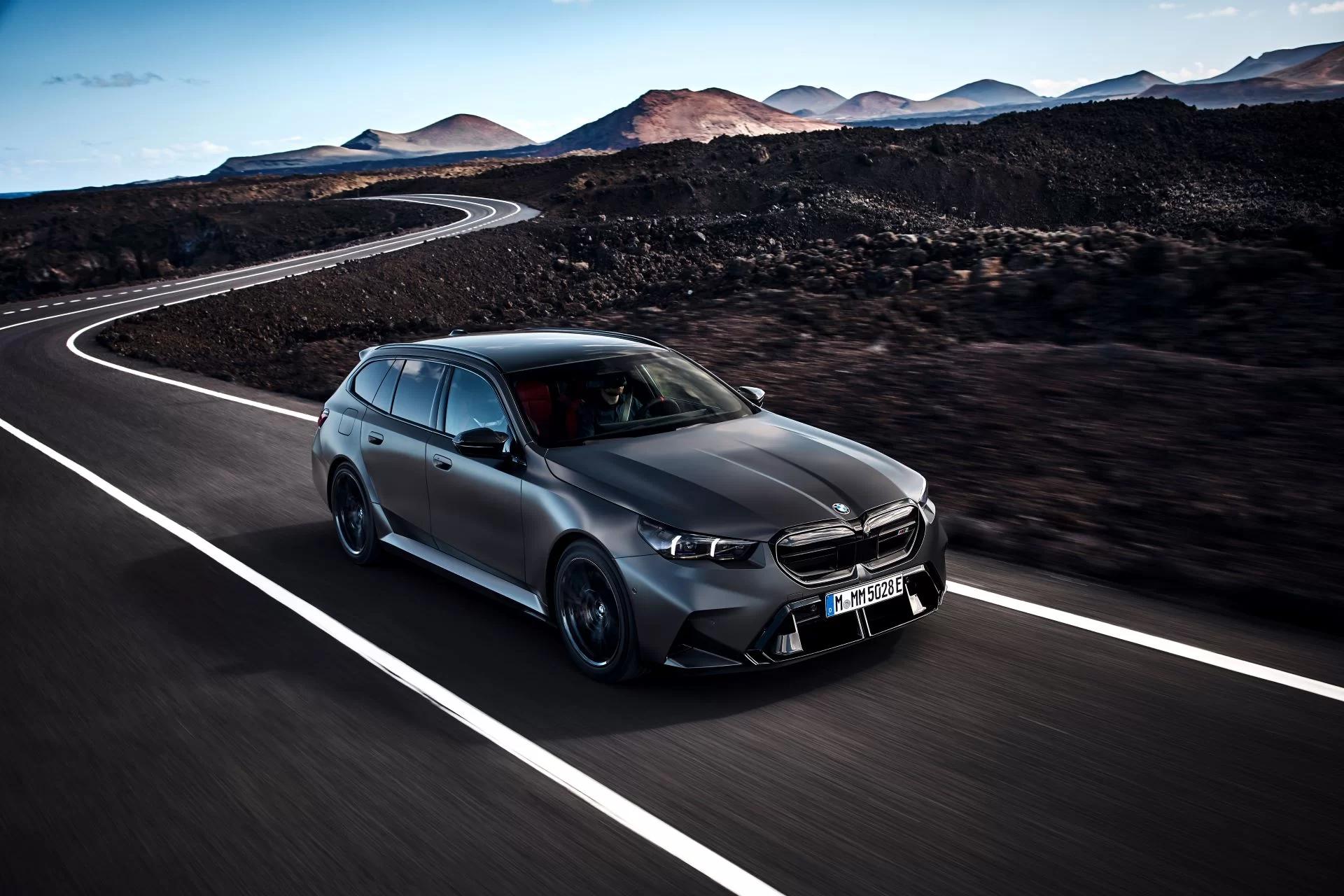
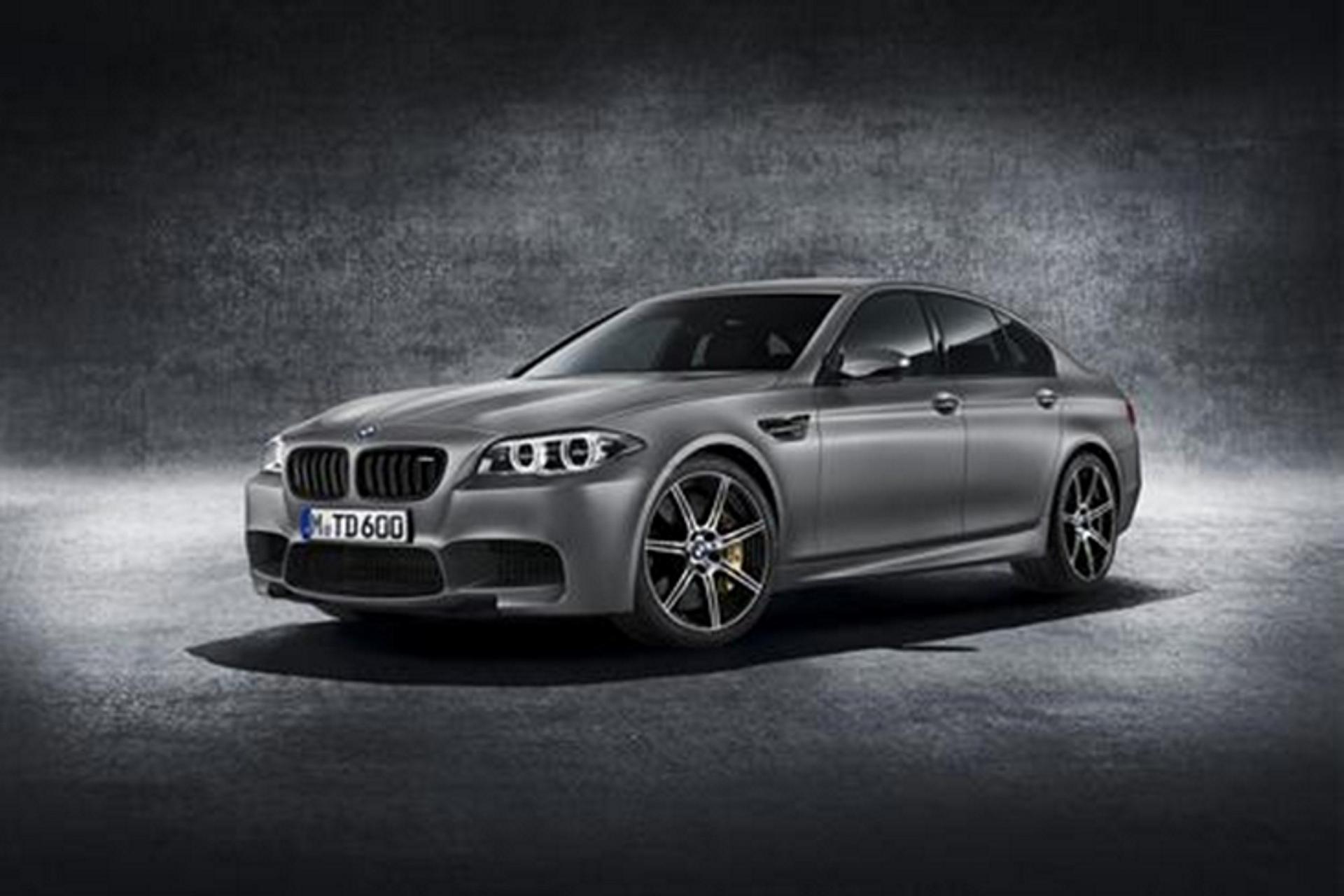
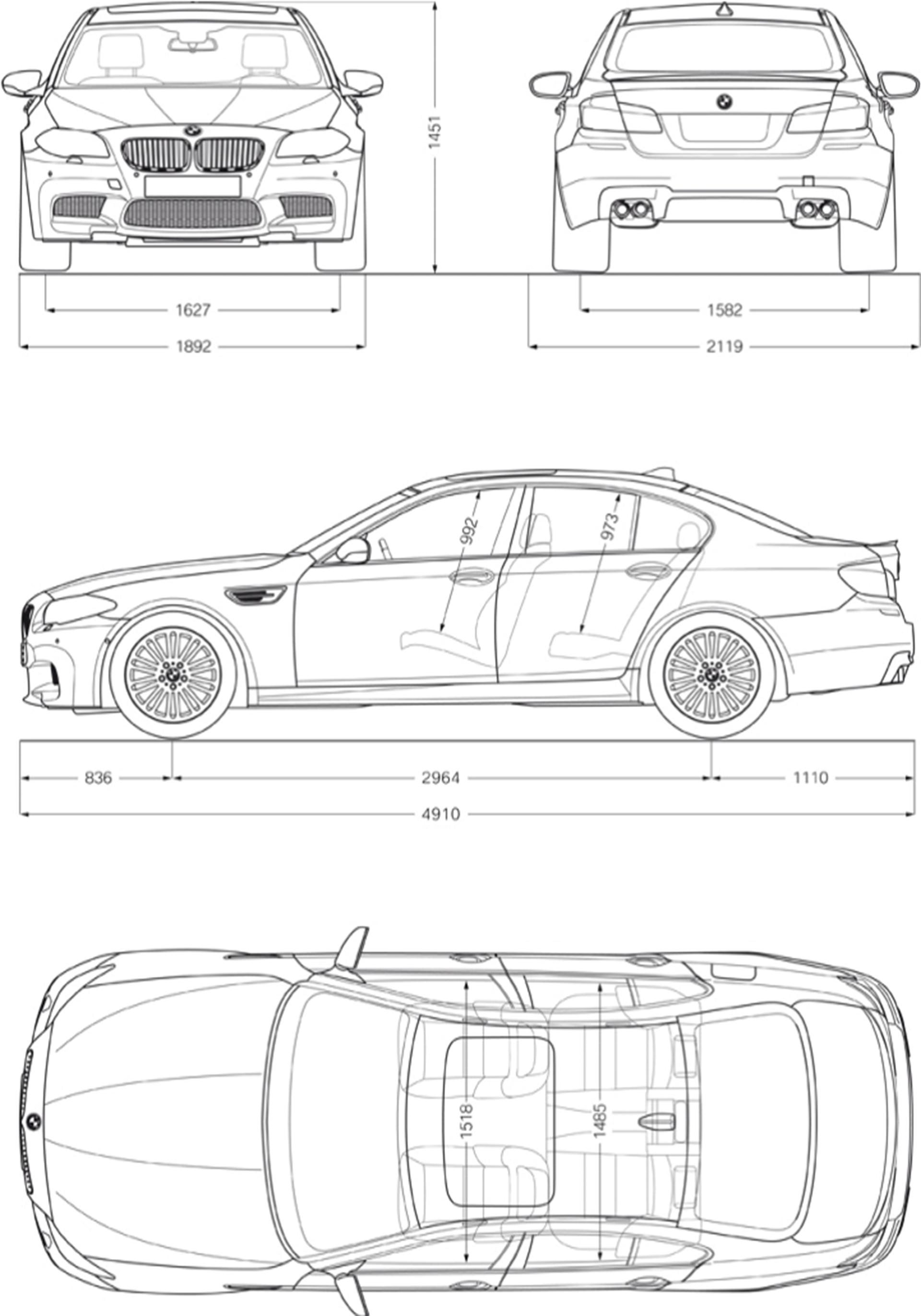
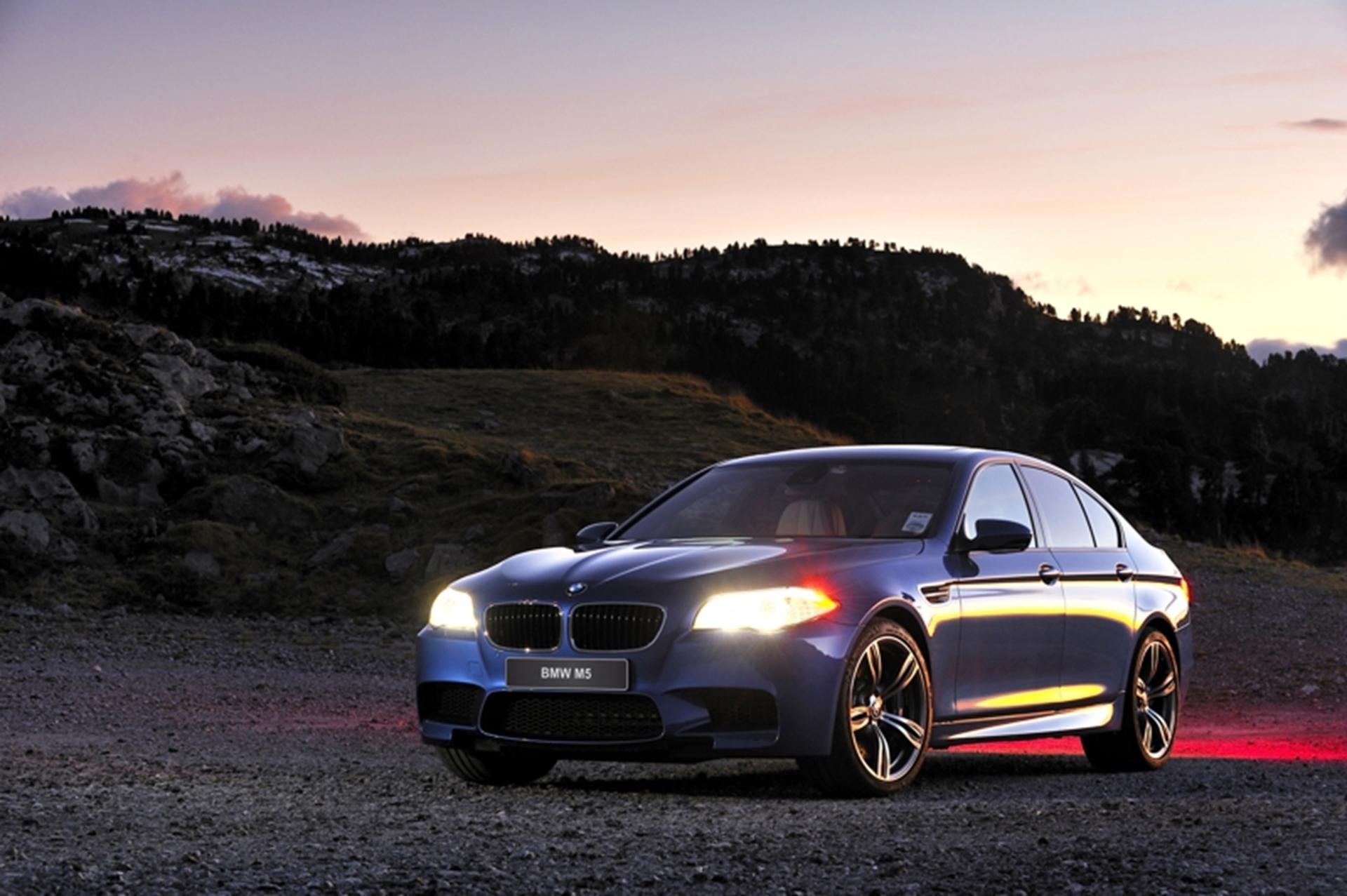
Almost 27 years after the launch of the first BMW M5, the fifth generation of the model is poised to take over at the pinnacle of the high-performance sedan segment established by the pioneering original. The latest model’s devotion to constant innovation and its rigorous adherence to the harmonious overall concept of engine, chassis and body traditionally espoused by M models take the infectious allure of this breed of car into a new dimension and ensure that it outstrips even the outstanding attributes of its predecessor.
Each of the four previous editions of the M5 has encapsulated the inimitable M feeling with its own individual flair. More objectively, comparing the models on paper reveals the constant technological progress that has been achieved through the five generations. The maximum engine output of the BMW M5 has virtually doubled over the years, from 210 kW/286 hp to 412 kW/560 hp, and peak torque has risen by exactly 100 per cent – from 340 Newton metres to 680 Nm today. And yet, over that time average fuel consumption of the M5 has improved from 11.3 litres per 100 kilometres in the first-generation model to 9.9 l/100 km for the new BMW M5. And impressive progress has also been made on an even more telling figure when it comes to the driving experience: the weight-to-power ratio of the first BMW M5 was 5.0 kilograms, but that figure has now fallen to 3.3 kg.