




A practical tyre-check routine for everyday driving
Tyres connect your car to the road, but their condition can change gradually enough to escape notice. A simple routine can help you spot pressure loss, damage or uneven wear before a long journey. It does not replace a professional inspection, and a tyre that looks normal can still have a problem.
Check the tyres when the car is parked safely on level ground. Keep a reliable pressure gauge available, find the vehicle manufacturer's recommended pressures, and give yourself enough time to look at each wheel rather than checking only the one that appears low.
Find the right pressure first
The recommended pressure is usually listed on a vehicle label, often in a door opening, and in the owner's manual. The label may specify different values for the front and rear, or for a fully loaded vehicle. Use the recommendation applicable to your car, tyre fitment and load. Do not treat the maximum pressure moulded into the tyre sidewall as the normal setting for every vehicle.
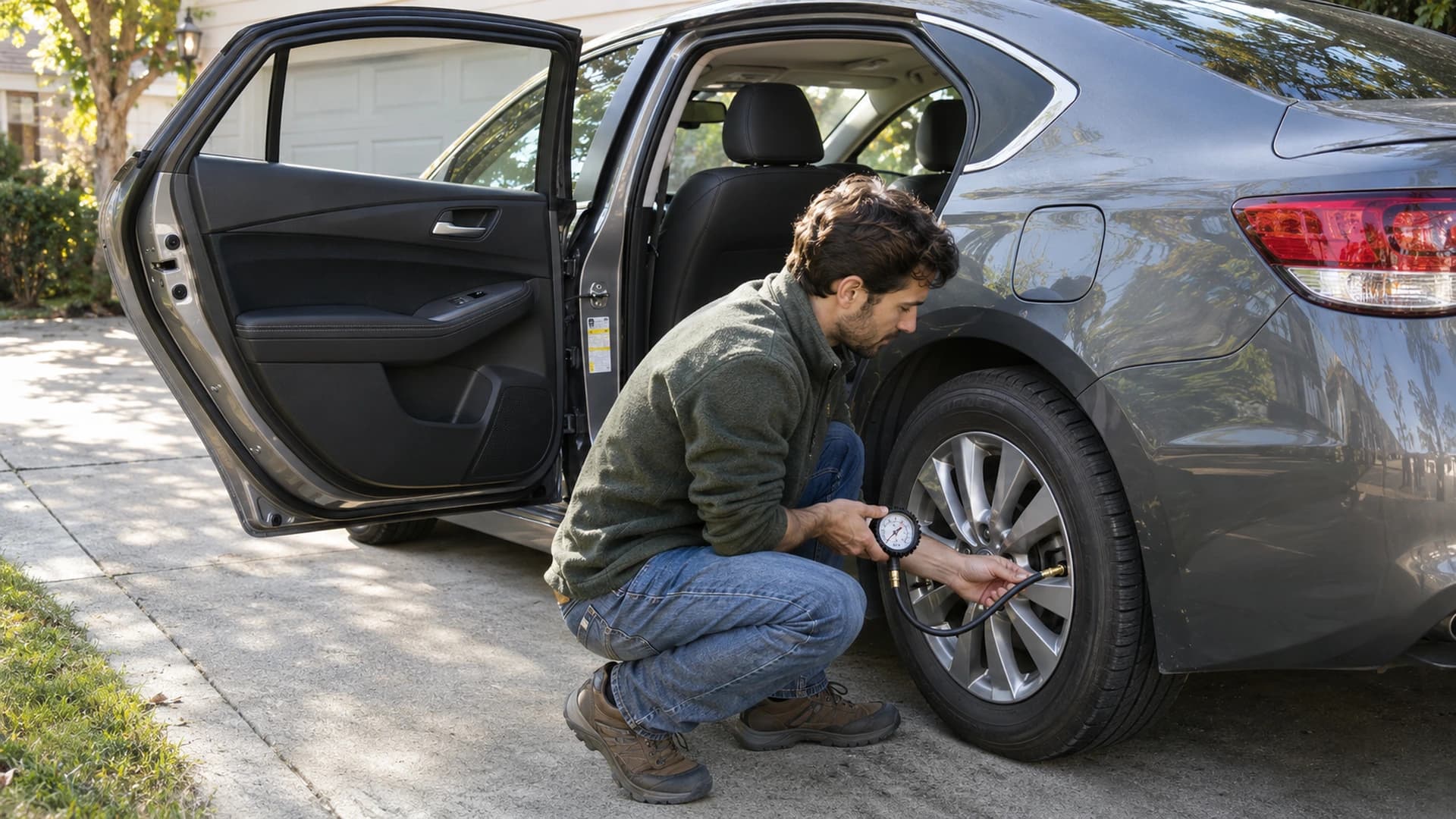
Pressure should be checked when the tyres are cold, following the vehicle manufacturer's instructions. Bridgestone South Africa advises that cold tyres, or tyres driven only a short distance, are the best basis for measuring pressure. Driving warms the tyre and raises its pressure, so avoid releasing air from a hot tyre simply because the reading is above the cold recommendation.
Remove the valve cap, attach the gauge firmly and compare the reading with the correct figure. Add air if needed, recheck, and replace the cap. Check all four tyres and the spare if the vehicle has one. A temporary spare can have a different specified pressure and usage restriction.
Look at the tread and sidewalls
Walk around the vehicle and inspect the visible tread and sidewalls. Look for cuts, bulges, embedded objects, cracks and unusual wear. A bulge or serious sidewall damage deserves prompt professional attention. Do not pull out an embedded object yourself if doing so could release the remaining air; have a tyre specialist assess it.
Look across the width of each tread as well as around the circumference where visible. Uneven wear can point to a pressure, alignment, suspension or other issue, but the pattern alone is not a reliable diagnosis. A specialist can check the cause and advise whether the tyre remains safe to use.
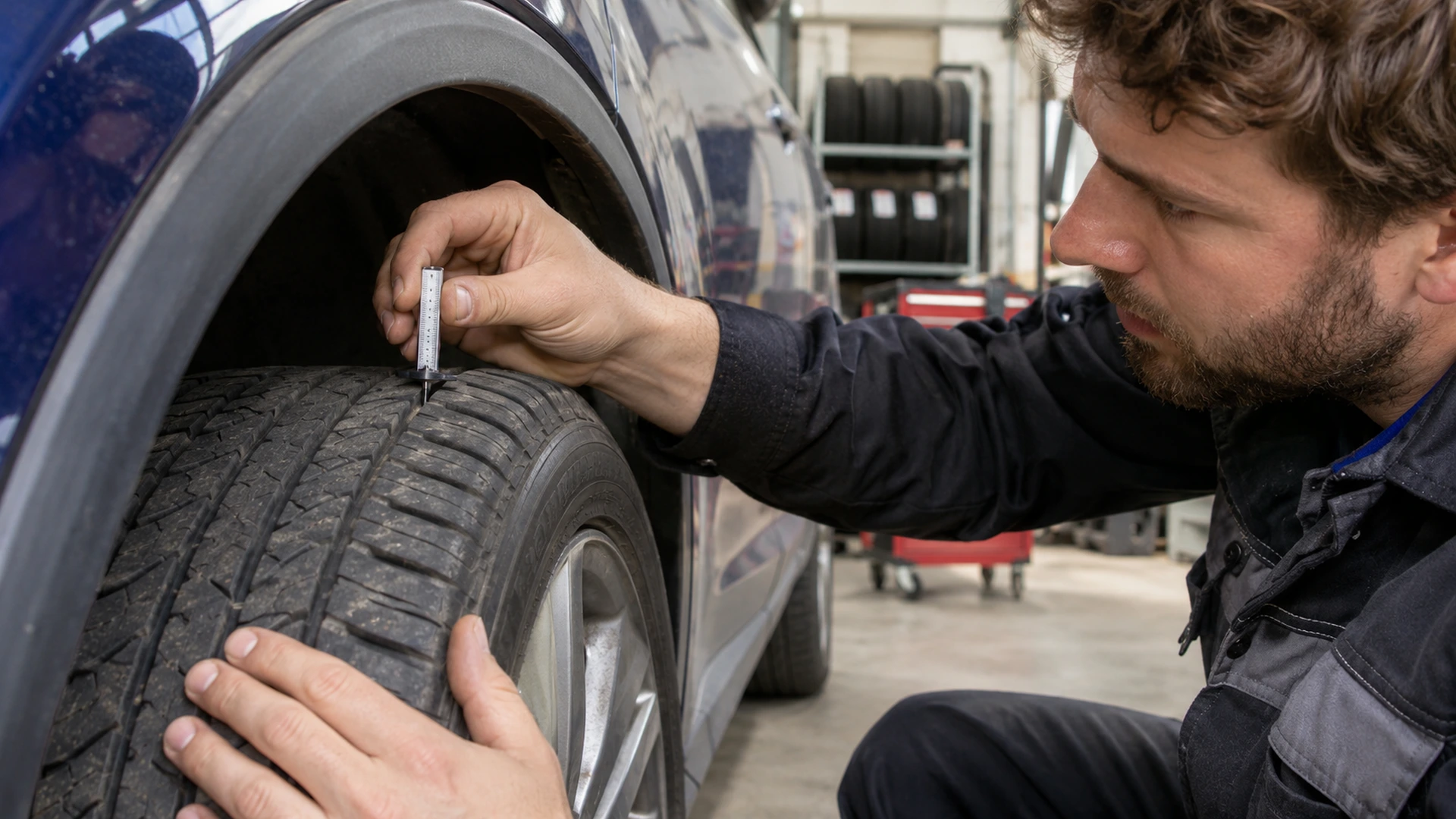
Tread wear indicators can help show when a tyre has worn down, but check current South African requirements and the manufacturer's recommendations rather than relying on a visual guess. Replace tyres before they become unsafe, and remember that wet-road performance can deteriorate as tread wears. A tread-depth gauge provides a more useful measurement than an improvised object.
Pay attention to changes on the road
A new vibration, pulling to one side, repeated pressure loss or an unusual noise needs investigation. The cause may be a tyre, wheel, alignment, brake or suspension issue. Avoid trying to identify the cause while driving; stop somewhere safe and arrange professional help if the vehicle feels unsafe.
A tyre-pressure monitoring system can provide a warning, but it is not a substitute for regular checks. Some systems report pressure directly; others infer a problem from wheel behaviour. Learn what the warning light means in your car and follow the handbook's reset and calibration instructions after correcting pressures or changing tyres.
If a warning appears, slow down smoothly, avoid abrupt manoeuvres and stop in a safe place. Inspect and check the pressure if it is safe to do so. If a tyre is visibly damaged or flat, do not continue driving on it unless the vehicle and tyre manufacturer specifically permit limited operation and you can comply with their instructions.
Plan for a puncture
Find out whether your vehicle carries a full-size spare, a temporary spare, run-flat tyres or a repair kit. These are not interchangeable. Read the supplied instructions before you need them and check that the tools, locking-wheel key and any repair-kit consumables are present and usable.
If a puncture occurs in a dangerous location, prioritise getting people to safety and call for assistance. Do not attempt to change a wheel in moving traffic or on unstable ground. A temporary repair is not a permanent fix; have the tyre inspected promptly and follow the repair-kit or spare-wheel limits.
Make the routine easy to repeat
Check pressures regularly and before a long trip or a change in load. Use the same trustworthy gauge where practical, and make a note if a tyre repeatedly needs air. Before travelling with a full cabin and luggage, consult the loaded-pressure recommendation and check the spare and recovery arrangements.
When replacement is needed, ask a reputable tyre specialist to match the vehicle's required size, load and speed ratings. Discuss any recommended pairing or replacement pattern for your drivetrain. Keep the invoice and note the date and mileage so that you can track future wear.
A few minutes spent checking tyres can reveal issues worth addressing. The goal is not to diagnose every fault yourself; it is to notice changes early and get qualified help when the condition is uncertain.
Comments
Newest firstLoading comments…