


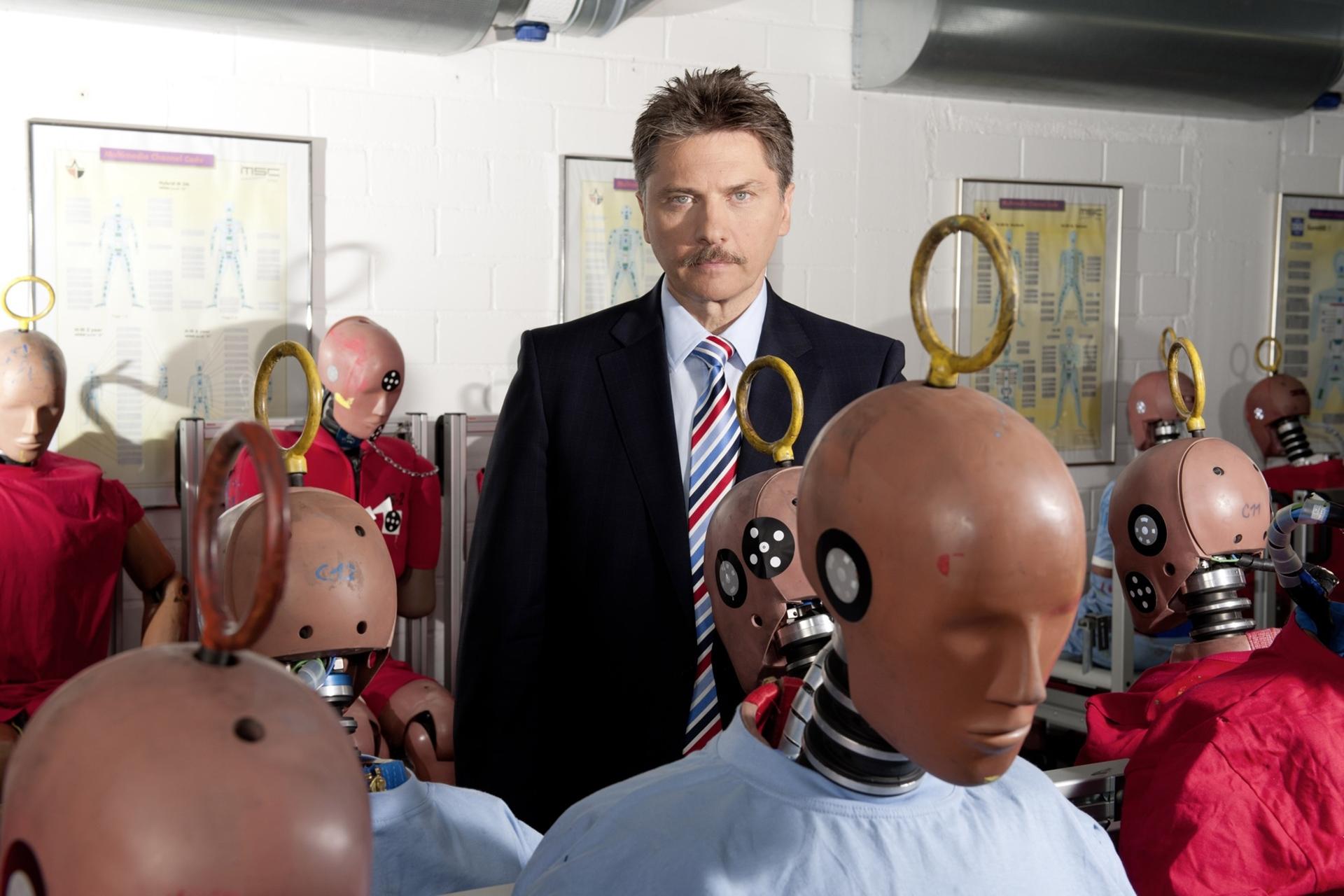
Interview with Prof. Dr. Ing. Rodolfo Schöneburg, Head of Passive Safety and Vehicle Functions at Mercedes-Benz Cars
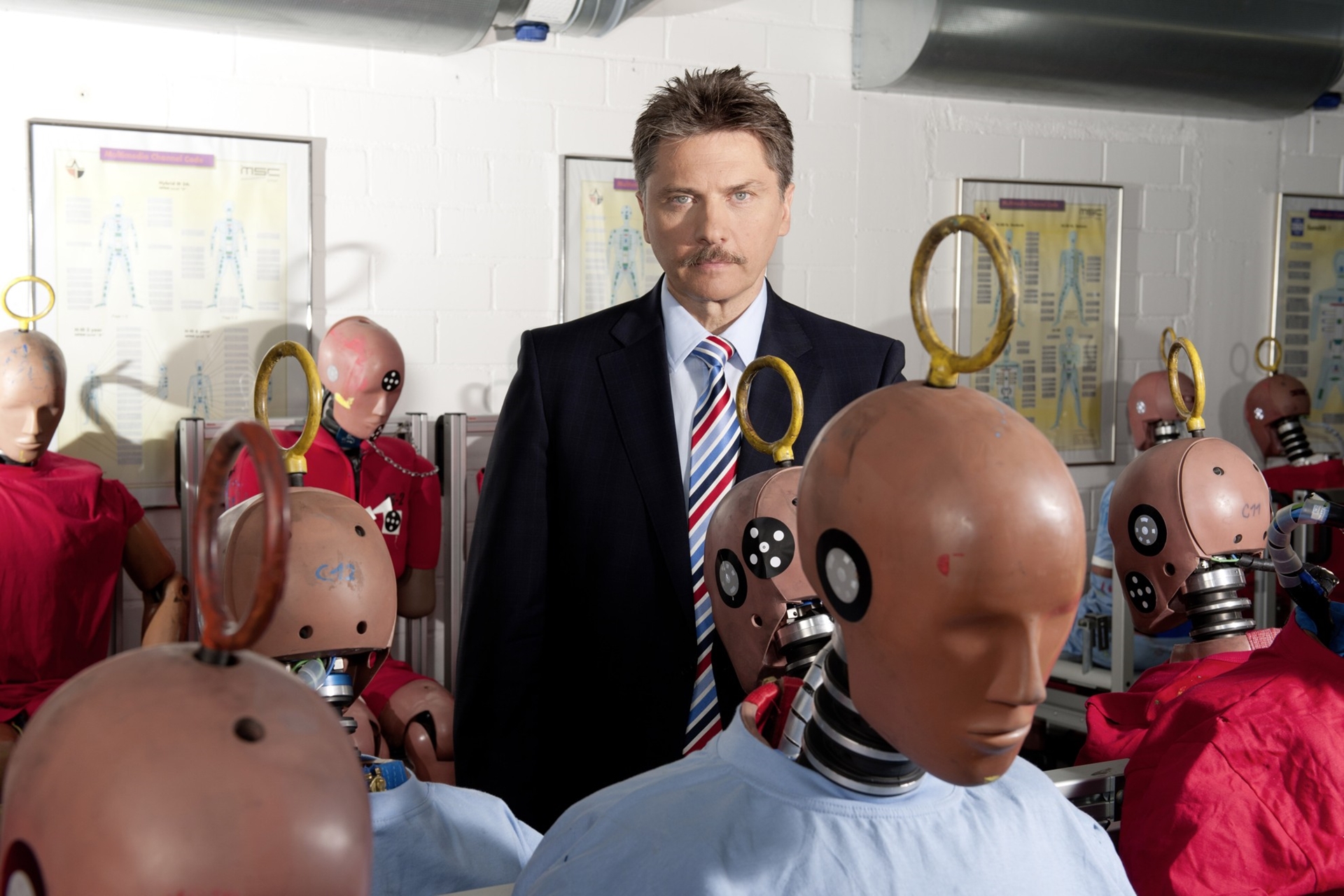
Prof. Dr. Ing. Rodolfo Schöneburg was born on 30 October 1959 in Ciudad Bolivar in Venezuela, studied aerospace engineering and obtained his doctorate at the Technical University of Berlin. He holds an honorary professorship at the College of Technology and Business Economics (HTW) in Dresden.
He has been active as the head of the centre for safety/vehicle functions at Mercedes-Benz since April 1999. It was under his aegis that the PRE-SAFE® anticipatory occupant protection system entered series production in 2002, with which Mercedes-Benz started a new era in vehicle safety. Here are some of Prof. Schöneburg’s comments on the history and future of PRE-SAFE®.
Professor Schöneburg, preventive safety systems went into series production for the first time in 2002 with the launch of PRE-SAFE® in the S-Class at that time, but how did the history of such systems begin?
Schöneburg: The concept of PRE-SAFE®, namely preventive safety, began as early as the 1990s. How would future safety systems function? Would we always have to wait with our safety systems until an accident actually happened? Or could we activate the systems preventively, i.e. before the accident, when the hazardous situation has been detected? Would it not be possible to improve certain elements in the vehicle in advance, so that subsequently you would be in a better position in the event of an accident? These were the initial ideas. You could compare all of this with human reflexes: in a hazardous situation, you try to hold your hands in front of your head, for example. We wanted to achieve something similar in vehicles.
And at what point did the decisive breakthrough come?
By the end of the 1990s, Brake Assist and ESP® (Electronic Stability Program) were fitted as standard in all vehicles. As a result, we were now able to detect specific hazardous situations. That is to say, in the event of emergency braking and severe over or understeer, we knew that there was the risk of an accident, and as such we had information at our disposal to enable us to intervene in a preventive way for the first time. The other decisive step was the development of reversible protection systems, in particular the reversible belt tensioner.
Did both of these factors therefore represent a paradigm shift in automotive safety?
Schöneburg: The core element was the consolidation of active and passive safety. Passive safety has always dealt with minimising the consequences of an accident, in particular from the moment at which contact with the other party involved in the accident occurs. Active safety has dealt with driving safety and the avoidance of accidents, as well as maintaining the driving stability of the vehicle. Since the development of PRE-SAFE®, we have moved into a bordering area, the area close to the accident in which we can discuss the probabilities of an accident. The fact that we started to exploit this particular area was a real leap forward; a completely new level of discussion on the topic of safety therefore became possible. How innovative this step was can be seen in the fact that test institutes such as Euro NCAP took years to incorporate preventive safety systems into their analyses. Even other vehicle manufacturers have started to follow our approach in the meantime and also started to integrate preventive protection systems into their models. But that is what distinguishes a true innovation: rather than being just an individual topic it is an issue which significantly influences the development of future systems. Recently aspects of comfort have also started to come into play, because we are providing increasing support to the driver in traffic situations. This networking approach to the “Intelligent Drive” concept had its origins in the development of PRE‑SAFE®.
Initially only a few signals were available when it came to detecting critical situations, such as ESP ® and Brake Assist. How have things moved on in this area today?
Schöneburg: Yes, that’s right. Figuratively speaking, in the beginning we only “sensed” danger, that is to say we recognised situations involving braking or acceleration. Today the vehicle can also “see”. When it comes to sensor systems, a tremendous amount of progress has been made in the past ten years. Today we have a whole host of radar sensors and cameras at our disposal, and we also have information on the behaviour of the driver, such as whether he has his hands on the steering wheel or how quickly he is steering. As a result, we are able to analyse increasingly complex situations and, thanks to improved sensor systems for the surrounding area, we are also able to recognise potential road traffic hazards even better than before. A decisive factor for the new functions has also been the combination of algorithms, which take their data from the enhanced radar sensors and new stereo camera. We call this “sensor fusion”. As a result, for the first time the new BAS PLUS Brake Assist system with Cross-Traffic Assist is able to detect crossing traffic and pedestrians. And PRE-SAFE® PLUS can trigger preventive measures in the event of an impending rear-end collision. Figuratively speaking: the next S‑Class not only has eyes at the front, but also 360-degree all-round vision.
And what is the next step? With the ESF 2009 research vehicle three years ago, you already provided a far-reaching insight into future developments in the field of safety technology.
Schöneburg: Thanks to ever-improving sensor technology, in the coming years we will experience a further paradigm shift. So far it has been the case that have been able to predict an imminent accident with increasing efficiency. But there has always been the option of the collision not occurring, therefore all PRE-SAFE® measures have had to be reversible.
With PRE-SAFE® Impulse, which will celebrate its premiere in the coming year, for the first time we are exceeding this boundary: with this, at an early phase of the crash, before the resulting deceleration starts to increase, the driver and front passenger are pulled against the direction of the impact. This helps to considerably reduce both the risk and severity of injury in a front-end crash. Following in the wake of reliably detecting an accident in this way are further innovative implementation measures. These include some of the ideas presented in the ESF 2009, such as PRE-SAFE® Impulse and PRE-SAFE® Structure.
PRE-SAFE® Impulse is not restricted to a front impact. In the event of a side impact, PRE-SAFE® Impulse is able to reduce the upper body loads on the occupants by around a third, whereby the system preventively moves the occupants by up to 50 mm towards the centre of the vehicle in advance. For this, the anticipatory restraint system uses the air chambers in the side bolsters of the seat backrests. And in the case of PRE-SAFE® Structure, inflatable metal structures save weight or increase the stability of structural components. In an idle state, the metal section is folded away to save space. If its protective effect is called for, a gas generator provides an internal pressure of 10 to 20 bar within fractions of a second, and the section is unfolded to provide significantly more stability.
Innovations are playing an increasingly significant commercial role, and PRE‑SAFE® has made a major contribution to reinforcing the position of Mercedes‑Benz as a safety pioneer. How can you protect this competitive advantage against those wishing to copy your measures?
Schöneburg: Our goal is to maintain our role as a trendsetter in the area of safety. We simply want to prepare the way, and when others follow us along this same route then I think that is a major endorsement of our work. I believe that is what it is all about: if possible making innovations in the field of vehicle safety accessible to others. It is in our interests to increase road safety. And it has traditionally been the case: the inventor Béla Barényi worked for us and registered a great number of patents for the company. He made a major contribution to vehicle safety – he discovered the crumple zone, and developed the impact absorber in the steering wheel. And as a company we have never used any of these patents to block the competition. And, most importantly, after introducing new safety technologies into our luxury class, we also try to introduce them as quickly as possible across our entire vehicle range. As such, the new A and B-Class can equally be regarded as pioneers in the field of safety, with COLLISION PREVENTION ASSIST and PRE-SAFE®.
How does the transfer to the competition work? Are others now developing systems further or are they able to take on your system by acquiring it from you under licence?
Schöneburg: This mainly occurs via the supplier industry. They develop individual systems for us, and then this gives us the opportunity to use them exclusively for a specific period. Or we release a system from the very outset. This normally also helps us, because the numbers then increase and the system therefore becomes more favourably priced.