


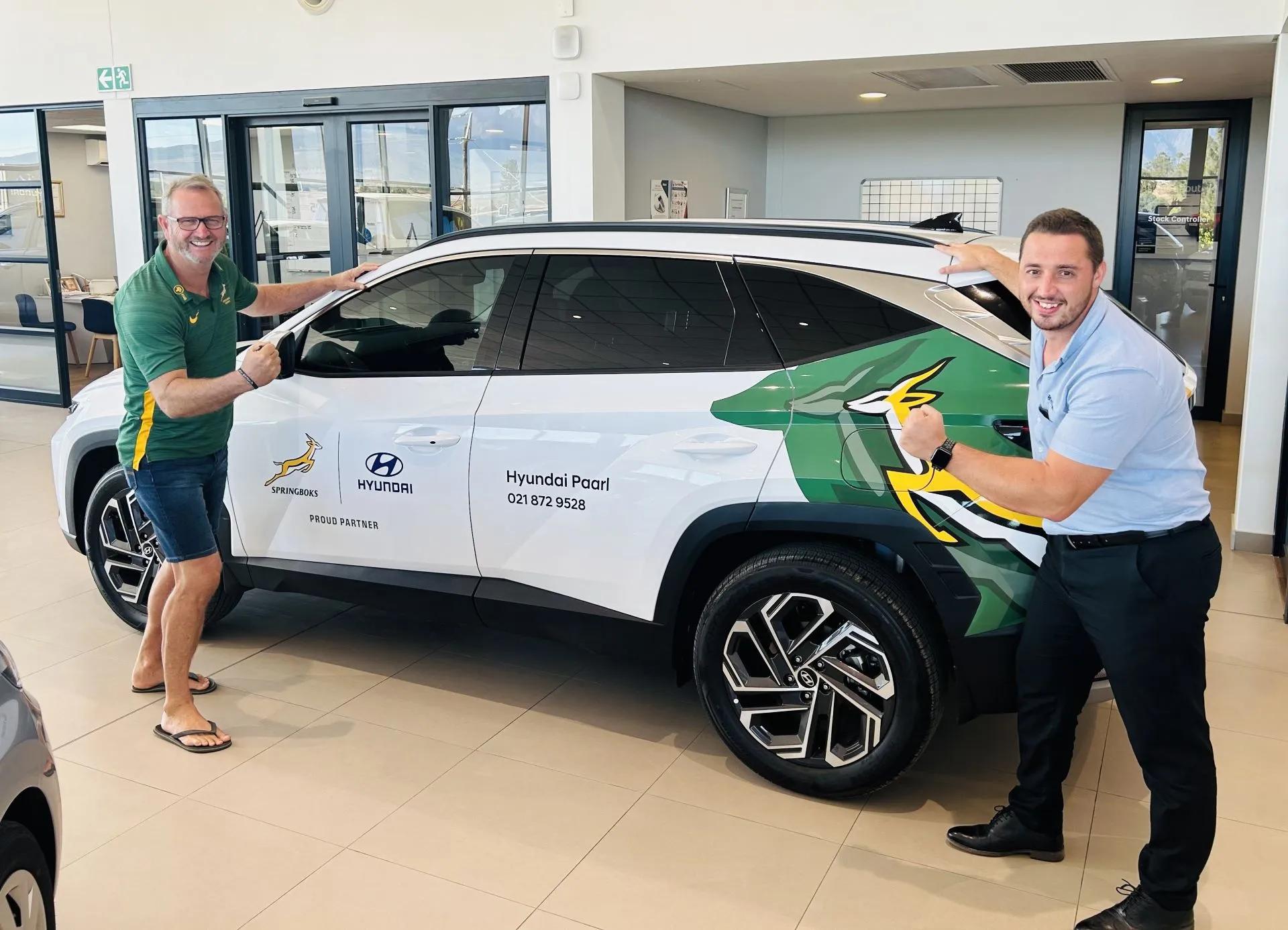
In a move that underscores the growing momentum behind women’s rugby in South Africa, Hyundai Automotive South Africa has partnered with Swys de Bruin, head coach of the Springbok Women, to enhance mobility and expand the reach of the national programme.
At the heart of the collaboration is the provision of the all-new Hyundai TUCSON, a vehicle designed to meet the demands of extensive travel across the country’s varied terrain. For de Bruin, whose responsibilities extend well beyond matchday tactics, reliable transport is a critical enabler in identifying and nurturing talent at grassroots and provincial levels.
“Coaching the national team extends far beyond the field,” de Bruin explained. “A large part of the job involves being on the road and working with provincial structures. Having the mobility and reliability of the Hyundai TUCSON allows me to perform those duties more effectively.”
The partnership reflects Hyundai’s broader commitment to supporting initiatives that drive meaningful impact through sport and leadership. By aligning with a figure like de Bruin, the brand reinforces its focus on resilience, performance and long-term development, values that resonate strongly within both the automotive and sporting arenas.
According to Stanley Anderson, CEO of Hyundai Automotive South Africa, the collaboration is as much about enabling progress as it is about recognition. “Swys de Bruin embodies leadership, resilience and the pursuit of excellence, values that strongly align with the Hyundai brand. This partnership is about supporting and enabling a coach who is investing in the future of the sport.”
The Hyundai TUCSON, with its blend of practicality, advanced technology and modern design, is well suited to the demands of a national coaching role that requires frequent travel across urban centres and remote regions alike. More importantly, it becomes a tool that facilitates deeper engagement with local rugby structures, where the next generation of players is emerging.
For women’s rugby in South Africa, the timing is significant. The sport continues to gain traction, with increasing participation and visibility on both domestic and international stages. Access, however, remains a key challenge, particularly when it comes to identifying talent in underserved communities.
“The rugby women’s game in South Africa is gaining incredible momentum,” de Bruin added. “Partnerships like this allow us to reach more communities, discover more talent and build a more competitive national team.”
By enabling greater mobility, Hyundai’s involvement extends beyond brand association. It becomes part of the infrastructure supporting the sport’s growth, helping to bridge the gap between potential and opportunity, and ensuring that talent, regardless of geography, has a pathway to the national stage.