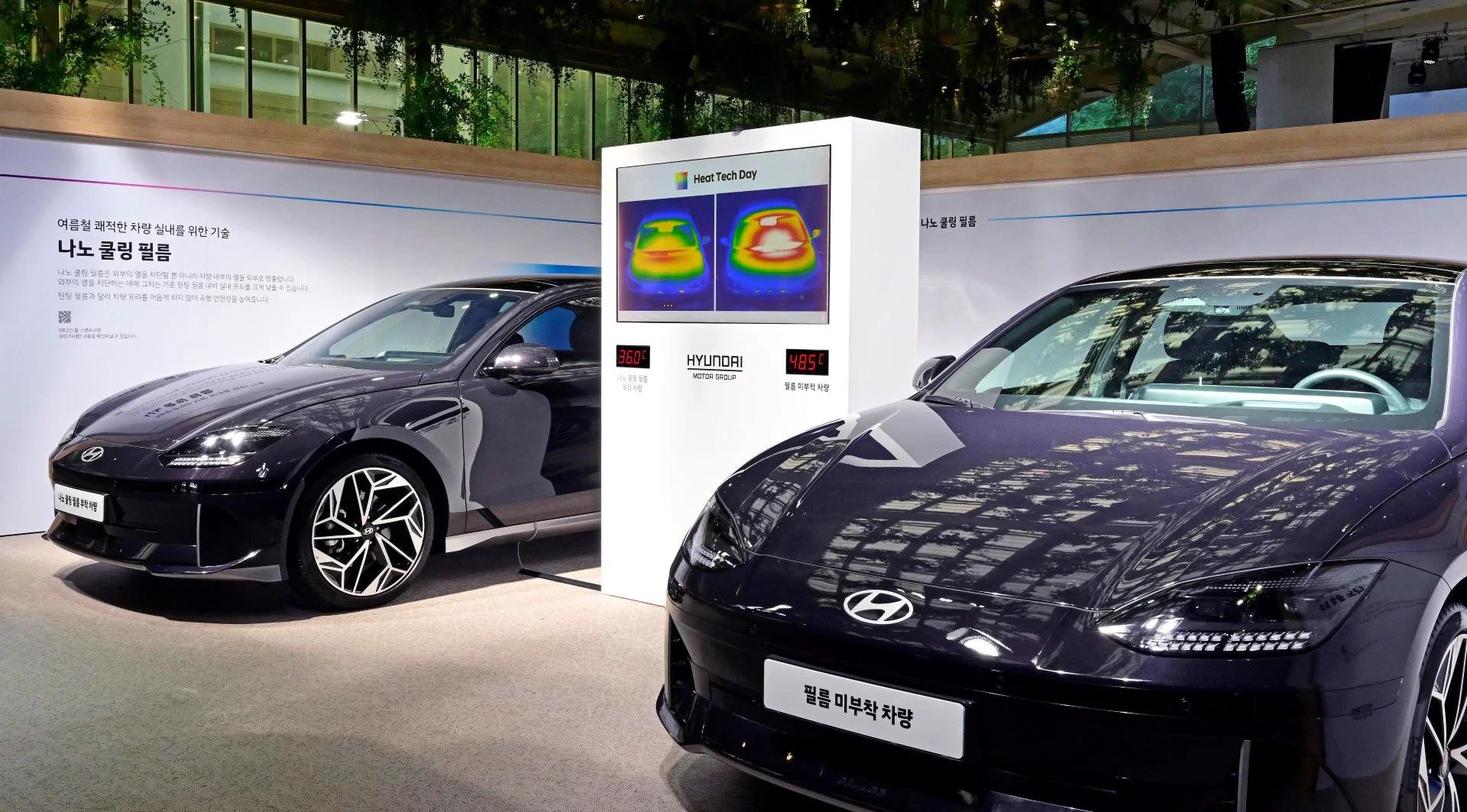
In a bold stride towards redefining passenger comfort and energy efficiency, Hyundai Motor Company and Kia Corporation introduced three cutting-edge temperature control technologies at the highly anticipated ‘Heat Tech Day’ event in Seoul, South Korea. These innovations are set to revolutionize the in-vehicle experience, aligning with the rapidly evolving demands of modern mobility.
As the automotive landscape shifts towards electric vehicles and connected living spaces, the need for sophisticated climate control systems has never been more critical. Hyundai and Kia’s latest offerings—the Nano Cooling Film, Radiant Heating System, and Metal-Coated Heated Glass—are poised to deliver unparalleled comfort while optimizing energy consumption.
Nano Cooling Film: A Breath of Fresh Air for Hot Climates
Hyundai and Kia’s Nano Cooling Film technology is a game-changer for hot weather conditions, promising a significant reduction in cabin temperature. This advanced material, applied to vehicle glass, can lower interior temperatures by over 12°C, far surpassing the capabilities of traditional tinting films. The Nano Cooling Film achieves this by blocking harmful infrared radiation and allowing heat to escape from within the cabin. Comprising three specialized layers, this film reflects solar energy and emits mid-infrared wavelengths, ensuring a cooler and more comfortable ride.
The technology’s effectiveness was demonstrated during a series of tests where vehicles equipped with Nano Cooling Film showed a remarkable reduction in interior temperature—up to 12.5°C compared to vehicles without the film. This innovative solution not only enhances passenger comfort but also reduces the energy demand on air conditioning systems, contributing to overall energy efficiency.

Radiant Heating System: Instant Warmth for Cold Weather Comfort
Winter driving can be an uncomfortable experience, but Hyundai and Kia’s Radiant Heating System promises to change that. This system, designed to deliver rapid and energy-efficient warmth, uses a high-temperature film-type heating element to emit radiant heat towards passengers’ legs. Within just three minutes, the system can raise the perceived temperature around passengers, greatly improving comfort during cold weather.
The Radiant Heating System is not just about comfort—it’s about efficiency. By supplementing the vehicle’s existing heating system, it conserves up to 17 percent more energy while reducing the time required to reach the desired cabin temperature. This energy-saving feature is particularly beneficial for electric vehicles, extending their driving range in cold conditions. Moreover, the system’s burn prevention mechanism ensures safety by automatically lowering the temperature upon detecting body contact.
Metal-Coated Heated Glass: Clear Vision, Enhanced Safety
Hyundai and Kia have also taken windshield defrosting to the next level with their Metal-Coated Heated Glass technology. This world-first innovation utilizes a 48V system to quickly and efficiently remove frost and moisture from the windshield, significantly improving visibility and safety. Unlike conventional tungsten wire heating elements, the Metal-Coated Heated Glass is virtually invisible, providing a clear, undistorted view for occupants.
The system’s efficiency is impressive, completely defrosting the glass surface within five minutes at -18°C. It operates up to four times faster than traditional air-conditioning systems and consumes 10 percent less energy. On hot days, the metal coating also serves as a passive heat blocker, reducing solar energy penetration by over 60 percent, thereby lowering the cabin’s cooling requirements.
Hyundai Motor and Kia Corporation have once again demonstrated their commitment to enhancing passenger comfort and energy efficiency with these groundbreaking temperature control technologies. As the automotive industry continues to evolve, these innovations are set to play a crucial role in shaping the future of in-vehicle climate control, offering drivers and passengers a more comfortable and energy-efficient journey.