



Advanced common rail turbodiesel with frugal consumption broadens powertrain options in S40, V50
-
Second generation, advanced common rail injection system
-
Variable Nozzle Turbine technology for optimum turbo-boost
-
Fuel consumption of 5,7 litres/100 km recorded in test cycle
-
Catalytic converter reduces CO and HC emissions
-
Particulate filter reduces emissions further
-
Six-speed manual transmission for swift acceleration, fuel economy
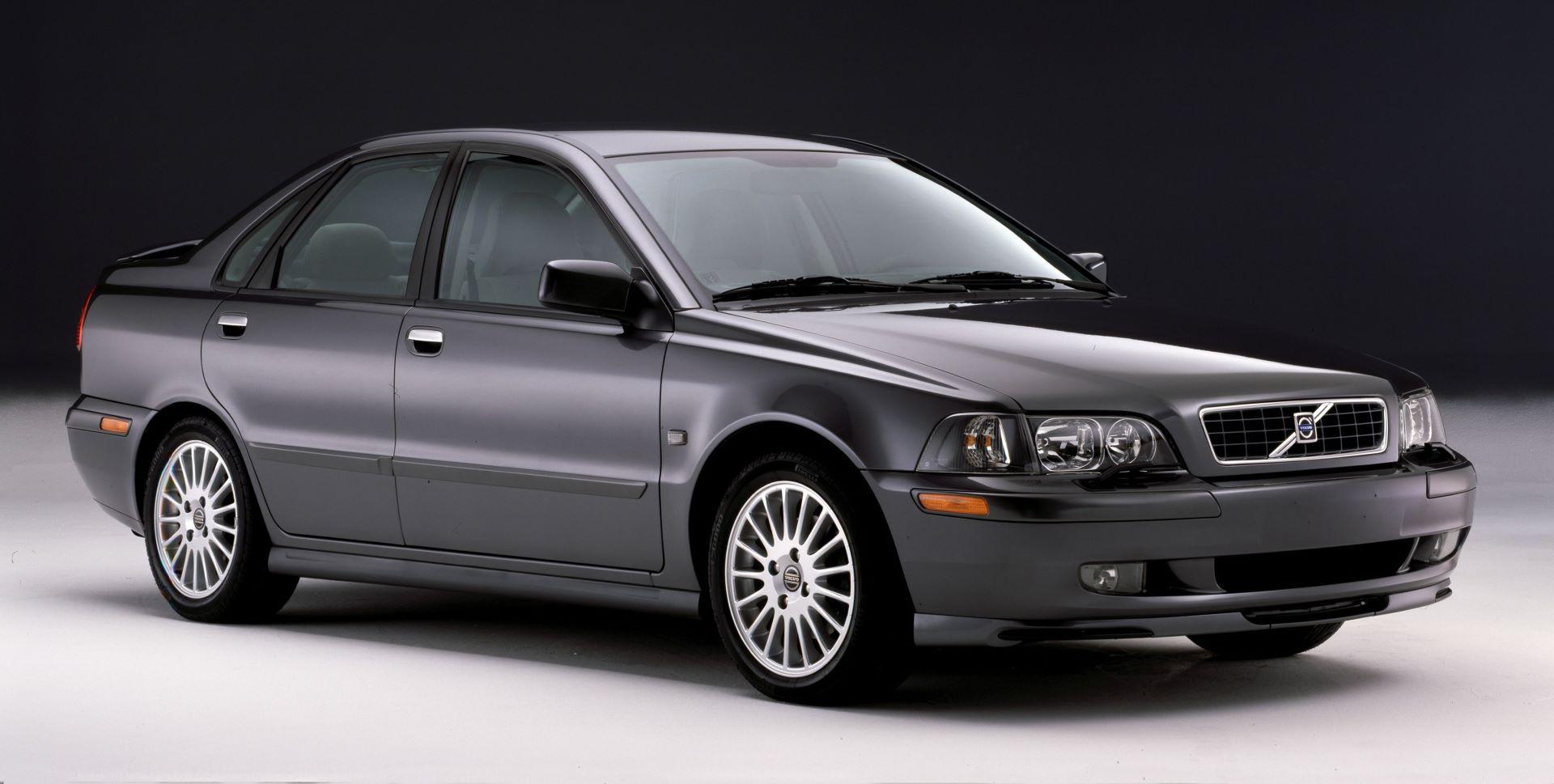
With the launch of the S40 and V50 2.0D an entirely new four-cylinder turbodiesel with advanced, second-generation common rail technology featuring moving rails has been added to the existing normally aspirated 2.4 litre and turbocharged 2.5 litre petrol engines in these two model ranges.
The addition of the 2.0D not only broadens the range of powertrain options in the S40 and V50 model ranges, but also adds an engine with frugal fuel consumption, yet abundant torque with the typical strong pulling power associated with a turbodiesel.
Frugal fuel consumption
The S40 2.0D recorded a best consumption figure of 5,7 litres per 100 km in a mixed cycle of urban, highway and country roads. This is a result of the application of the latest diesel engine technology that delivers a highly efficient combustion process and thus an abundance of torque, with the maximum of 320 Nm already available at 2 000 rpm.
This combination of power, swift acceleration and good economy delivers an ideal package to meet the demands of discerning diesel drivers.
Cleaner emissions due to particulate filters
Emissions of carbon dioxides (CO2) from a diesel engine are 20% lower than from a petrol engine. However, emissions of particulates are a traditional problem when driving on diesel, especially in urban traffic. As environmental care is one of the core values of Volvo Cars – the others being safety and quality – special attention has been given to the reduction of particulates in emissions.
The emissions of particulates have generally been significantly reduced by approximately 90% in the past 20 years. There is, since a couple of years back, technology available that further reduces these particles by means of a filter.
More than 90% of the remaining particulates can be eliminated with a filter such as those introduced in the four-cylinder Volvo turbodiesel engine used in the S40 and V50.
With the particulate filter, the Volvo S40 and V50 2.0D meet the Euro 4 regulations with a broad margin (info: Euro 4 requirement is 0,025 g/test; VCC filter fulfils 0,0017 g/test). Even without the particulate filter, the engine has been developed to minimise the emission of particulates and already meets the European legal requirements valid until 2006.
The particulate filter operates together with an additive. The system requires a tank from which the additive is added to the diesel fuel. The filter will have to be cleaned and/or changed every 100 000 km, and is covered by Volvo Car SA’s 5 year/100 000 km service and maintenance plan.
The additive is a fluid with a catalyst based on cerium. Cerium stimulates and secures the process of burning off soot at all engine loads and speeds. However, no traces of cerium – an earth metal with catalytic properties – are emitted from the system in the process. The waste (ashes) is trapped in the filter.
Catalytic converter helps care for environment
The catalytic converter fitted to the 2-litre turbodiesel takes care of and cleans the engines emissions – an aspect that is part of Volvo’s core value of environmental care.
The ceramic oxidation catalyst in the catalytic converter reduces the carbon monoxide (CO) and hydrocarbon (HC) emissions. Its positioning immediately after the turbocharger, called Closed Coupled Catalyst (CCC), means that the catalytic converter quickly reaches the correct and efficient operating temperature.
Advanced injection system for optimum combustion
The new turbodiesel’s injection system operates under immense pressure, ensuring extremely fine distribution of the fuel particles. This helps promote both good performance and low emission levels.
With the help of piezo-electrical injectors, the fuel can be portioned out in several small injections during each combustion cycle, helping to cut noise levels as a result. With these piezo-electrical injectors, the engine is prepared for forthcoming emissions requirements.
The cylinder block is made of cast iron with an oil sump of aluminium alloy. As in the petrol engine variants, the turbodiesel has two inlet and two outlet valves per cylinder. Valve clearances are adjusted hydraulically.
Diesel is fed under pressure to the cylinders via a Siemens common rail injection system for the piezoelectric injectors to deposit the precise amount of fuel into the combustion chamber. Each time an injector is activated, it is with a voltage of approximately 160 V and a current of 8 A.
As with other “common rail” systems, injection occurs in two stages: priming and main injection. This reduces noise levels and emissions.
Because the piezo-electric injectors are significantly faster than conventional injectors, the injection timing can be individually adapted for both priming and main injection. This means that the time interval between priming and main injection can be controlled which gives a progressive pressure increase in the cylinder. This minimises noise and emission levels.
At engine speeds exceeding 3 000 rpm at full load or 4 000 rpm at a low load, injection occurs in a single stage. This is because there is not sufficient time for two injections.
There are a number of advantages to using piezoelectric material to control the injection sequences compared to injectors working electro-magnetically:
-
The process is up to the four times faster;
-
There is no continuous time-dependent voltage/current required to control the injection period. Only one impulse is required to start injection and one to stop injection;
-
Electrical consumption is low, approximately 8 A;
-
The combination of low current and short impulse control means that less energy is required for each injection sequence;
-
Charging times – the time it takes for an injector to start and complete an injection sequence – is short. This varies between 130 to 200 microseconds depending on the engine load and speed;
-
This speed means that the injection periods can be controlled precisely, accurately regulating the volume of fuel injected;
-
The interval between priming and main injection can be controlled precisely which reduces noise and emissions; and
-
The system is not sensitive to electro-magnetic effects.
Variable Nozzle Turbine (VNT) technology increases performance
The 2-litre turbodiesel in the S40 and V50 2.0D features a turbocharger with Variable Nozzle Turbine (VNT) technology that compacts the air into the combustion chambers. This delivers a most efficient combustion process which delivers power output of 100 kW at 4 000 rpm and a torque maximum of 320 Nm that is already available at 2 000 rpm. An overboost function increases the torque momentarily at take-off to 340 Nm.
The Variable Nozzle Turbine turbocharger operates with a vacuum regulator that is connected by a lever to control rods. The position of the control arms is controlled by the air pressure in the pressure regulator.
A solenoid valve controlled by the ECM controls the pressure in the box. A position sensor is located on the vacuum regulator. The sensor registers the position of the rod and therefore the position of the control rods. The sensor signal is used by the ECM to calculate the position of the control rods and therefore the boost pressure.
A few more features of the S40 and V50’s turbodiesel engine are:
-
Camshafts that operate on roller followers. This produces low friction and means that the valves can be positioned close to each other;
-
Two separate inlet channels of different lengths and geometry. This creates a powerful whirl which is necessary for good combustion; and
-
Hollow camshafts that are constructed of separate components such as cam lobes. It gives low weight and means that a camshaft can be made of materials with differing characteristics.
Because the diesel engine does not have a throttle and therefore is always pressurised to atmospheric pressure or more there is no possibility of obtaining a vacuum in the intake manifold.
The engine is therefore equipped with a vacuum pump which ensures that the brake power booster, the system for controlling the turbocharger nozzle and other functions always have sufficient vacuum.
Six-speed manual transmission
The S40 and V50 2.0D come as standard with a six-speed manual gearbox (not the same as in the T5 model, which is equipped with a six speed gearbox also found in the Volvo S60 R).
This contributes to swift acceleration owing to excellent pulling power in every ratio. On the open road, the sixth gear ratio with its overdrive qualities provides excellent fuel economy – yet it has enough torque to accelerate in top gear under normal conditions. These two models will only be available with the six-speed manual transmission.
Normal service intervals for the S40 2.0D are scheduled at every 20 000 km, but a change of oil and oil filter takes place every 10 000 km. As with all other services the intermediate oil and filter changes are covered by Volvo Car SA’s 5 year/100 000 km service and maintenance plan.