TOYOTA GAZOO Racing South Africa (TGRSA) demonstrated both speed and resilience on Tuesday as Stage 3 of the 2026 Dakar Rally unfolded over the grueling AlUla loop. The 421 km special stage, part of a 736 km marathon day, tested crews with constantly shifting terrain, tricky navigation, and no mid-stage tyre resupply, making mechanical sympathy and tactical precision just as critical as outright pace.
Leading TGRSA’s charge, Guy Botterill and Oriol Mena (#218) delivered a standout performance, finishing third on the stage—just 5 minutes 23 seconds off the stage-winning pace. Starting deep in the field after Stage 2 setbacks, the pair navigated heavy traffic, dust, and three punctures to claw back significant time.
“Today was a good day for us,” said Botterill. “We started far down in the field, so we had a challenging run through the traffic and a lot of dust. We got three punctures and had to limp over the line with a flat, but everything paid off. Oriol was fantastic on the notes; we could see a lot of people getting lost, and he was right on the money. The main thing is we brought back a lot of time and the car performed really well.”
Saood Variawa and Francois Cazalet (#213) also showed strong pace, running competitively through the sandy opening sections and overtaking several competitors—including Sébastien Loeb—before stony terrain caused a series of punctures. The pair ultimately crossed the line in 17th, 16 minutes 55 seconds behind the leader.
“Today went quite well at the start, especially in the soft sand,” Variawa said. “We had really good pace, caught and passed a few cars, and even passed Loeb. Then the terrain became very stony, and we picked up three punctures. Navigation was tricky, but we were on it. Everything is okay with the car, and I think we’re in a decent place heading into the marathon.”
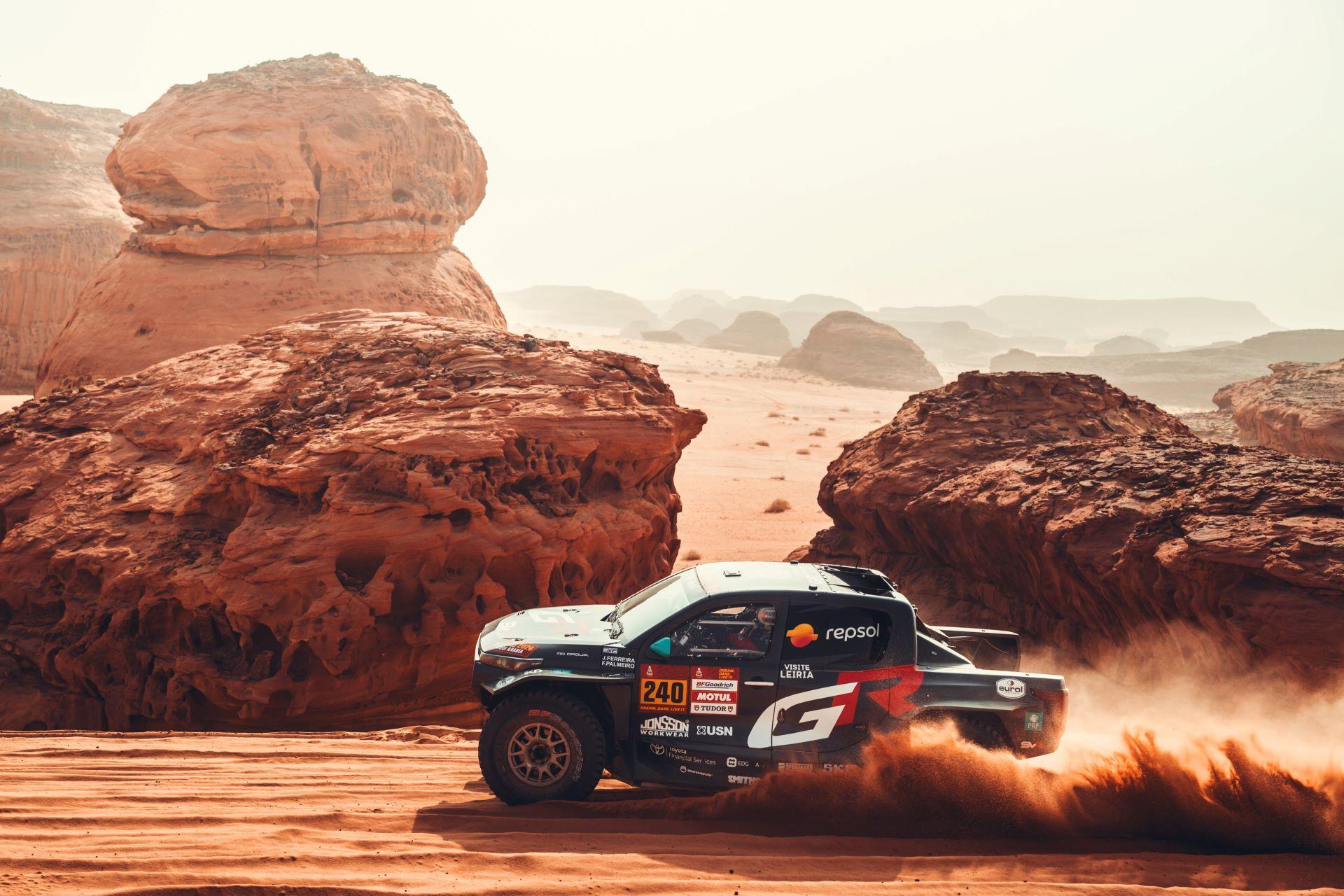
João Ferreira and Filipe Palmeiro (#240) faced a tougher day. Two early punctures forced the Portuguese duo to adopt a cautious approach, prioritising survival over speed and finishing 28th, 29 minutes 21 seconds off the pace.
“It was a tough one, very long and much more stony than we expected,” Ferreira said. “We had two punctures at the beginning and had to drive very slowly and carefully to avoid more problems. But we survived, and now we focus on the marathon stage.”
After three stages, TGRSA’s crews are positioned strongly in the overall standings: Variawa and Cazalet sit ninth (+10:57), Ferreira and Palmeiro are 15th (+20:50), and Botterill and Mena have climbed to 17th (+27:37) following their recovery drive.
Attention now turns to Stage 4, the first Marathon stage of Dakar 2026, taking crews from AlUla to the Marathon Refuge. Covering a 452 km special stage over sand and dirt tracks with no external assistance allowed overnight, this stage will place a premium on reliability, strategic decision-making, and car preservation as the rally enters one of its most demanding phases.