





On Earth Day 2025, Volvo Car South Africa reiterates its unwavering commitment to a cleaner, greener tomorrow through electric innovation, circular business models, and renewable energy alignment.
Each year on April 22, Earth Day unites millions around the world in a shared pursuit: to safeguard the planet for future generations. This year’s theme, “Our Power, Our Planet,” calls for transformative action—most notably, a global goal to triple renewable electricity generation by 2030. For Volvo, this mission isn’t just aspirational—it’s already well underway.
As a leader in South Africa’s electric vehicle (EV) landscape, Volvo has carved out a distinctive role in shaping the nation’s sustainable mobility future. The Swedish automaker has set an ambitious global target: by 2030, between 90% and 100% of all Volvo vehicles sold will be electrified. That means fewer tailpipes, lower emissions, and a significant stride toward carbon neutrality.
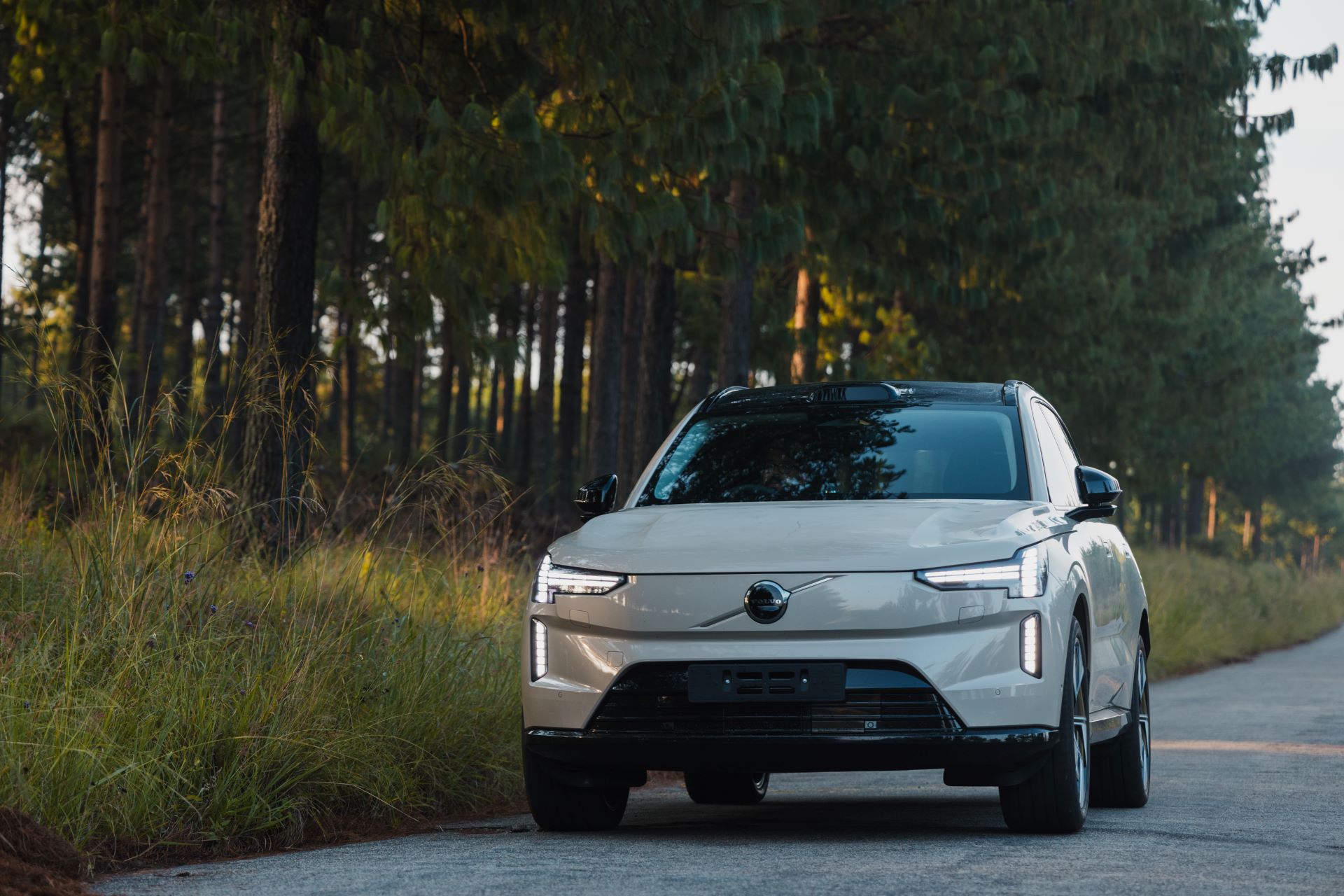
“Following the successful introduction of the C40 and XC40 Recharge, as well as the award-winning EX30, Volvo has expanded its fully electric lineup with the introduction of the EX90,” says Felipe Yagi, Head of Marketing & Communications at Volvo Car South Africa. “Later this year, we’re planning to introduce the ES90 luxury sedan and EX30 Cross Country, bringing electrification to an even wider range of customers.”
Clean Energy Meets Clean Driving
Volvo’s electrified ambitions are particularly resonant in a country where energy conversations are as much about access as they are about sustainability. That’s where initiatives like Zero Carbon Charge (CHARGE) come in. This local project is establishing 120 solar-powered charging stations, spaced every 150 kilometres, throughout South Africa—making it easier than ever for EV owners to travel emissions-free.
Pairing electric vehicles with renewable energy infrastructure turns clean mobility from a personal choice into a national movement. It’s a future where road trips don’t just avoid emissions—they actively support a cleaner power grid.
A Circular Vision for Tomorrow
Yet sustainability, for Volvo, is not limited to what powers a vehicle—it extends to how it’s made, and how long each component can last.
The company is aiming to become a circular business by 2040, a vision grounded in reducing waste and pollution. That means designing cars for longevity, using more recycled and renewable materials, and remanufacturing parts wherever possible.
The new EX90 is a perfect example of Volvo’s commitment in action: it contains around 15% recycled steel, 25% recycled aluminium, and 48 kg of recycled plastics and bio-based materials. These figures are more than impressive—they’re essential. Producing brand-new parts consumes significant energy and resources, but Volvo’s remanufacturing programme can reduce raw material usage by 85% and energy consumption by 86%. In 2022 alone, the company saved over 4,800 tonnes of CO₂ by reconditioning more than 33,000 components.
It’s a legacy that stretches back to 1945, when Volvo began remanufacturing gearboxes—a full 30 years before the first Earth Day. Long before “sustainability” was part of the global lexicon, Volvo was already building it into its DNA. From pioneering the three-way catalytic converter in 1978 to eliminating harmful CFCs from its vehicles by 1993, Volvo’s history is one of environmentally conscious innovation.
Leading by Example
As Earth Day 2025 casts a spotlight on renewable energy and global responsibility, Volvo remains focused on making sustainable driving the new standard. The brand’s electrification roadmap, coupled with bold targets in recycling and remanufacturing, sets a compelling precedent not just for carmakers, but for all industries navigating the road to net zero.
With every EV rolled off the production line, every remanufactured part, and every solar-powered charge, Volvo is making it easier for people to make environmentally sound choices in everyday life.
This Earth Day, Volvo’s message is clear: the power to protect the planet lies in our hands—and in the way we choose to drive forward.
Comments
Newest firstLoading comments…