




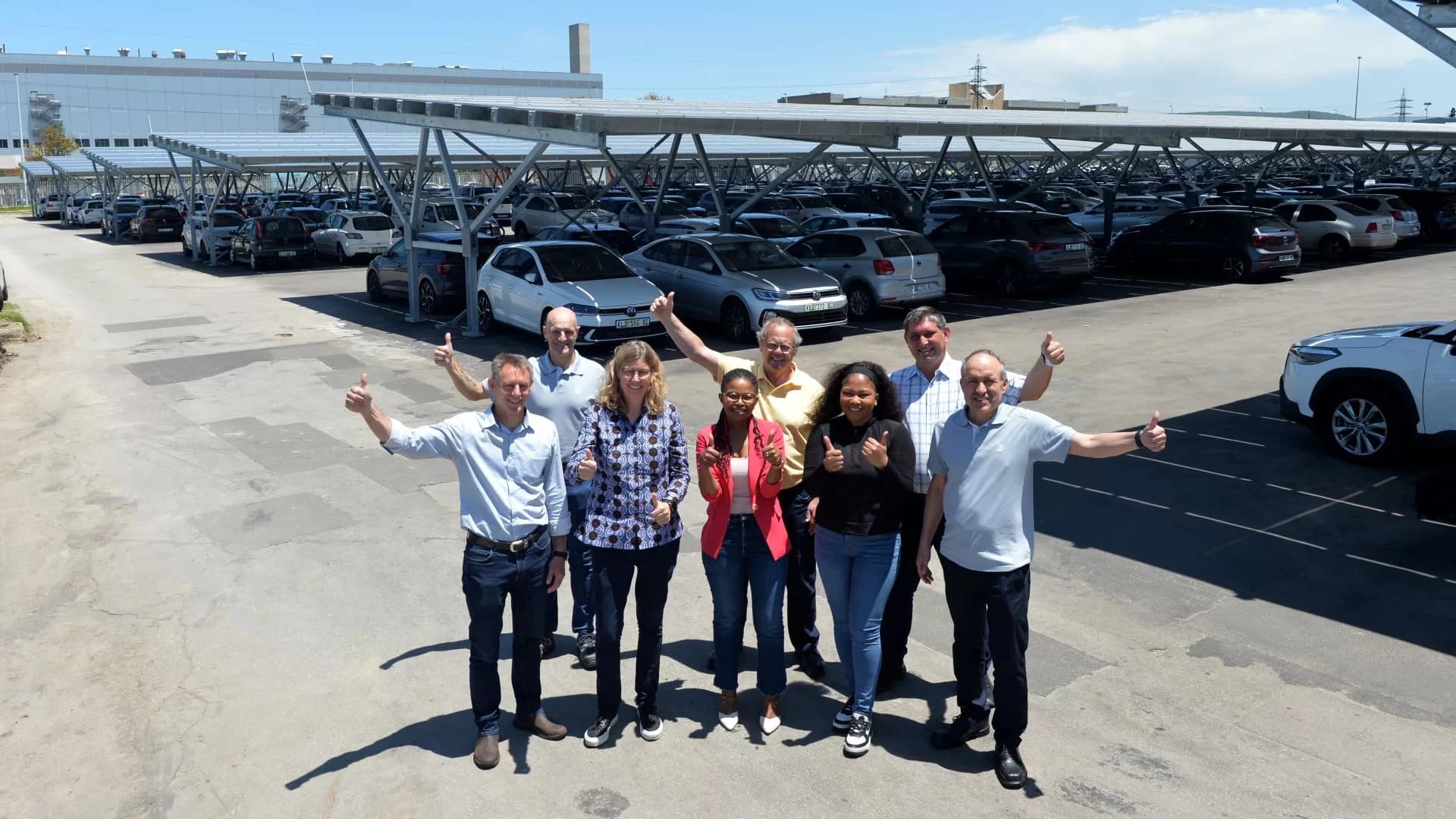
KARIEGA, SOUTH AFRICA – Volkswagen Group Africa is accelerating its sustainability journey with the addition of 3 megawatts (MW) of solar energy to its grid at Plant Kariega. This brings the total renewable energy output to an impressive 5.9 MW, equivalent to powering at least 2,000 two-bedroom homes equipped with geysers and electrical appliances.
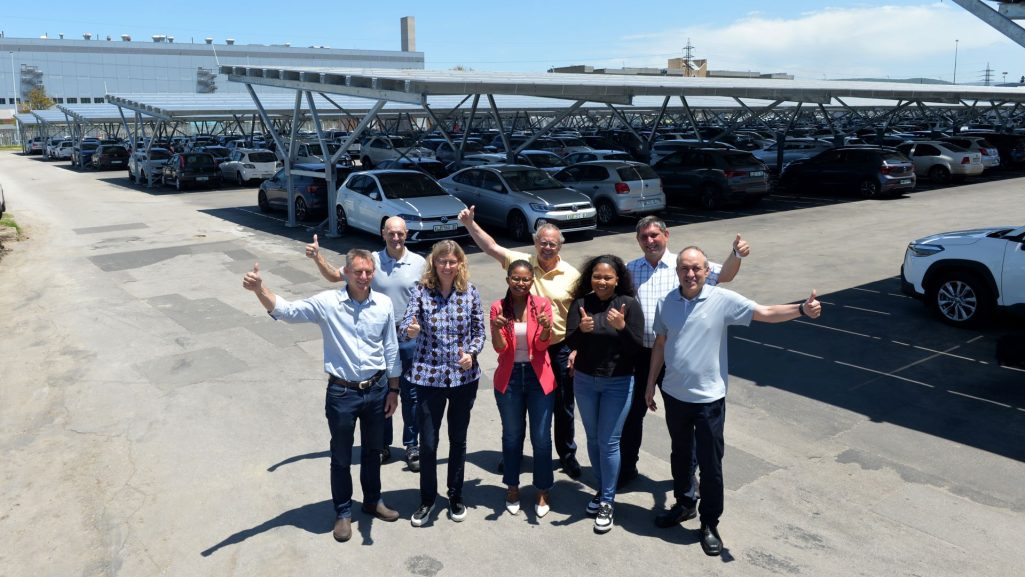
The expansion is marked by the installation of 5,710 photovoltaic (PV) panels in the employee car park, complementing the initial 6,166 panels installed on the Engine Plant and Final Assembly building roofs in earlier phases. The total number of PV panels now stands at 12,097, with further installations planned for the next phase of this ambitious project.
Volkswagen Group Africa has invested nearly R100 million in solar energy since embarking on its renewable energy strategy. These investments have significantly increased the company’s renewable energy share from a modest 1.5% in 2018 to a remarkable 17.1% in 2023, drastically reducing reliance on municipal electricity supply. This shift is not just about energy independence; it’s about environmental stewardship. The solar energy capacity at Plant Kariega is now capable of saving approximately 7,500 tonnes of carbon dioxide (CO₂) emissions annually.
Towards a Zero Impact Factory by 2030
Ulrich Schwabe, Production Director at Volkswagen Group Africa, emphasised the strategic importance of renewable energy in achieving the company’s environmental goals.
“Reducing dependence on fossil fuels is critical for our vision of becoming a Zero Impact Factory by 2030. By 2025, we project that renewable energy will account for 23% of Plant Kariega’s energy needs,” Schwabe said.
This vision aligns with Volkswagen Group’s global Go To Zero Environmental Strategy, which aims for carbon neutrality across all plants in line with the Paris Agreement.
Driving Efficiency: A Decade of Progress
Plant Kariega has been a benchmark for energy efficiency, with electricity usage per vehicle manufactured decreasing by an impressive 54% between 2010 and 2023. These reductions were achieved through innovative initiatives such as a robust Demand Side Management plan and continuous monitoring of energy-intensive processes, including air conditioning systems.
Beyond energy usage, the plant has made strides across multiple environmental indicators. Since 2010, Plant Kariega has reduced its overall environmental impact by 57.7%, encompassing reductions in water usage, waste generation, solvent emissions, and carbon output.
A Collaborative Effort
Volkswagen Group Africa’s sustainability success is the result of teamwork, innovation, and long-term vision. From the leadership team to employees, a collective effort drives these initiatives forward.
Comments
Newest firstLoading comments…