


Hanover, Germany, 18 March 2025 – Volkswagen Commercial Vehicles (VWCV) has successfully navigated a year of transformation, maintaining steady sales revenue at €15.12 billion, despite a 4% decline in sales and consistent delivery figures. While restructuring efforts led to an operating result of €743 million—a decrease from the previous year’s €873 million—this remains significantly higher than 2022’s €527 million, underscoring the effectiveness of VWCV’s strategic evolution.
Revamping the Model Lineup: A Historic Offering
VWCV’s commitment to innovation saw the launch of three world premieres in 2024, positioning the brand with its most comprehensive and competitive lineup to date. The discontinuation of the T6.1 in mid-2024 paved the way for a new generation of VW Bus models, now comprising the ID. Buzz, Multivan, and the all-new Transporter. The latter, which debuted at IAA Transportation in September, has already garnered significant demand, with 52,000 orders placed for the Transporter and Caravelle by early March.
“We promised a landmark year for our model range, and we delivered,” stated Carsten Intra, Chairman of the VWCV Brand Board of Management. In 2024 alone, VWCV introduced the ID. Buzz GTX, the new California based on the Multivan, and updates across nearly all other models—including the 4Motion system for the Multivan, a plug-in hybrid Caddy, and the refreshed Crafter.
Financial Stability and Investment in the Future
Despite market challenges, Chief Financial Officer Michael Obrowski emphasized the brand’s resilience. “Our broad product range and enhanced vehicle quality have driven strong demand,” he explained. Revenue held steady at €15.12 billion, with 404,000 vehicles sold, reflecting the enduring strength of VWCV’s customer appeal. However, restructuring expenses related to the GRIP programme impacted the bottom line. “These are necessary investments that will significantly enhance our cost structure in the long run,” Obrowski added.
VWCV remains committed to optimizing costs through its ‘Top 10 Programme’ while accelerating international expansion. Lars Krause, Board Member for Sales, Marketing, and Aftersales, highlighted the global ambitions: “The ID. Buzz has returned to North America, and 2025 will see our presence grow in Asia-Pacific markets like Australia, New Zealand, Hong Kong, and Indonesia. This expansion is key to increasing our all-electric share, with a goal of double-digit EV penetration across our fleet in 2025.”
75 Years of the VW Bus: Honouring an Icon
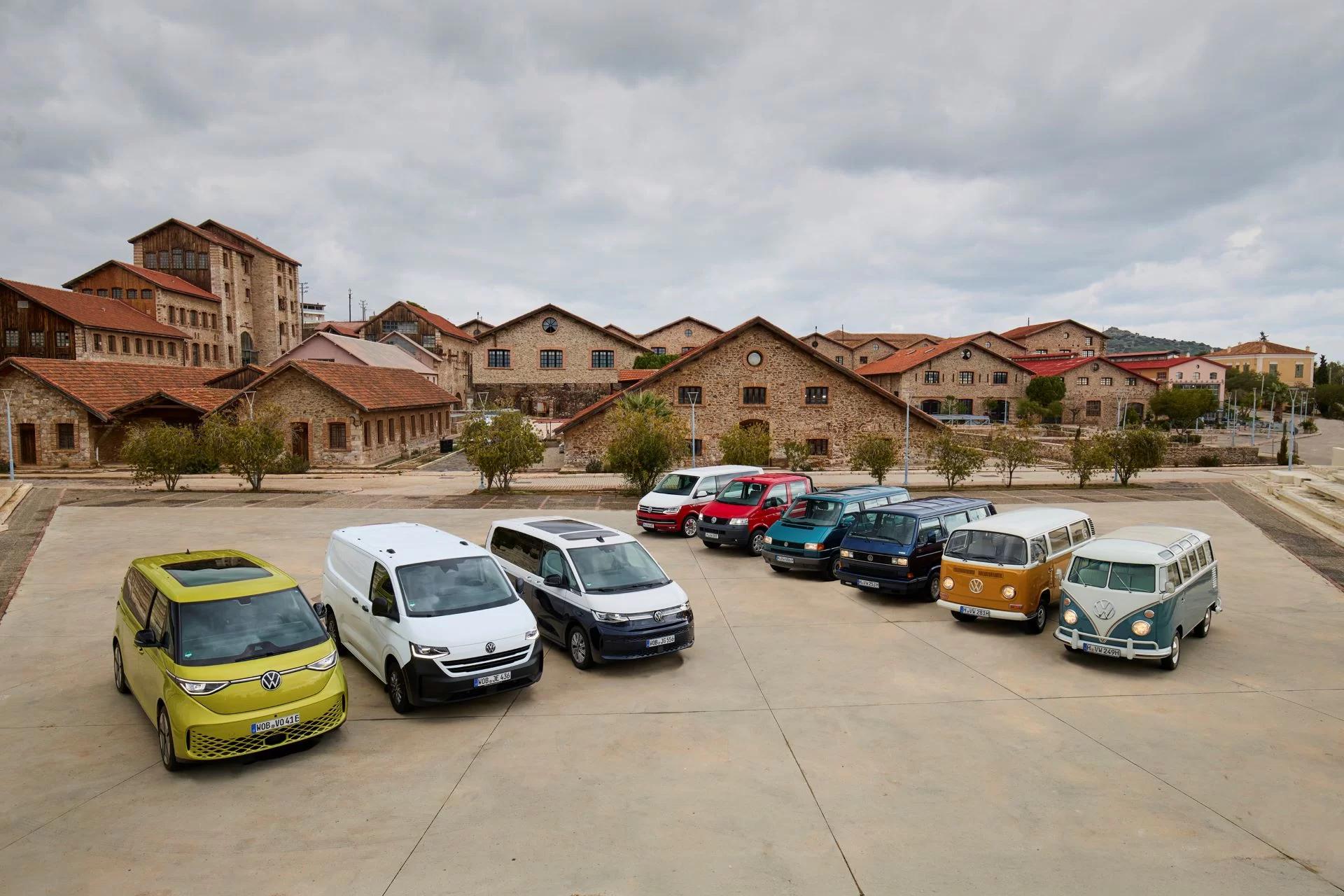
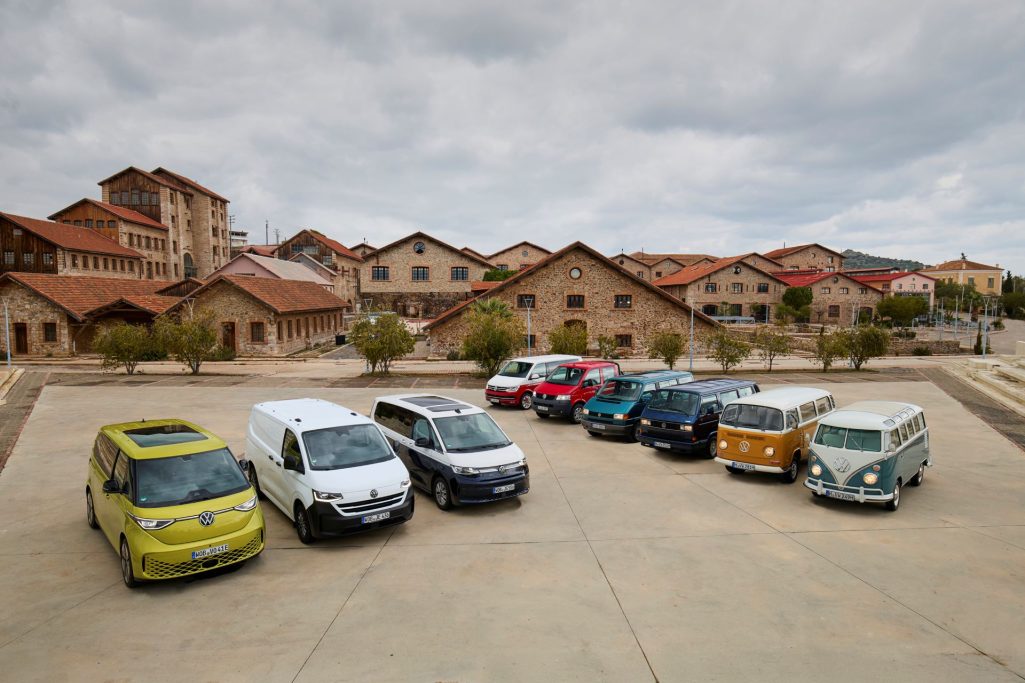
This year also marks a historic milestone: 75 years of the VW Bus, the most successful European commercial vehicle of all time. First produced on 8 March 1950, the T1 Transporter sparked a legacy that has seen over 12.5 million VW Buses roll off production lines, primarily from Hanover since 1956.
“From the T1 to the T6.1, our vehicles have always been built on a single platform, serving everyone from tradespeople to adventurers,” Intra reflected. However, the shift to electric mobility ushered in a new philosophy—‘The right VW Bus for everyone’—culminating in today’s diversified lineup:
- Multivan & California – Versatile lifestyle vans
- ID. Buzz & ID. Buzz Cargo – The first mass-produced all-electric VW Bus
- Transporter & Caravelle – The latest-generation workhorse, with BEV, diesel, and hybrid options coming in 2026
This evolution ensures that the VW Bus remains as relevant and beloved today as it was 75 years ago. “We founded the van segment—we are the original,” Intra concluded. “No other vehicle has more dedicated fans, and our legacy of supporting customers will continue for generations to come.”
As VWCV embarks on another year of transformation and growth, the brand’s commitment to innovation, sustainability, and customer-centric design remains steadfast, ensuring that the Volkswagen Bus legacy thrives well into the future.