





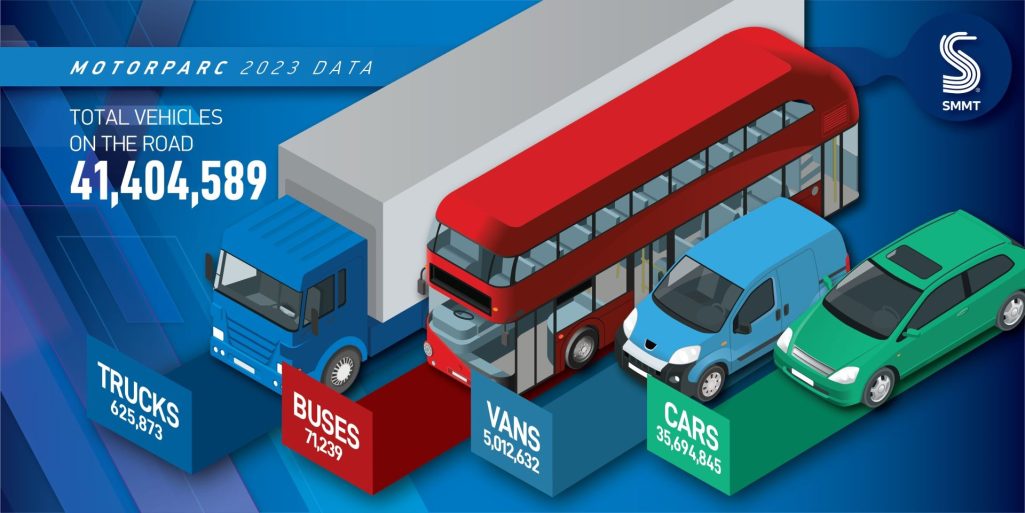
In 2023, the UK witnessed a historic increase in the number of vehicles on its roads, totaling 41.4 million—a 1.7% rise from the previous year, according to data from the Society of Motor Manufacturers and Traders (SMMT). This surge was significantly driven by a spike in electric and plug-in hybrid vehicle registrations, with total car numbers climbing to 35.7 million. Notably, battery electric vehicles (BEVs) saw a dramatic 47.3% increase, now representing 2.7% of all cars.
The transition to electric vehicles (EVs) was accelerated by substantial investments from businesses into electric fleets, supported by attractive fiscal policies. This shift is evident as the average CO2 emissions from cars fell by 2.1%, and a remarkable 11.5% reduction was observed in company cars.
Commercial vehicle use also reached new heights with over 625,000 heavy goods vehicles and more than 5 million vans now active, experiencing increases of 1.7% and 2.6%, respectively. Electric vans and HGVs saw substantial growth, although they still make up a small fraction of their respective total numbers.
Despite these advances, the rollout of public EV charging points is not keeping pace with the growth of plug-in vehicles. The current infrastructure supports only one charger per 35 plug-in vehicles, indicating a need for significant enhancements to meet increasing demands.
The call for improved infrastructure investment is urgent, particularly for commercial vehicles. As the number of mandated electric cars and vans increases, comprehensive nationwide charging solutions become imperative for supporting this green transition.
This shift towards electric mobility not only supports the UK’s net zero ambitions but also stimulates economic growth and enhances the living environment, marking a pivotal year for the automotive industry in its recovery post-pandemic and adjustment to new market dynamics.
Comments
Newest firstLoading comments…