





Boulogne-Billancourt, 11 March 2025 – As cities and transport authorities rethink the future of mobility, Renault Group is pioneering the integration of autonomous public transport solutions. In partnership with WeRide, Renault Group is expanding autonomous miniBus trials across Europe, proving their potential in enhancing urban, peri-urban, and high-security environments.
Pioneering Autonomous Public Transport
Renault Group is convinced that autonomous public transport is a key solution for the future, providing more efficient, sustainable, and accessible mobility. Since unveiling its autonomous vehicle strategy in May 2024, Renault Group and WeRide have been conducting open-road trials, beginning with a successful test at Roland-Garros, where two autonomous miniBuses covered 1,000 km and transported nearly 700 passengers. This milestone demonstrated not only the technological maturity of these vehicles but also their real-world applicability.
Encouraged by positive feedback from local authorities, transport operators, and private stakeholders, Renault Group has extended these trials to multiple European cities, including Barcelona, Valence, and Zurich. Each of these trials highlights the adaptability of autonomous miniBuses to different urban and controlled environments.
Barcelona: A Step Towards Autonomous Urban Mobility
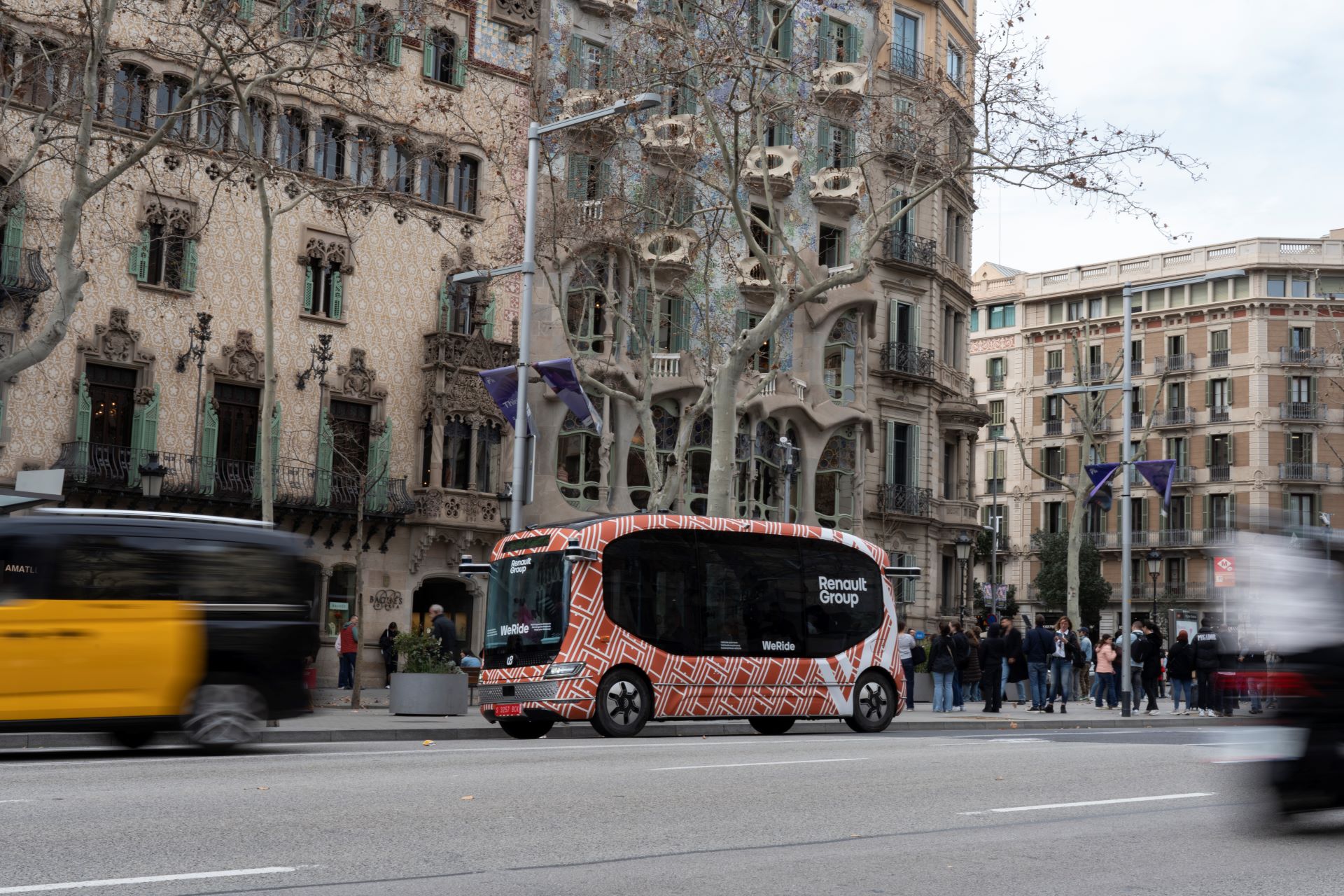
From 10 to 14 March, Renault Group and WeRide are showcasing the future of urban transport with two autonomous electric miniBuses operating on a 2.2-kilometre route in Barcelona’s bustling city center. This initiative aims to demonstrate how autonomous technology can seamlessly integrate into dense and complex urban settings.
Barcelona’s trial underlines Renault Group’s commitment to sustainable mobility by offering a glimpse into how autonomous transport can decongest city centers, reduce emissions, and improve accessibility. The project is a key step towards Renault’s vision of liveable and efficient cities.
Valence: Expanding Mobility in Peri-Urban Areas
Addressing the mobility needs of peri-urban regions, Renault Group, beti (a private public transport operator), Macif (insurer), and WeRide have launched a groundbreaking initiative in Valence. Running from 10 March to 19 April, this trial is set to transition into a full-fledged commercial service by July 2025.
The two autonomous shuttles, operating on a 3.3-kilometre open-road route, connect Valence’s TGV station with a 162-hectare business park housing 150 companies and 3,000 employees. By bridging this gap, the project offers a sustainable alternative to conventional transport, fostering better connectivity for employment, healthcare, and leisure.
This collaborative effort represents a paradigm shift in public transport, proving that shared automated mobility can open up underserved regions, accelerate the ecological transition, and provide equitable access to key services.
Zurich Airport: Enhancing High-Security Mobility
Since January 2025, Renault Group and WeRide have been conducting trials at Zurich Airport to test the feasibility of autonomous miniBuses in high-security environments. Designed to facilitate employee transportation between terminals, these shuttles highlight the reliability and safety of autonomous technology in complex, controlled spaces.
Zurich’s high-security setting provides a stringent testing ground, reinforcing the potential of autonomous miniBuses to operate in critical infrastructures while ensuring safety and efficiency.
Renault Group’s Autonomous Vehicle Strategy
Renault Group has adopted a pragmatic and differentiated approach to autonomy, distinguishing between individual vehicles and public transportation. While the company is currently focusing on market-leading Advanced Driver Assistance Systems (ADAS) for private vehicles, it recognizes the immediate relevance of L4 autonomous miniBuses for public transport.
As European cities expand low-emission zones and seek innovative transit solutions, Renault Group anticipates that thousands of autonomous electric miniBuses will be required in the next decade. These vehicles, capable of independent operation under defined conditions, have proven their viability through extensive trials and partnerships.
Looking ahead, Renault Group aims to introduce a robotised electric miniBus platform by 2030, integrating cutting-edge automation solutions from specialized partners. This initiative reinforces Renault’s commitment to carbon-free mobility while addressing the evolving transportation needs of cities and regions.
Driving the Future of Mobility
Renault Group and WeRide’s ongoing European trials mark a significant leap forward in autonomous public transport. By validating the technology across diverse settings—from bustling city centers to suburban business hubs and high-security airports—Renault Group is shaping a new era of smart, sustainable, and accessible mobility. As these trials continue to expand, the vision of autonomous, shared, and carbon-free transport is fast becoming a reality.
Comments
Newest firstLoading comments…