




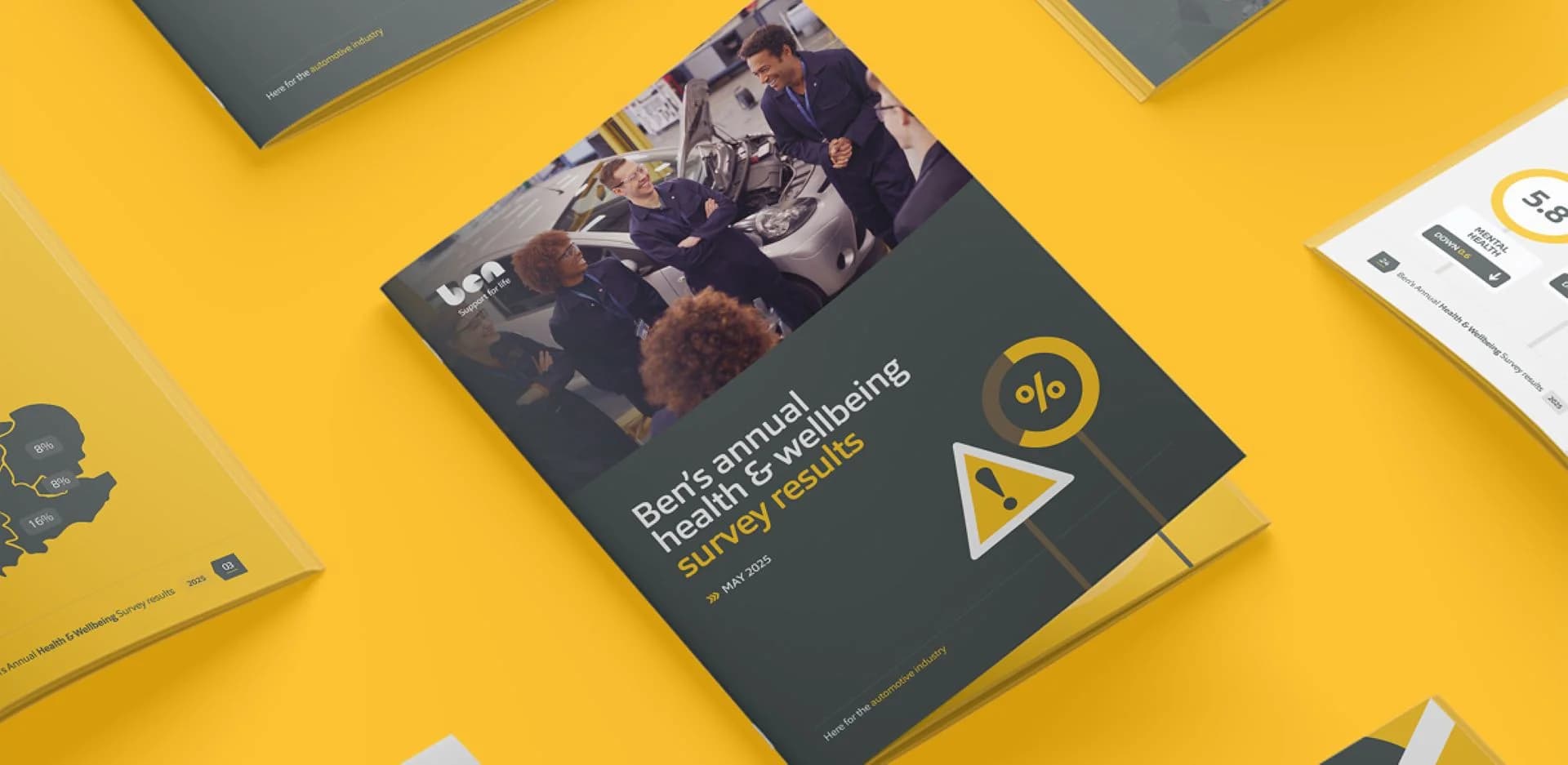
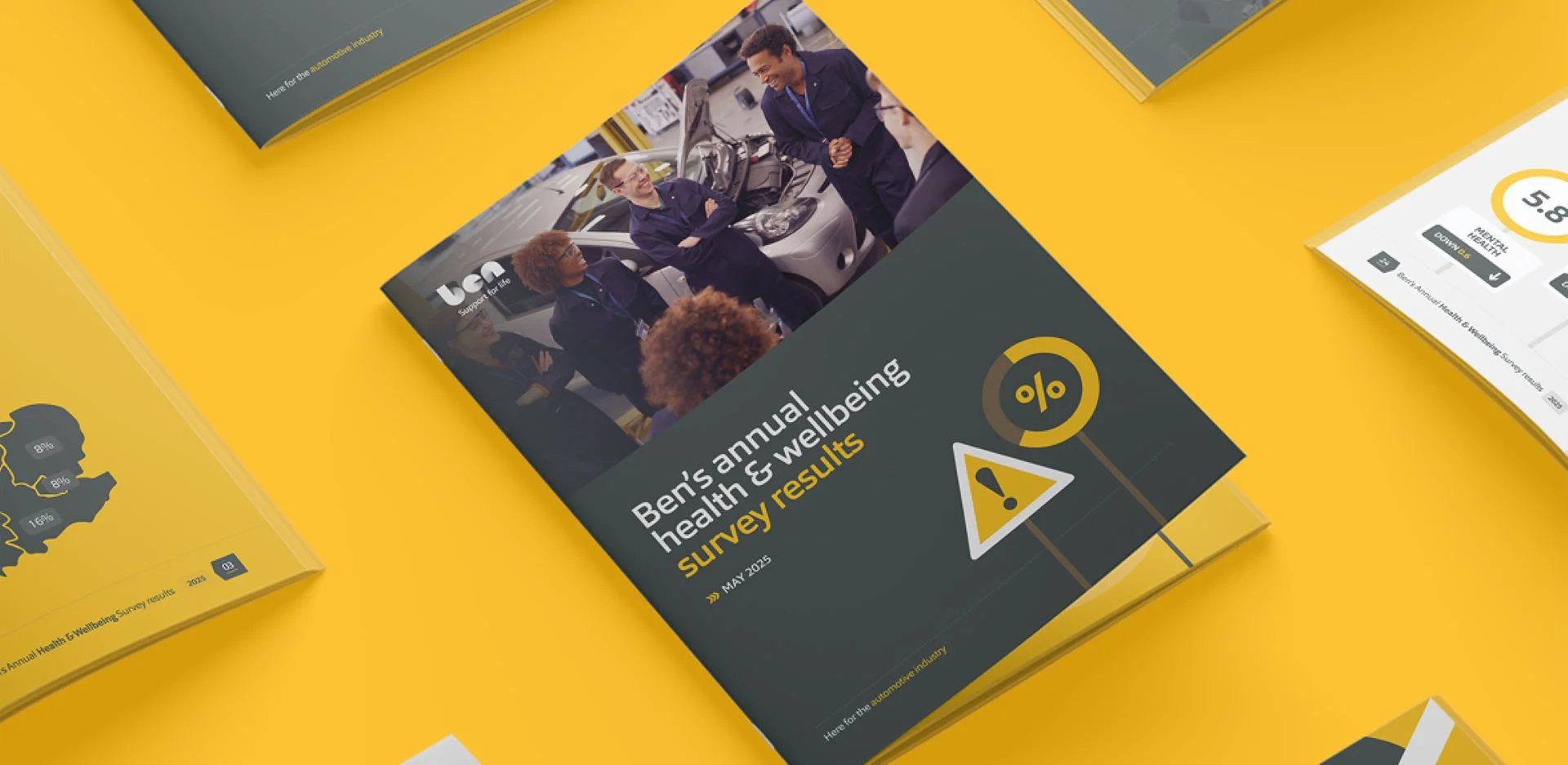
The UK’s automotive workforce is grappling with unprecedented levels of stress, anxiety, and financial hardship, according to the latest Health & Wellbeing Survey by Ben, the industry’s dedicated charity. The report, now in its eighth year, reveals a troubling snapshot of the sector’s wellbeing, with nearly every respondent citing personal challenges over the past 12 months.
Polling over 1,000 industry workers, the survey found the top five health concerns to be:
- Stress (57%)
- Poor sleep (52%)
- Anxiety (44%)
- Low mood (41%)
- Not taking time to rest or relax (43%)
These issues are not only widespread, but worsening. Mental health scores have declined year-on-year, and more than 1 in 9 respondents said they had personally been affected by a lack of mental health support in the workplace.
The data paints a stark contrast to the general UK workforce. Automotive employees are more likely to report poor work-life balance and mental health struggles, with stress continuing to dominate the conversation. In fact, 38% now report poor work-life balance — a 6% increase on last year — with showroom staff, parts department employees, and workshop technicians feeling the strain most acutely. Long hours, understaffing, and excessive workloads are cited as major contributors.
“Stress remains the biggest issue for our automotive family,” says Rachel Clift, Chief Executive Officer at Ben. “Many people cite they don’t feel they have enough time to switch off from work to rest and relax, as well as raising concerns over access to support.”
A Workforce on the Edge
Perhaps the most alarming finding is that nearly 1 in 4 automotive professionals are considering leaving the industry. Half of those pointed to poor mental health as the key reason.
The financial picture is equally grim. Despite falling inflation, cost-of-living pressures remain high, and automotive workers are feeling the pinch:
- 1 in 6 have skipped meals due to financial constraints
- 1 in 5 are grappling with debt
- Among those contemplating a career change, 25% say financial problems are a factor
These pressures aren’t just hurting morale — they’re impacting the long-term sustainability of the industry. Ben’s report underscores the urgent need for employers to take a more proactive role in supporting the wellbeing of their staff.
“These insights allow us to engage with employers and industry partners,” adds Clift. “So we can collectively work towards improving the resilience, wellbeing and motivation of automotive workers and the industry as a whole.”
What Happens Next?
The annual survey acts as a crucial barometer for the wellbeing of those working in every corner of the automotive sector — from apprentices to senior managers. The 2025 findings reinforce the need for timely and tailored support across mental health, financial wellness, and workplace culture.
Ben continues to offer free, confidential services to anyone who works (or has worked) in the automotive industry — and their families. The charity also partners with businesses to provide wellbeing programmes and tools that address these critical issues head-on.
To access the full report, including a breakdown of results by sub-sector, visit:
www.ben.org.uk/surveyreport2025
If you or someone you know is struggling, get help here:
www.ben.org.uk/gethelp
Employers can learn more about workforce support options at:
www.ben.org.uk/business
Comments
Newest firstLoading comments…