




AMSTERDAM and Munich, Germany ‒ November 7, 2024 – In an ambitious step towards advancing the electric vehicle (EV) landscape, Stellantis N.V. and Infineon Technologies AG have announced a pioneering collaboration aimed at enhancing the power architecture of Stellantis’ EVs. This partnership will leverage Infineon’s extensive semiconductor expertise to help Stellantis achieve its strategic vision of providing clean, safe, and affordable mobility, as outlined in its “Dare Forward 2030” plan.
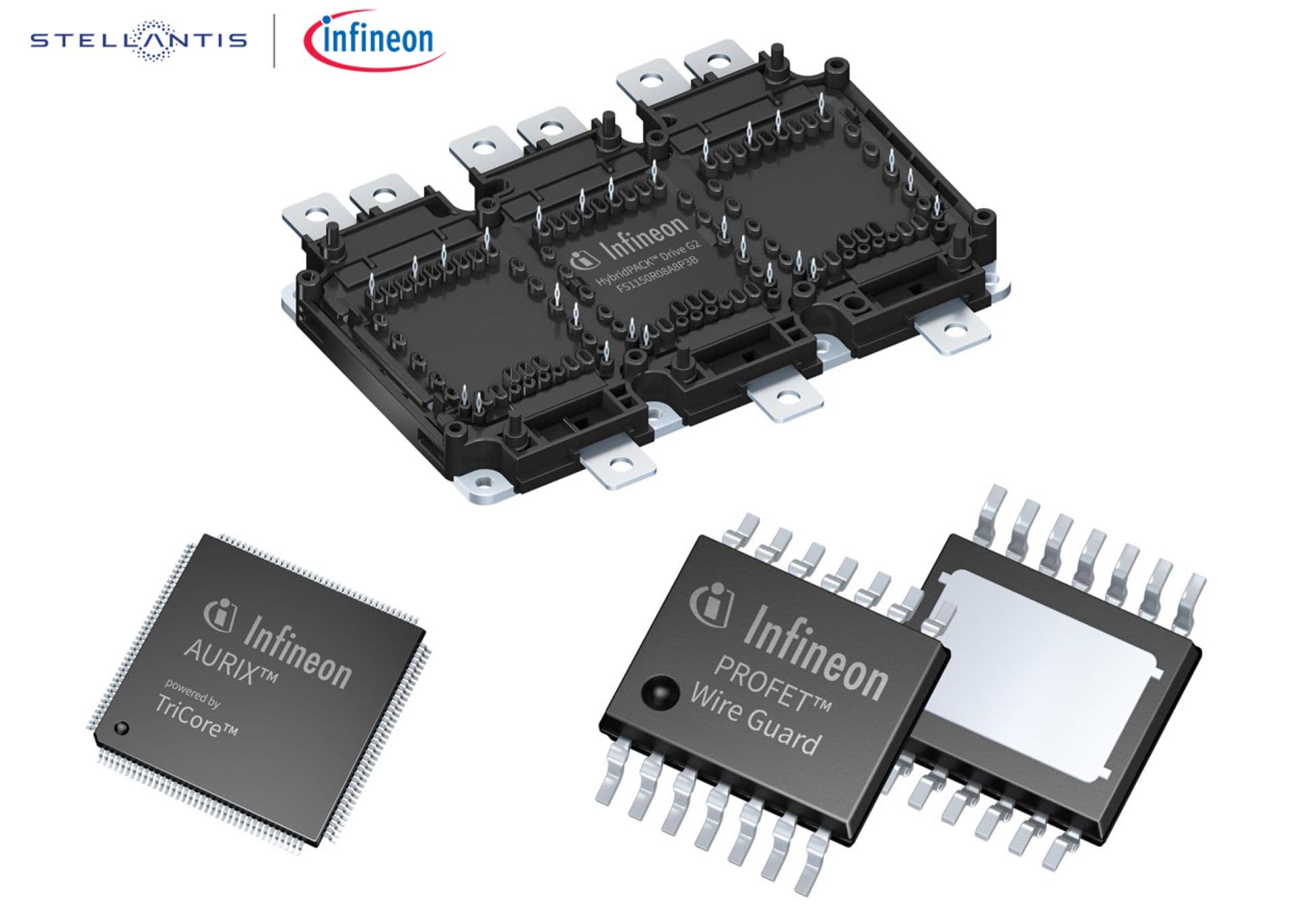
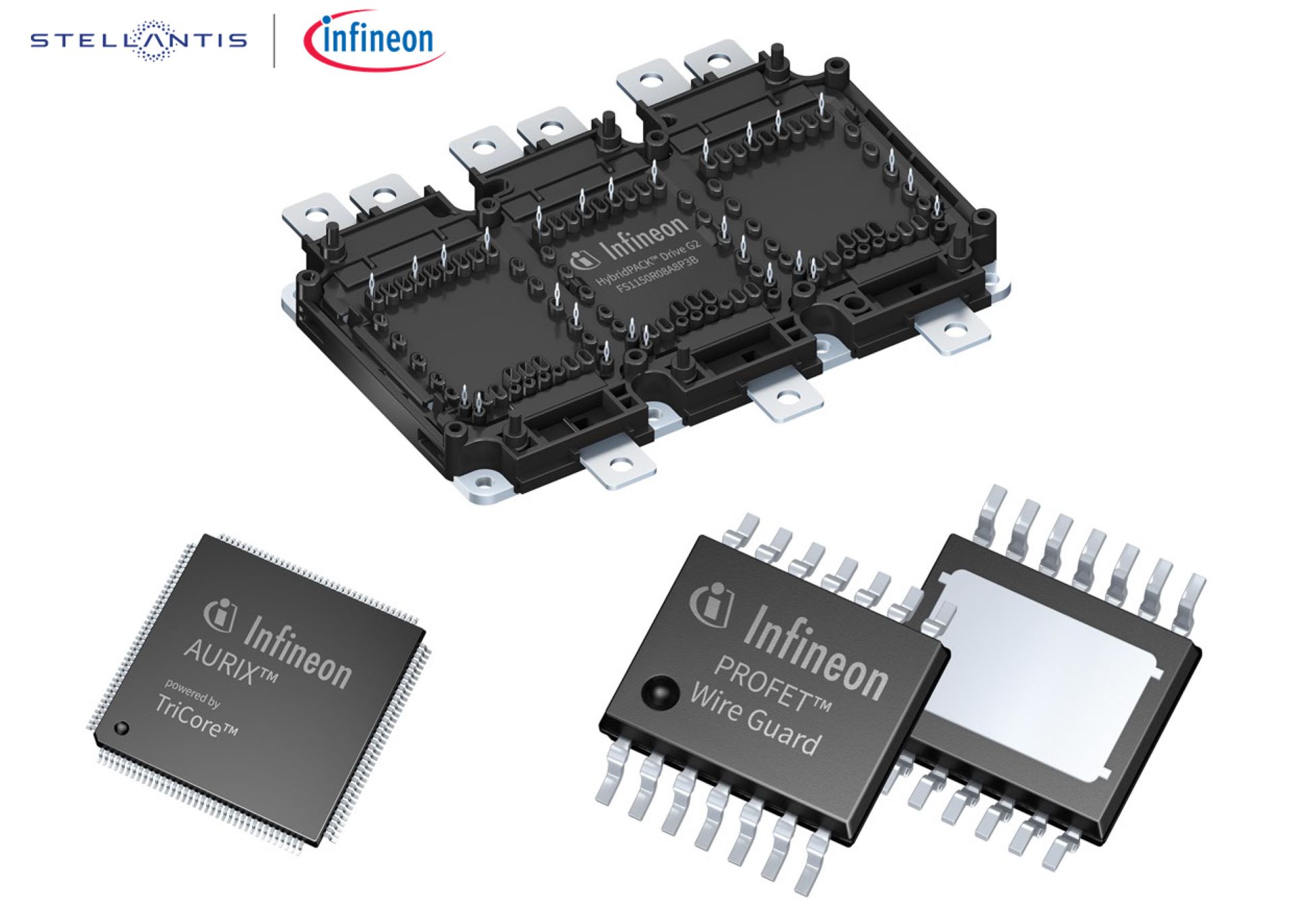
The agreement, which includes substantial supply and capacity reservations, signifies a major commitment by both companies to transform the next generation of Stellantis’ power architecture, using advanced components that promise to elevate cost efficiency, energy efficiency, and overall vehicle performance. Key elements of the collaboration include Infineon’s PROFET™ smart power switches, silicon carbide (SiC) semiconductors, and AURIX™ microcontrollers, which collectively will be instrumental in establishing Stellantis’ software-defined EV ecosystem.
Replacing Tradition with Innovation: PROFET™ Smart Power Switches
One of the standout aspects of this partnership is the integration of Infineon’s PROFET™ smart power switches into Stellantis’ EV architecture. Unlike traditional fuses, PROFET™ switches offer an intelligent power management solution, capable of reducing wiring and optimizing energy flow. Stellantis’ adoption of these switches marks a significant milestone, as it positions the company among the first automotive manufacturers to implement intelligent power network management at this level. This innovation is expected to not only reduce vehicle weight but also increase safety and durability by enhancing electrical system resilience.
Silicon Carbide Semiconductors: Boosting EV Efficiency and Reducing Costs
Central to the collaboration are Infineon’s SiC CoolSiC™ semiconductors, which offer a breakthrough in power management and efficiency. By standardizing its power modules on silicon carbide, Stellantis aims to dramatically improve EV performance and extend driving range. These SiC semiconductors operate with less energy loss than traditional silicon-based components, resulting in a more efficient and cost-effective EV powertrain. For consumers, this translates into longer driving ranges, reduced charging times, and potentially lower vehicle costs.
AURIX™ Microcontrollers and STLA Brain Zonal Architecture
The partnership also introduces Infineon’s AURIX™ microcontrollers to Stellantis’ STLA Brain zonal architecture. This new architecture, described as the “nerve center” of future Stellantis EVs, will enable a more sophisticated and responsive electrical and electronic (E/E) system. By using zonal architecture rather than traditional wiring harnesses, Stellantis will streamline the vehicle’s electronic operations, leading to faster data processing, enhanced driver assistance systems, and greater adaptability to over-the-air updates. The AURIX™ microcontrollers will support this scalable and modular architecture, setting a new standard for software-defined vehicles.
Launching a Joint Power Lab for Future Innovation
In addition to the initial supply and capacity agreements, Stellantis and Infineon are planning to establish a Joint Power Lab. This innovative space will serve as a collaborative research hub, dedicated to developing scalable, intelligent power solutions for Stellantis’ upcoming EV models. By consolidating research and development, the Joint Power Lab will play a pivotal role in refining the power architecture to meet the demands of software-defined vehicles.
“As outlined in our strategic plan, Dare Forward 2030, we are securing the supply of crucial semiconductor solutions required to continue our transition to an electrified future,” commented Maxime Picat, Stellantis Chief Purchasing and Supplier Quality Officer. “Innovative E/E architectures will be the backbone of our next-generation platforms.”
Infineon, a global leader in the semiconductor industry, brings unmatched expertise to the table. With its world-class SiC production facilities in Malaysia and Germany, as well as strategic joint ventures like its partnership with TSMC, Infineon is well-equipped to meet growing market demand. According to TechInsights, Infineon holds a commanding 29% share in the global automotive microcontroller market, underscoring its influence in the field.
“Infineon is now entering a collaboration and innovation partnership with Stellantis,” stated Peter Schiefer, President of Infineon’s Automotive Division. “Our semiconductors drive the decarbonization and digitalization of mobility. They increase the efficiency of cars and enable software-defined architectures that will significantly improve the user experience.”
The Future of EVs: A New Era in Power Architecture
The Stellantis-Infineon collaboration represents a strategic alignment that could redefine the EV power architecture landscape. By focusing on scalable, intelligent, and cost-efficient solutions, Stellantis is poised to deliver vehicles that meet the evolving needs of a digital and environmentally conscious consumer base. With Infineon’s technology at the core of its new E/E architecture, Stellantis is set to offer a more connected, efficient, and sustainable driving experience.
As the global EV market accelerates, this partnership demonstrates how collaboration between automakers and semiconductor experts can drive impactful change in automotive technology. The move not only underscores Stellantis’ commitment to sustainable innovation but also highlights Infineon’s role in powering the future of electrified mobility.
Comments
Newest firstLoading comments…