


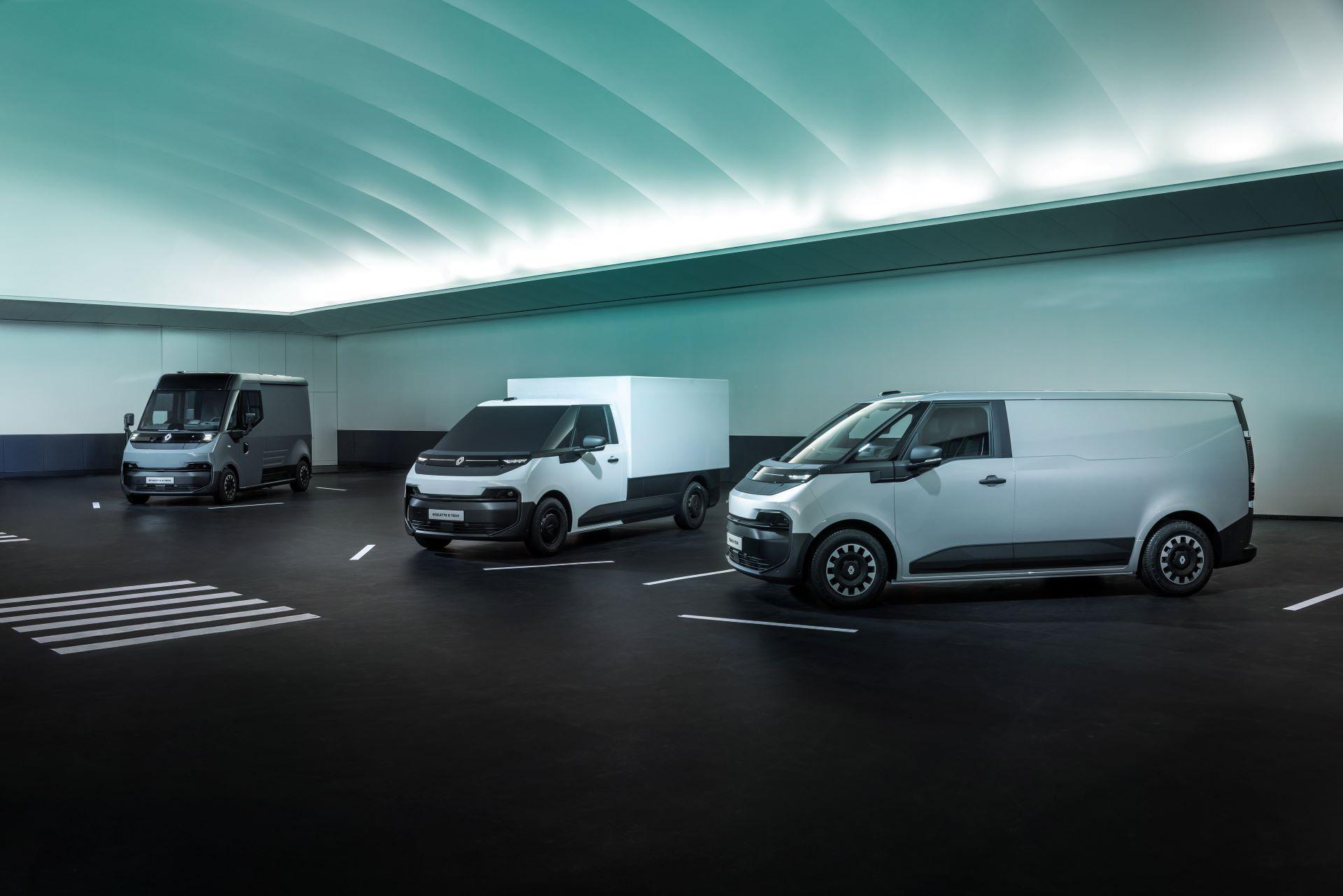
Renault, a pioneering force in the commercial vehicle sector and an early adopter of electric mobility, is poised to redefine the light commercial vehicle (LCV) segment once again. Building on its legacy of innovation that began with the all-electric Kangoo 15 years ago, the French automaker is launching a revolutionary new generation of electric vans—Trafic, Goelette, and Estafette E-Tech—designed to meet the complex demands of modern business users.
This next-gen E-Tech range, developed by FLEXIS and underpinned by a new electric skateboard platform, brings together cutting-edge software, high-efficiency hardware, and a design philosophy deeply rooted in utility and sustainability. It’s a bold, future-facing move that positions Renault to solidify its leadership in the electrified LCV space.
Three Icons, One Electric Future
The new family—Trafic, Goelette and Estafette—shares a design DNA that honours Renault’s historic icons, but each model delivers a distinct personality tailored to specific business applications. Together, they offer an unparalleled blend of versatility, performance and digital intelligence.
Built in France at Renault’s Sandouville plant, these vans will not only offer 100% electric mobility but also enable customised body solutions through Qstomize, Renault’s in-house conversion arm. This ensures every business, from urban couriers to tradespeople, can find a model tailored to their operational needs.
Revolution Under the Skin: Electric Platform and SDV Architecture
All three vans are the first Renault models to benefit from Ampere’s new Software Defined Vehicle (SDV) architecture—a major leap in the brand’s digital evolution. This flexible, upgradable system ensures that the vans remain current throughout their lifecycle, with over-the-air updates and seamless integration into the cloud and energy ecosystems.
Complementing this is a brand-new all-electric skateboard platform. Compact, agile and cleverly packaged with a rear-mounted powertrain, the platform offers best-in-class manoeuvrability (just a 10.3m turning radius, equal to the Clio) and maximised cargo volume thanks to a flat floor and short overhangs.
Battery Choice, Ultra-Fast Charging, and Long Range
Renault understands that not all business users have the same needs. That’s why the new E-Tech range offers two battery technologies:
- Standard Range (LFP): An affordable solution for urban operators, offering up to 350 km WLTP range without the use of rare earth metals.
- Long Range (NMC): Tailored for high-mileage fleets, delivering up to 450 km WLTP with advanced nickel manganese cobalt chemistry.
For the first time in a Renault van, 800V architecture enables ultra-fast DC charging—going from 15% to 80% in under 20 minutes. This ensures minimal downtime and maximum productivity, particularly for users who can’t afford long charging stops during the workday.
Power, Performance and Sustainability
The newly developed 150 kW electric motor (345 Nm torque) brings smooth and responsive power delivery, perfectly balancing payload capability and driving refinement.
Renault also raises the bar in ecological sustainability. Each van incorporates 22.5% recycled materials, with 80% of those materials recyclable at end of life—excluding the battery. By 2030, Renault Group targets 33% recycled content across its vehicles.
Connected and Empowered: V2X Integration
In a rapidly electrifying world, connectivity extends far beyond the cabin. Renault’s new vans are V2X-enabled, offering:
- Vehicle-to-Load (V2L): Power tools, laptops or equipment directly from the van’s battery via multiple outlets, including one in the cab and one in the cargo area.
- Vehicle-to-Grid (V2G): Feed energy back to the grid during peak times, offering new opportunities for fleet operators to participate in energy markets and reduce overall costs.
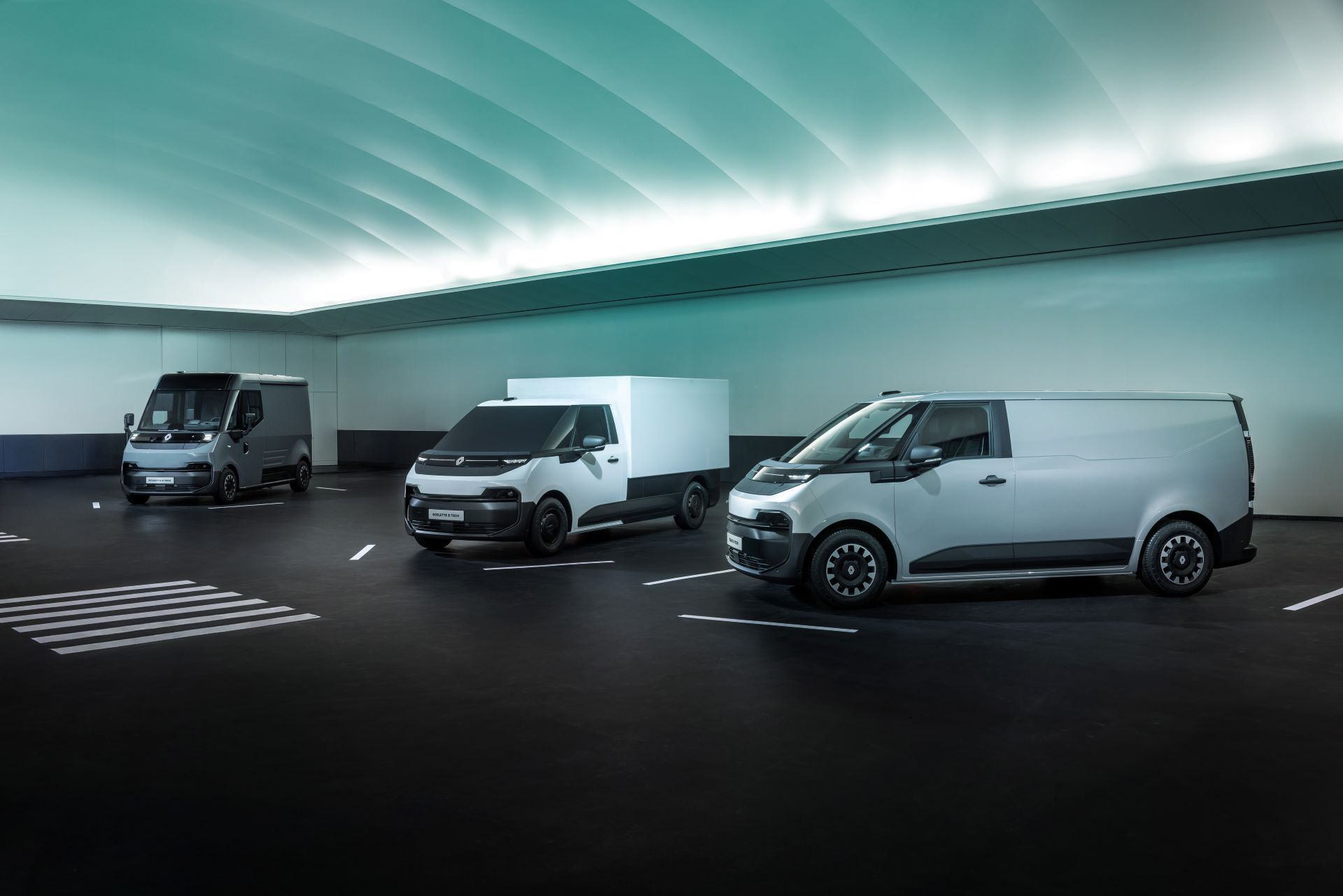
Renault Trafic E-Tech: The Versatility Champion
Among the trio, the Trafic E-Tech stands out as the all-rounder, with a legacy stretching back to 1980 and over 2.5 million units sold. This fourth-generation model is no mere evolution—it’s a full reinvention.
With its one-box aerodynamic body, rear powertrain layout, and two available lengths (L1: 4.87m, L2: 5.27m), Trafic offers up to 5.8 m³ of load volume. Its 1.90m height ensures easy access to urban underground parking, while modern aesthetics—backlit logos, light strips, and visor-style windscreen—signal a future-forward design language.
Inside, the disruptive dashboard architecture includes a 10” digital instrument cluster and a 12” infotainment screen, marrying robust ergonomics with premium tech appeal.
A Complete LCV Ecosystem for Professionals
This isn’t just a new product launch; it’s a 360° transformation. With its new E-Tech range, Renault blends hardware innovation, software adaptability and a deep understanding of professional users to offer:
- Low operating costs
- Seamless fleet integration
- Long-lasting digital relevance
- Urban-friendly design
- Zero tailpipe emissions
As Alessandro de Rinaldis, Product Leader for the range, puts it:
“Designed around software, they benefit from software and hardware upgrades throughout their lifecycle to support professionals and local authorities in their energy transition as effectively as possible.”
Renault: Still the Trailblazer
With the Kangoo E-Tech, Renault pioneered the fully electric van 15 years ago. Now, with Trafic, Goelette and Estafette E-Tech, it is rewriting the rules once again. These aren’t just electric vans—they’re smart, agile, sustainable workhorses engineered for the business realities of tomorrow.
Whether you’re running a fleet, delivering in dense cities, or powering tools at remote job sites, Renault’s new generation of electric vans gives you the edge.
Renault. Reinventing the van. Again.


