





Johannesburg, South Africa – 20 January 2025
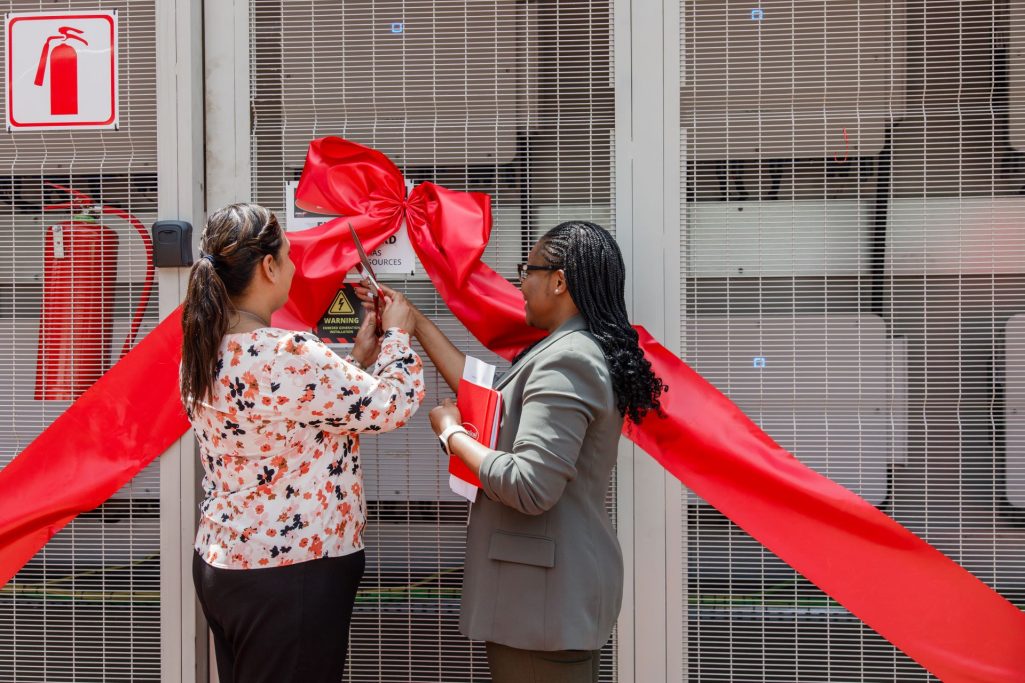
Henkel South Africa has taken a transformative step forward in its sustainability journey by launching a solar farm at its Alrode manufacturing plant. With this installation, the plant now operates on 100% renewable electricity during daytime hours, underscoring Henkel’s commitment to tackling climate challenges while supporting South Africa’s national 2050 sustainability targets.
Boasting a peak capacity of 1.8 megawatts, the solar farm is seamlessly integrated into the plant’s energy grid, providing uninterrupted power while reducing greenhouse gas emissions. This achievement positions Henkel as a leader in sustainable industrial operations, setting a new benchmark for renewable energy adoption in the manufacturing sector.
Revolutionising Energy Use in Manufacturing
The solar installation is grid-tied, ensuring real-time adaptation to energy demands. During the day, the solar farm meets all of the plant’s electricity needs. At night, operations are powered by a mix of grid electricity and Henkel’s renewable energy certifications. This dual-source approach ensures operational continuity without compromising sustainability goals.
By leveraging solar energy, the Alrode plant is set to reduce its reliance on the national grid by 70% during the day, translating to a substantial cut in carbon emissions.
“Achieving 100% renewable energy sourcing for daytime operations is a proud moment for Henkel South Africa,” said Thelma Mamatlepa, Plant Manager at Henkel SA. “This project proves that sustainable operations and economic efficiency can co-exist, serving as a model for other industrial players in the country.”
A Cornerstone in Henkel’s Net-Zero Roadmap
The solar farm forms a critical pillar of Henkel’s net-zero strategy. In addition to its current achievement, Henkel plans to fully electrify the Alrode plant by 2025/2026. Upcoming initiatives include installing an advanced electrical boiler to replace fossil-fuel-based systems, further reducing scope 1 and scope 2 emissions.
“Henkel’s efforts are aligned with science-based targets, driving meaningful progress in sustainability while contributing to South Africa’s broader energy transition,” added Mehmet Yilmaz, Director Operations and Projects HAT MEA.
Driving Efficiency Through Innovation
Beyond the solar farm, Henkel has implemented several innovative measures to optimise energy efficiency across the Alrode plant:
- Optimised Boiler Systems: Upgraded operations through descaling, servicing, and advanced water treatment technologies.
- Enhanced Insulation: Steam lines and mixers are insulated to minimise heat loss and conserve energy.
- Smart Scheduling: High-energy-demand activities are scheduled during daylight to maximise solar power utilisation.
- Resource Recycling: Process water is reused for cleaning and operational needs, significantly reducing water consumption.
- LED Lighting Rollout: Energy-efficient lighting solutions are being implemented across warehouses and office spaces.
Fostering Collaboration and Employee Empowerment
Henkel’s solar project highlights the importance of inclusivity and collaboration in achieving sustainability goals. Employees at all levels contributed by identifying energy-saving opportunities, proposing process adjustments, and championing new initiatives.
“From optimising motor operations to developing water-saving strategies, our employees have shown extraordinary ingenuity,” said Mamatlepa. “Their contributions are a testament to the power of collective action and shared commitment.”
Charting a Sustainable Future
While the current solar installation does not include energy storage, Henkel plans to explore battery solutions to enhance energy independence further. The plant’s energy monitoring systems will also be upgraded to provide real-time insights into consumption, enabling continuous optimisation.
“Henkel’s solar farm is more than an operational milestone—it’s a demonstration of what’s possible when innovation and determination converge,” said Veerabhadra Konakalla, Head of Sustainability, Health and Environment HAT IMEA. “We hope to inspire other organisations to embrace renewable energy and environmental responsibility.”
A Call to Action for Industry
Henkel’s Alrode solar project is a powerful example of how businesses can overcome South Africa’s energy challenges, including load shedding and rising electricity costs. By combining innovation with data-driven strategies, Henkel has created a model for industrial sustainability that balances environmental and economic priorities.
“At Henkel, sustainability is not just a target—it’s a responsibility,” concluded Konakalla. “We are proud to contribute to a cleaner, greener future for South Africa.”
Through bold initiatives and a steadfast commitment to renewable energy, Henkel South Africa is leading the charge toward a sustainable tomorrow, setting a new standard for industrial innovation in the region.
Comments
Newest firstLoading comments…