



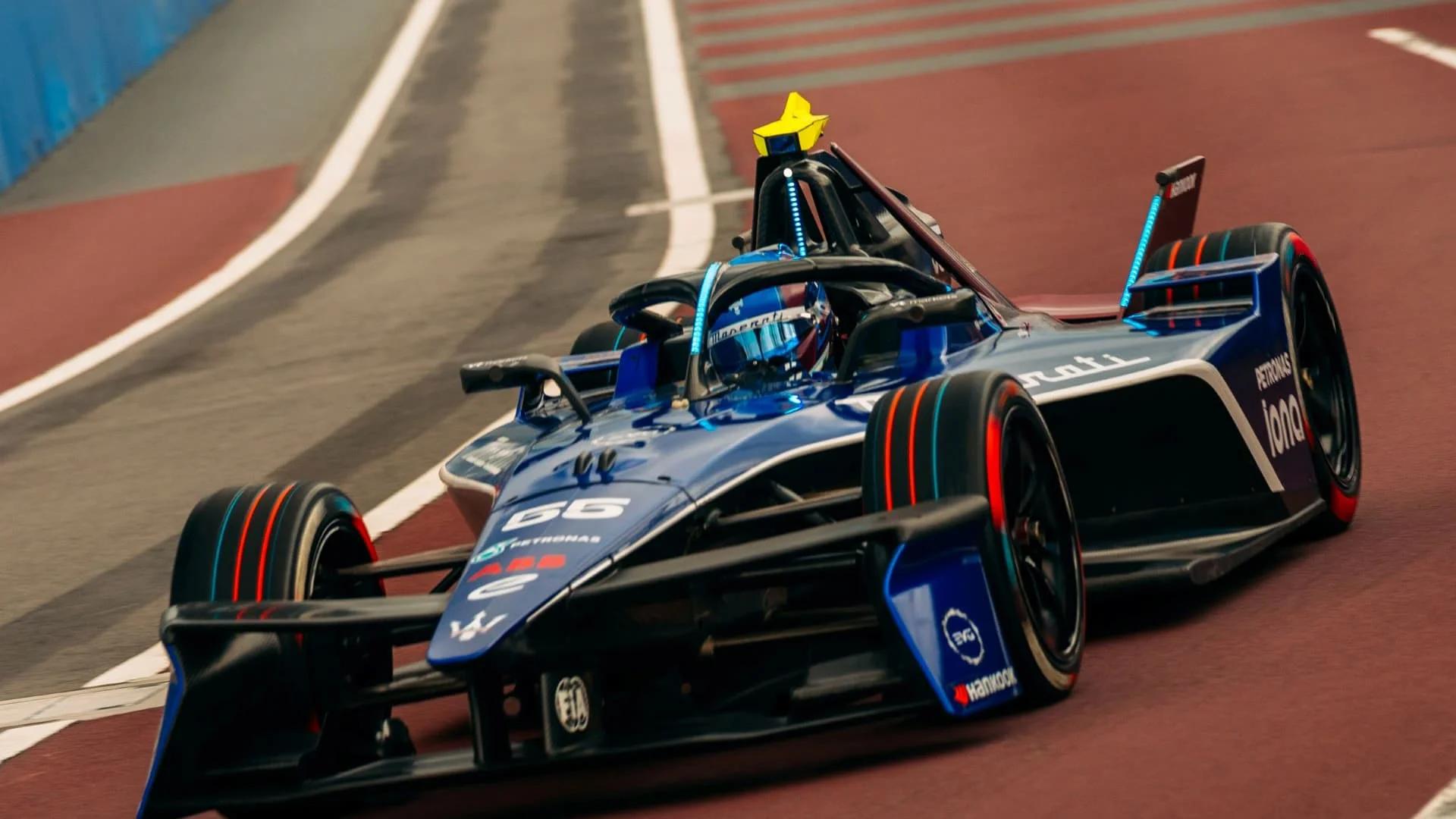
After basking in the thrill of a Round 8 victory, Maserati MSG Racing came back down to earth with a hard-fought but ultimately unrewarding Round 9 in Tokyo. The team’s momentum couldn’t carry them to a second consecutive win, as race-day complications and misfortune hampered both drivers’ efforts. Jake Hughes finished in 18th, while Stoffel Vandoorne was forced to retire following a dramatic late-race collision.
Qualifying Woes Set the Tone
Unlike the previous day’s rain-disrupted schedule, Round 9 offered a dry and straightforward qualifying session. Yet that clarity didn’t translate to progress for Maserati MSG Racing.
Stoffel Vandoorne, starting first in Group A, felt confident after changes made in FP3. But a high-speed crash from Jaguar’s Mitch Evans interrupted the session and denied Stoffel the chance to build momentum. He pushed hard, but traffic on his final lap saw him fall just half a second short of progressing to the duels.
Jake Hughes, out in Group B, encountered a now-familiar adversary — tyre temperature inconsistencies. Despite a promising FP3 session where he ran comfortably near the front, the switch to a new tyre set for qualifying saw performance drop off significantly. “At the moment we don’t completely understand this tyre,” he reflected. “It’s not reflective of the true pace of the car.”
Both drivers were left watching the duels from the sidelines, a disadvantage that would prove decisive come race time.
Strategic Gambles Undone by Late Safety Car
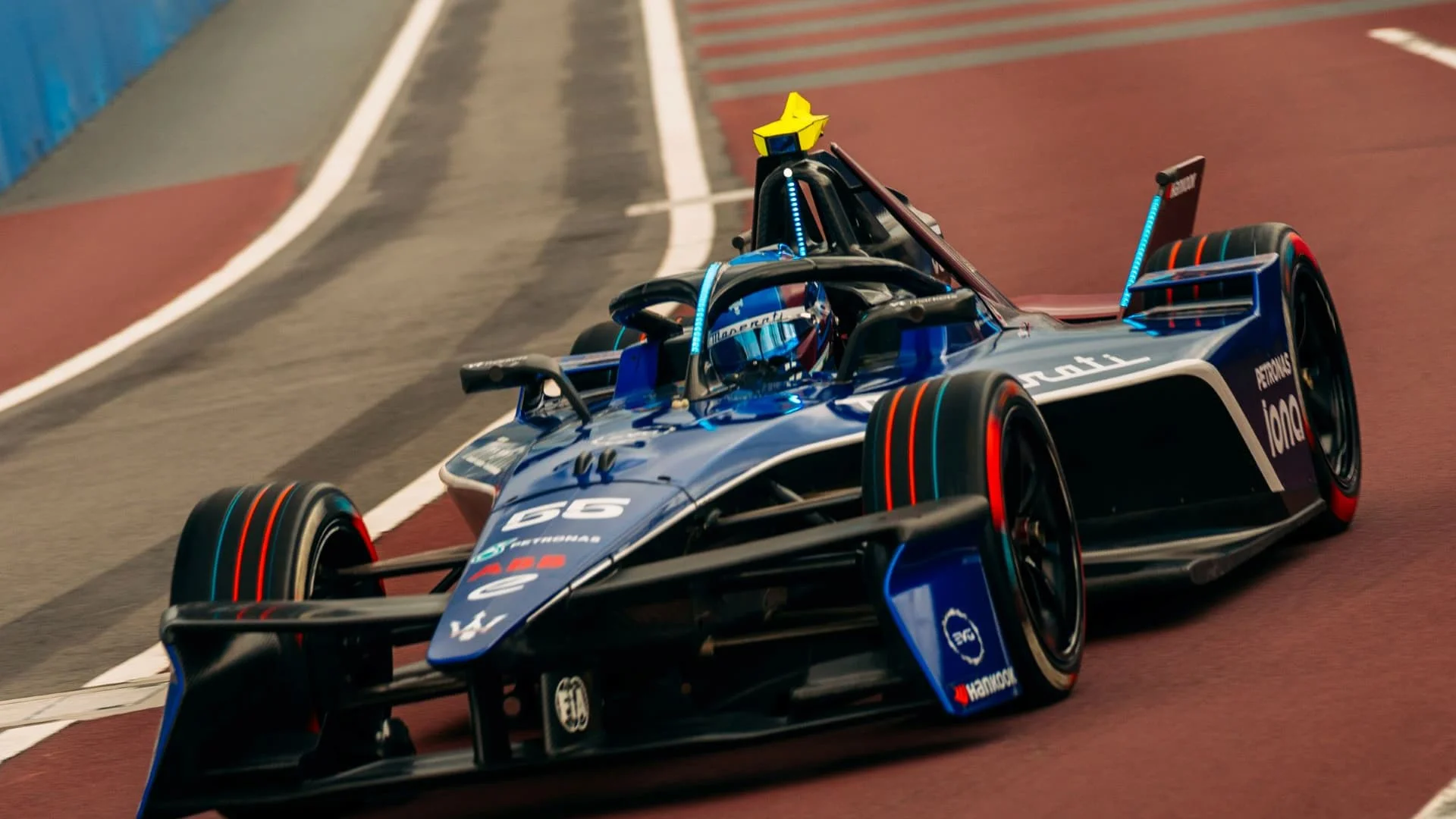
With overtaking opportunities at a premium, the team opted to split strategies in a bid to salvage points. Jake took a bold early Attack Mode approach, aiming to disrupt the rhythm of the midfield. Stoffel followed a more traditional plan, biding his time and carefully managing energy.
Both were making headway — Jake found himself in the points, while Stoffel was on track for a potential top-ten finish. But a late-race safety car, triggered by McLaren’s Taylor Barnard, changed everything. Deployed with only moments to spare, it denied Jake the time to properly complete his remaining two minutes of Attack Mode. In a bid to avoid an infringement penalty, he was forced to dramatically slow down on the final lap — undoing all the gains he had made and dropping him to the bottom of the classification.
For Stoffel, the situation was even more unforgiving. As he launched an overtake on Nissan’s Norman Nato coming out of Turn 8, Nato suffered a torque cut. The contact that followed sent Stoffel’s car briefly airborne, causing a puncture and broken front wing. With no way to continue, his race came to a premature end.
“It was a tough race,” Stoffel admitted. “I think we could’ve grabbed a couple of points. It wasn’t the result we wanted, but the performance was there — we just need to qualify better.”
Leadership Reflects and Refocuses
Team Principal Cyril Blais acknowledged the missteps in qualifying that set the stage for a challenging afternoon. “We didn’t do the job in qualifying, so we started too far back,” he said. “In the race, both drivers were fighting inside the top ten. The safety car came one lap too late for Jake — otherwise, he’d have been right in the points. We did what we could today, now we turn our focus to understanding our one-lap pace.”
Maria Conti, Head of Maserati Corse, put the weekend in broader context: “Every race weekend is an opportunity for learning. We leave Tokyo not only with a remarkable victory but also with valuable insights to carry into the next stage of the season. Our aim remains to consistently perform at the highest level, and to bring Maserati’s racing DNA ever closer to the front of the grid.”
A Weekend of Contrasts, A Season Still in Play
Tokyo served up a classic tale of two races for Maserati MSG Racing. Saturday brought celebration and a standout win, while Sunday delivered sobering lessons about consistency, strategy execution, and qualifying precision.
Still, with competitive race pace on display and a valuable win already secured in Japan, the team leaves with more positives than negatives. Shanghai looms as the next chapter — and with it, a chance to translate their evident potential into more meaningful points.
As Jake Hughes put it: “We learnt a lot this weekend. We go into Shanghai with, hopefully, some good momentum.”


