




As the leaves turn this autumn and Suzuki prepares to launch the all-electric e Vitara—its very first EV—it marks more than just a technological milestone. It’s a poignant reminder of a 70-year journey that began with a single car, a visionary founder, and a doctor who once made his house calls by bicycle.
From Looms to the Open Road
Suzuki Motor Corporation’s story doesn’t begin with cars, but with cotton. Founded in 1920 by Michio Suzuki in the coastal city of Hamamatsu, the company started as a manufacturer of textile looms. For decades, Suzuki’s innovations in loom technology set new standards in the industry, until a post-war decline in the cotton market forced a strategic pivot. That shift would change the course of automotive history.
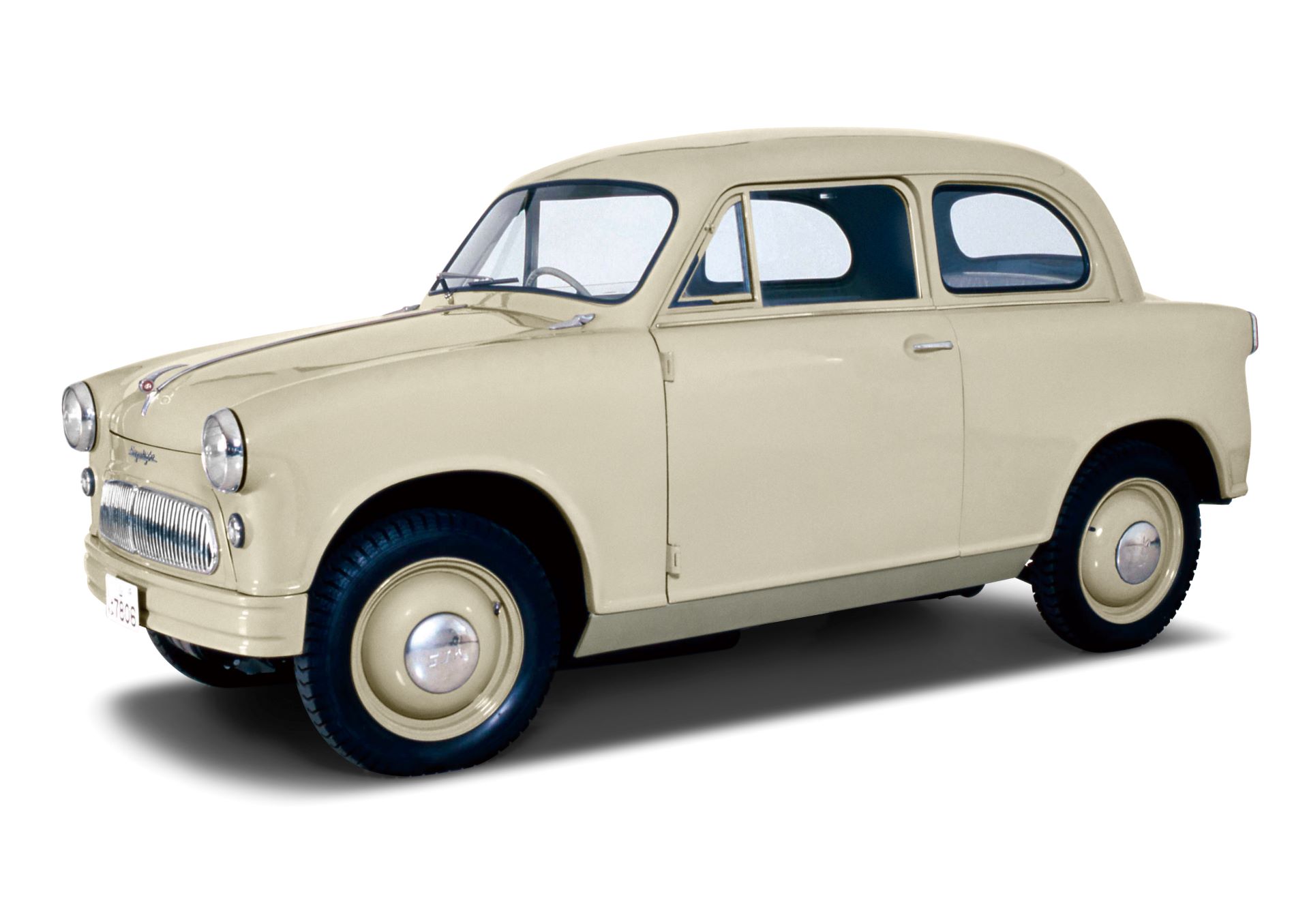
In 1953, Suzuki’s first foray into motorised transport took shape with the production of its debut motorcycle. Just two years later, in October 1955, the company officially entered the automotive arena with its first car—the Suzulight.
The Birth of the Suzulight
The Suzulight was more than a car; it was a statement of intent. Compact, clever, and daringly forward-thinking, the vehicle was powered by a 360cc two-stroke engine producing 15PS. Weighing just over 500kg and under three metres in length, it not only satisfied Japan’s strict Kei car regulations but also introduced innovations that were well ahead of their time: a front-engine, front-wheel-drive layout, independent coil spring suspension, and rack-and-pinion steering—all firsts for Japanese passenger vehicles.
But the journey to this point was not without interruption. Initial research into compact cars had begun as early as 1937, only to be halted by the outbreak of World War II. It wasn’t until 1954—when Suzuki Motor Co. Ltd was officially formed—that development resumed in earnest.
Guided by the local Enshu philosophy of Yaramaika—“Let’s do it”—Michio Suzuki immersed himself in automotive engineering, studying international designs and synthesising global insight with Japanese practicality.
A 300km Test of Grit
To prove the Suzulight’s mettle, Suzuki’s team undertook a now-legendary 300km test drive through the rugged Hakone mountains en route to Tokyo. Navigating largely unpaved roads, the team eventually arrived late at night to meet the President of Yanase Auto, then Japan’s leading authority on automobiles.
Despite the late hour, the President personally tested the prototype for several hours. Impressed by its engineering and performance, he gave his immediate endorsement for production. By early 1956, output had risen from just 3–4 units a month to 30, setting the wheels in motion for Suzuki’s ascension as a leading automaker.
The Legacy Continues
Fast forward 70 years, and the spirit of the Suzulight is alive and well. Suzuki Motor Corporation is now a global force, producing more than three million vehicles annually, with ambitions to exceed four million by 2030. Throughout, its commitment to small, lightweight vehicles has remained unwavering.
This ethos is most clearly expressed in the ‘HEARTECT’ platform—an advanced lightweight architecture that underpins current models like the Swift, Vitara, and S-Cross. And now, with the introduction of HEARTECT-e—engineered specifically for electric mobility—it paves the way for a new era, starting with the e Vitara.
A Future Rooted in Ingenuity
As Suzuki embraces the future with its first electric vehicle, it does so grounded in a remarkable legacy of innovation, resilience, and purposeful design. The e Vitara is not just a new chapter; it’s a continuation of the journey that began in 1955—with a simple dream, a pioneering car, and the enduring belief that small can indeed be mighty.
Would you like a title suggestion that’s more emotionally driven or technically focused?


