



Volvo Car South Africa’s electric vehicle (EV) lineup has captured the imagination of a rapidly growing audience. Leading the charge is the Volvo EX30, a compact crossover that has swiftly become a game-changer, converting combustion engine enthusiasts to the electrified era. Its design, efficiency, and sustainability resonate deeply with today’s drivers. But this modern marvel owes part of its existence to an unexpected pioneer: the 1976 Volvo Elbil concept car.
The Forgotten Pioneer
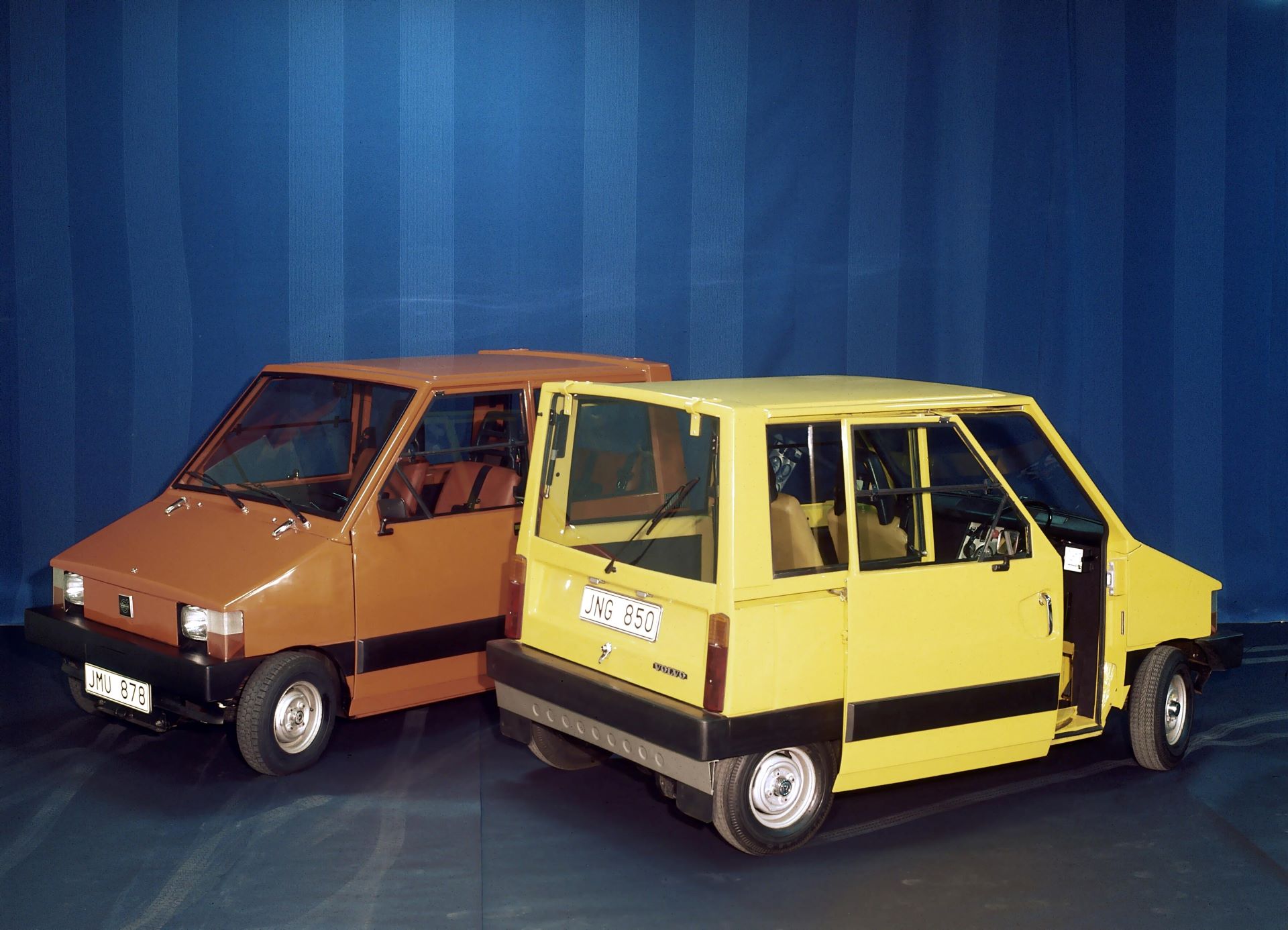
While Volvo’s XC40 Recharge marked the company’s first production EV, the seeds of electrification were sown decades earlier. In the mid-1970s, Volvo unveiled the Elbil, a bold experiment in sustainable mobility. Designed in collaboration with Swedish telecommunications company Televerket, the Elbil was available in two prototypes: a utilitarian two-seater for short-distance deliveries and a compact four-seater for urban driving.
With a length of less than 2.3 meters—nearly half the size of today’s EX30—the Elbil was a minimalist departure from Volvo’s typically robust design language. Its only identifiers were the Volvo badges on the front and rear fascias. Under the hood, it featured two electric motors powering the rear wheels and a dozen six-volt lead-acid batteries, giving it a modest range of 50 km.
A Trailblazer with Limits
Despite its pioneering spirit, the Elbil was not without limitations. The 300 kg battery pack contributed to its total weight of roughly a ton, and its top speed of 69 km/h reflected its utilitarian focus. Yet, within its constraints, the Elbil was a revelation, providing Televerket employees with a zero-emission solution for mail deliveries and short commutes.
Felipe Yagi, Head of Marketing & Communications at Volvo Car South Africa, reflected on its significance:
“The Elbil wasn’t just an experiment; it was a bold statement about the future of mobility. Even in the 1970s, Volvo understood the importance of innovation in creating a sustainable tomorrow.”
Visionary Yet Misunderstood
Despite its groundbreaking concept, the Elbil struggled to gain traction. Public perception of electric vehicles in the 1970s was lukewarm, even during the oil crisis. EVs were dismissed as slow and impractical compared to the rapidly advancing combustion engines of the time.
Still, the Elbil fulfilled its purpose, proving the feasibility of electric drivetrains. While it wasn’t a commercial success, it paved the way for the EV revolution we see today.
From Elbil to EX30
Fast-forward to 2023, and Volvo has come a long way. The EX30, for example, offers a range of up to 480 km—nearly ten times that of the Elbil—and combines advanced technology with cutting-edge design. Alongside the XC40 Recharge and C40 Recharge, the EX30 has solidified Volvo’s position in the EV market. Later this year, the highly anticipated flagship EX90 will further showcase the brand’s electrification strategy in South Africa.
As Yagi aptly summarises:
“Volvo’s journey is a remarkable evolution from a prototype that could travel 50 km to electric cars offering ten times that range. The Elbil’s legacy isn’t just technical—it’s a vision of how innovation can drive meaningful change.”
Looking Ahead
Volvo’s unwavering commitment to electrification continues to inspire. What began with the Elbil as a daring experiment has blossomed into a movement that challenges the conventions of mobility and embraces sustainability. Today, Volvo is not merely responding to the demands of the market; it’s shaping the future of driving.
Comments
Newest firstLoading comments…