



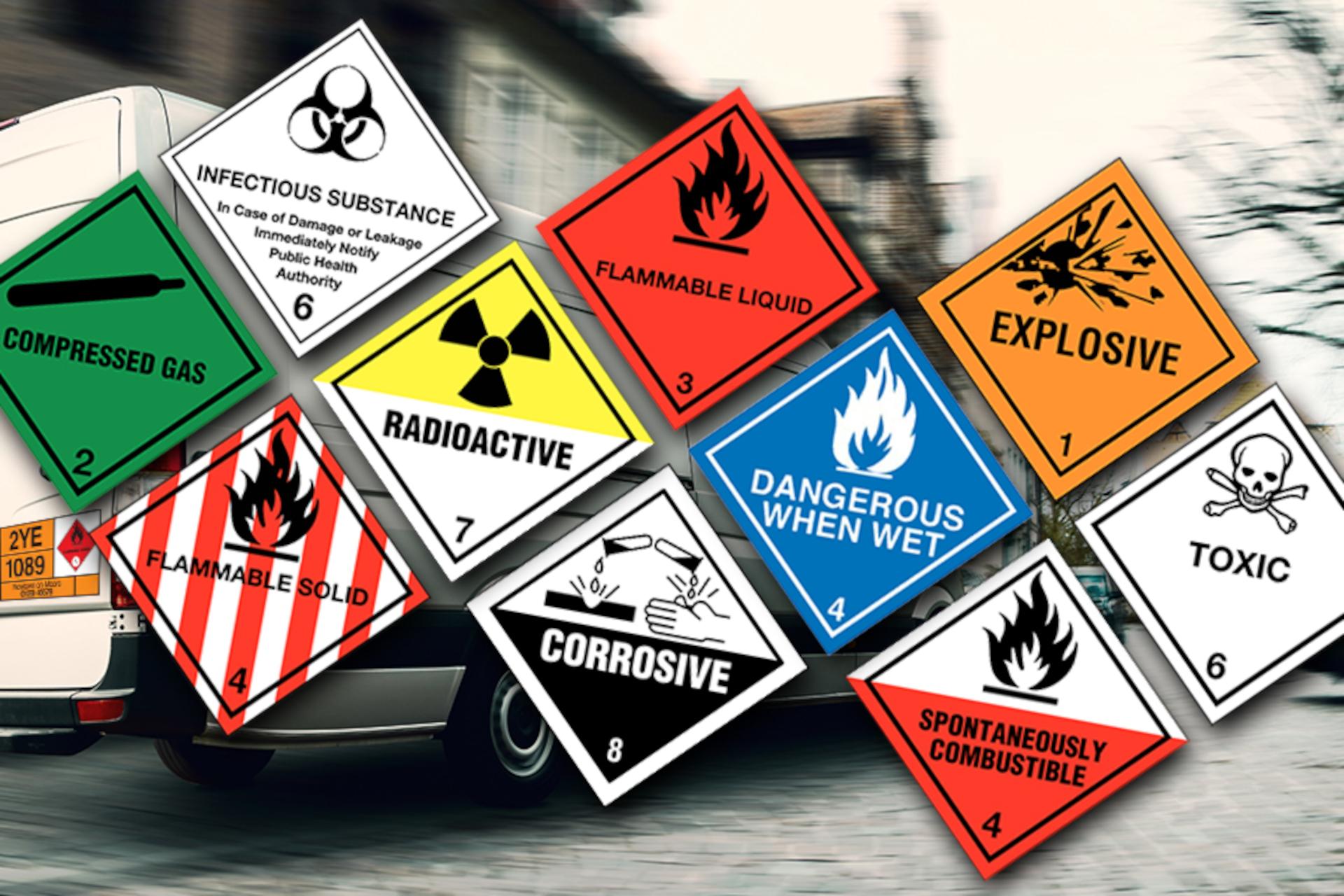
Hauliers carrying dangerous goods or chemicals are usually very aware of their legal requirements – but it’s surprising how easily the basics can be missed.
The police and DVSA often run joint operations to ensure safety of chemicals transport, particularly in those areas which have a lot of fuel refineries or chemicals producers, such as routes into and out of Teesside.
Most vehicles used for the Carriage of Dangerous Goods tend to be fairly new and well maintained, as many have to pass not only an annual standard test but in many cases also an annual inspection to gain approval for transporting dangerous goods. However, many vehicles and drivers stopped at roadside checks are missing some basic but very important safety requirements.
PPE
PPE and vehicle safety equipment may seem a mere precaution – until you need it. The correct PPE is essential to keep the driver and other road users safe in the event of a spill, collision or other incident.
Correct PPE includes:
- Two self-standing warning signs
- A suitable warning vest or warning clothing, gloves and goggles for each member of the crew
- A pocket lamp for each member of the crew. The pocket lamp or torch must be suitable for use in a flammable atmosphere in certain circumstances.
Depending upon the load, the driver must also be equipped with an emergency escape mask, eye rinsing liquid, drain seal, a shovel and a plastic collecting container.
Fire extinguishers
Fire extinguishers are essential, and the amount required depends on the size of the vehicle. These often have special bays on the transport units, but they should always be readily accessible to the driver in the event of a fire. Storage in the cab area to prevent theft is generally acceptable as long as extinguishers remain accessible.
If the extinguisher or the storage compartment gets wet, the body of the extinguisher can corrode, which makes it extremely dangerous. If the body of a fire extinguisher is corroded, it can suffer a catastrophic failure and could cause fatal injury to the person holding it.
Documentation
The driver must carry the vehicle’s ADR approval certificate if it is required (vehicles with tanks and certain bulk carriers), proving that it has passed its inspection for carriage of dangerous goods. If the driver cannot offer proof that the vehicle is ADR approved when required, it may be placed under an immediate prohibition, because it may not be safe to carry a dangerous load.
Drivers should also expect their licence, CPC (Certificate of Professional Competence) and the vehicle’s insurance, to be checked. The tachograph data will be examined and if a driver has exceeded hours marginally for any good reason, s/he should provide and carry a printout explaining the breach and be ready to explain it to officers.
Fatigue is extremely serious in dangerous goods transport. Most of these drivers are highly trained and conscientious professionals. However, the consequences of a lapse in concentration can be devastating. Not only is their vehicle one of the heaviest and most damaging in a collision, but the contents of their load could be an extreme hazard to other road users, emergency service personnel, and the environment.
Consignment details
It’s important that the goods classification is clearly marked, and that all goods are noted on consignment documents.
One common error is for the majority of a load to be reflected on the consignment note – for instance, as a Class 3 chemical – but then for other items of a different class to be added without documentation. To a transport planner this may simply seem common sense, if there is space and the truck is going to the right destination. However, it makes a huge difference to the safety implications of the load. The quantity of all dangerous goods on board should be clearly indicated on the transport document as this is a legal requirement.
Should there be a spill, or collisions, emergency services need to know exactly what is inside each load and accurate documentation is often their only source of information, particularly with packaged goods. Not knowing the full extent or mix of chemicals in a load could lead to an inappropriate and dangerous intervention.
With sealed loads the drivers themselves may be unable to see what they are carrying so need to know from the documentation what they have on board.
Exceptions to the standard ADR rules
Pallet network members and other hauliers who carry ‘limited quantities’ of hazardous goods must also be very careful. Limited quantities are often retail packages – for instance of drain cleaner, bleach or aerosol product. The rules set out what amounts can be classed as limited quantities and the type of packaging required – for example, small retail bottles within shrink-wrapped boxes that are suitably marked.
There are also other exemptions to full ADR rules for specific chemicals which meet the ‘small load’ threshold set out in law, and for excepted quantities. There are specific rules, packaging and labelling obligations with all these exceptions, although they may not be as onerous as full dangerous goods regulations.
The important aspect from a fleet point of view is to realise that while you may not have to follow all dangerous goods/ADR rules, you are still transporting chemicals, and as such need transparent, comprehensive documentation, and informed personnel. Although the law may not require drivers to hold a full vocational training certificate, the employer still has a duty of care towards them and the public.
Even if a full load contains only one pallet of aerosols, for example, emergency services need to know about their presence in the event of a collision, because they could present a hazard.


