-
World premiere of the CrossBlue in Detroit Auto Show – NAIAS 2013:
-
Volkswagen presents midsize SUV concept car with diesel plug-in hybrid
-
Six-seat CrossBlue offers powerful 306 PS and impressive 89 MPGe
-
New plug-in hybrid SUV has all-electric driving range of up to 14 miles in US test cycle
-
Electric driving range of 33 km in standard European test cycle (NEDC)
Wolfsburg / Detroit, 14 January 2013 – Volkswagen is presenting the concept car of a new SUV generation in a world premiere at the North American International Auto Show: the CrossBlue.
The largest carmaker in Europe conceptualized the new versatile SUV specifically for the USA and Canada. If it goes into production, the CrossBlue would enrich the Volkswagen model lineup with a seven-seat midsize SUV of the 5.0-meter class; currently, Volkswagen of America offers the Tiguan (4.4 meters long) and the exclusive Touareg (4.8 meters) as sport utility vehicles. It features one of the most innovative plug-in hybrid systems ever (TDI Clean Diesel + two E-motors + dual-clutch transmission + “propshaft by wire”).
Volkswagen estimates that fuel economy for the four-wheel drive SUV will be 89 MPGe (EPA standard fuel economy equivalent for hybrid vehicles in the USA with full utilization of battery charge; combined Highway and City cycles); in pure diesel operation, fuel economy is 35 MPG (combined Highway and City). In the test cycle of the European R101 ECE standard for electric hybrid vehicles based on computations that cannot be compared to those of the EPA standard the estimated fuel consumption is 2.1 liters per 100 km. Despite this superlative economy, the CrossBlue offers impressive drive system characteristics with a power of 225 kW / 306 PS and up to 700 Newton meters of system torque; the midsize SUV completes the sprint from 0 to 60 mph in just 7.2 seconds (0-100 km/h: 7.5 s).
Driving with zero emissions. The SUV can be turned into a zero emissions car either at the press of a button or automatically. When its lithium-ion battery (energy capacity: 9.8 kWh) is fully charged, the CrossBlue can travel a distance of up to 14 miles in all-electric mode based on the US test cycle; in this mode, its top speed is reduced from 127 mph (204 km/h) to 75 mph (120 km/h) to achieve an optimal driving range. In the new European driving cycle (NEDC), the CrossBlue attains an all-electric driving range of 33 km. Important: it is not possible to directly compare driving ranges and fuel economy values of the US and EU driving test cycles to one another, since the tests are configured differently.
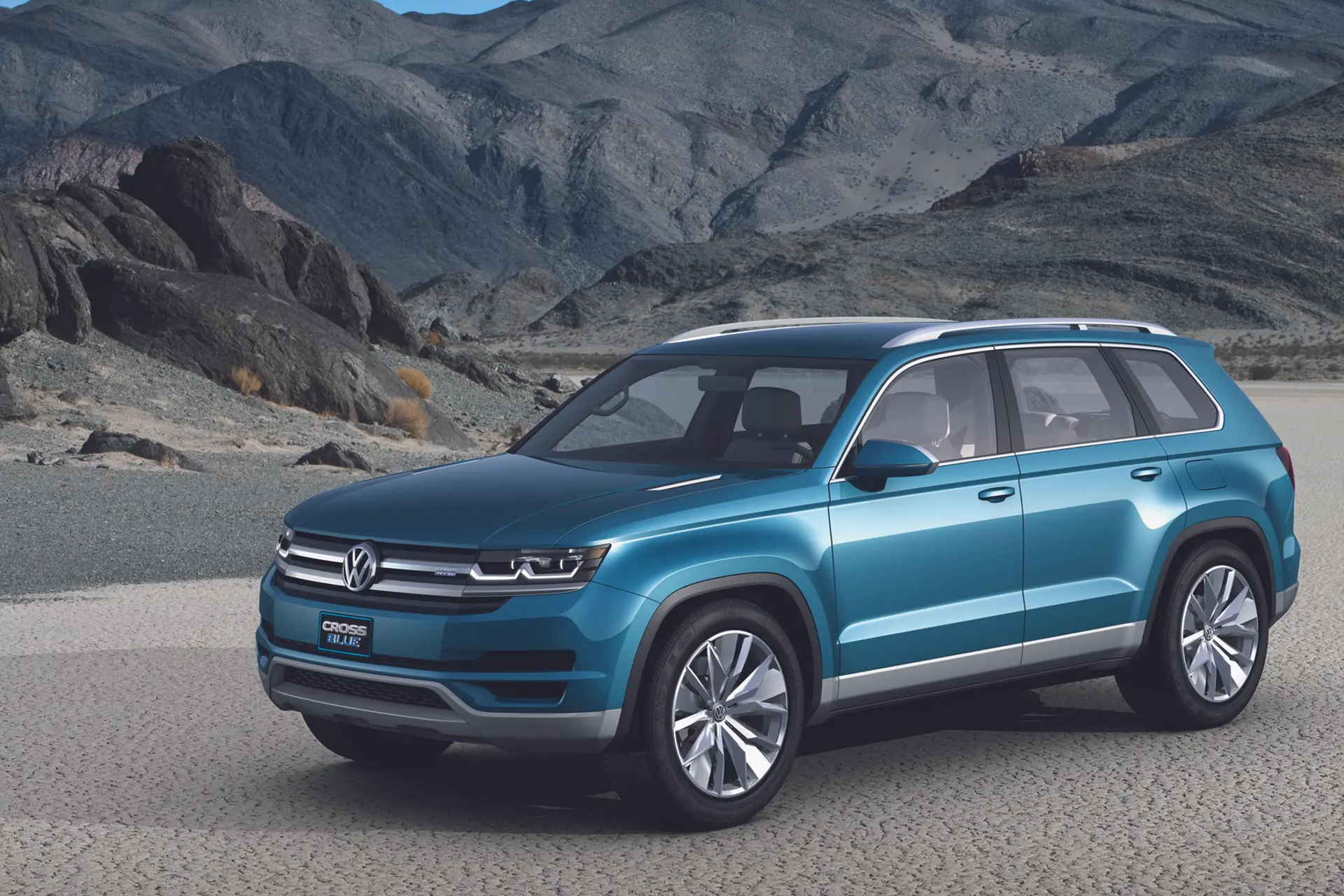
Spaciousness of a minivan. Conceptually, the CrossBlue – equipped with its six individual seats – combines the engine technology and visual impact of an SUV with the spaciousness of a minivan. Its ride comfort makes the CrossBlue an ideal cruiser; its good all-round visibility simplifies maneuvering; with ESP, a four-wheel drive system and up to twelve airbags, the concept car would also be a space cruiser of the safest kind.
Further developed Volkswagen styling. The CrossBlue was designed in Germany under the leadership of Walter de Silva (Head of Design, Volkswagen Group) and Klaus Bischoff (Head of Design, Volkswagen Brand) – but in close coordination with Volkswagen of America. The design effort merged the clean lines of German Volkswagen “design DNA” with the masculine character of an American SUV. This resulted in a very genuine car, which – although it is still a concept car – does not rely on show effects at all, but instead offers a near-production look at a potential new SUV model series from Volkswagen.
Volkswagen CrossBlue Exterior styling – a Volkswagen for America
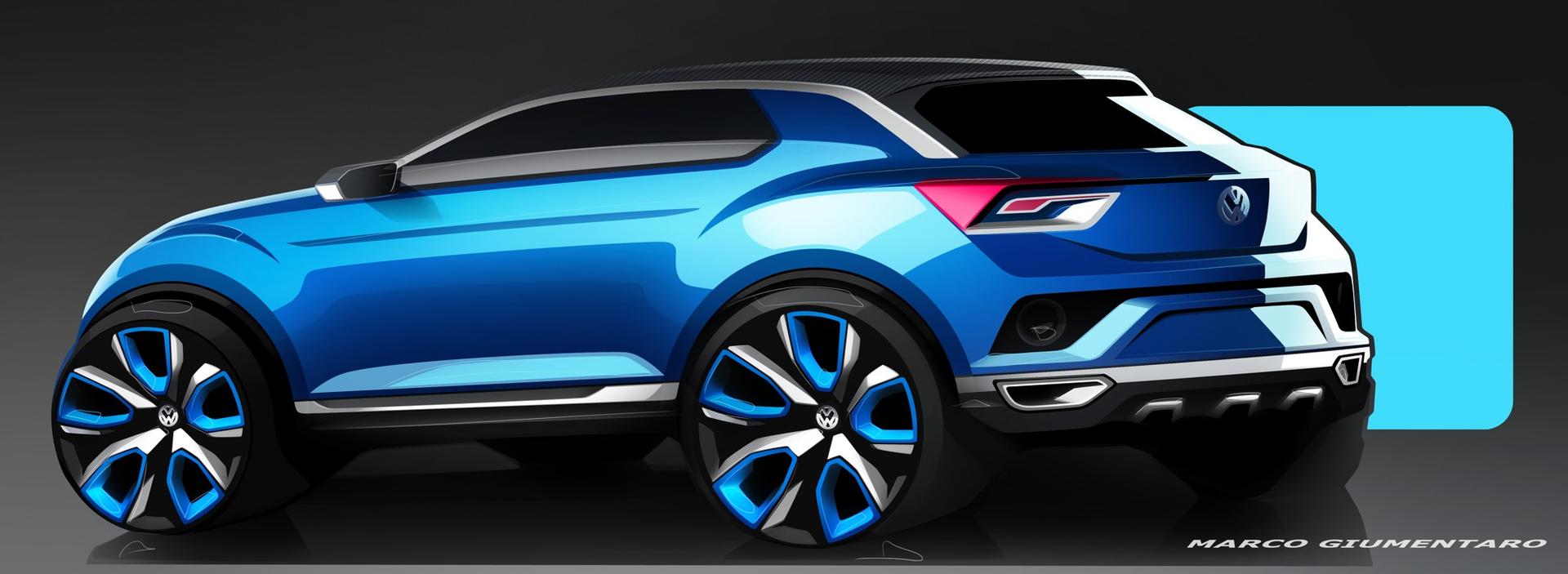
Impressive size. The Volkswagen – painted in “CrossBlue Glass Flake” – is 4,987 mm long, 2,015 mm wide and 1,733 mm tall. The CrossBlue assumes a very confident stance on the road with its large track widths (1,686 mm front, 1,696 mm rear), also newly designed 21-inch alloy wheels (with 285/45 tires) and significantly flared wheel arches. The very masculine image of the new CrossBlue is emphasized by its dominant track widths, dynamic proportions with a long and wide hood and large wheels.
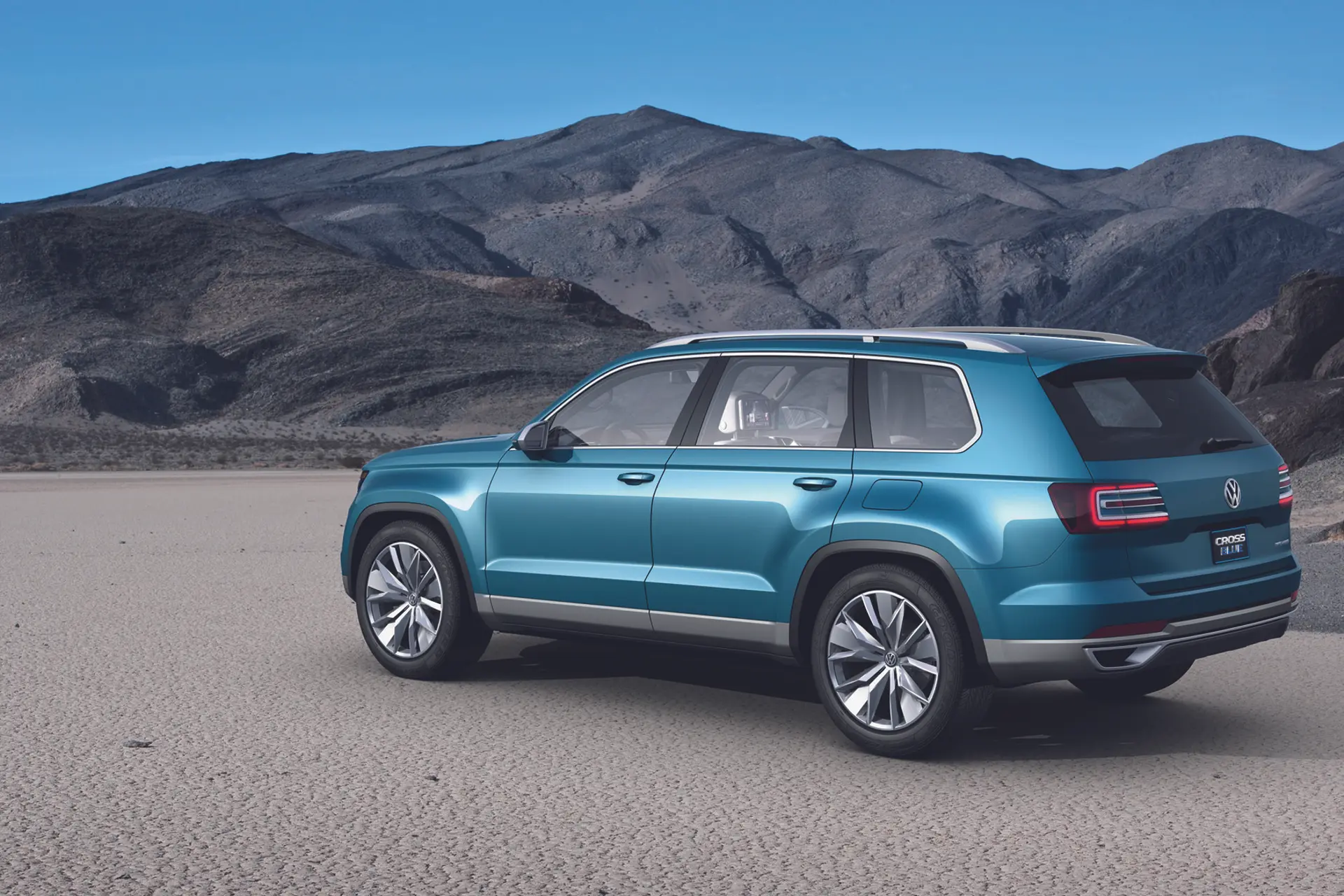
Long, extended side profile. Creating a contrast to the exterior paint is the body trim in stainless steel look that runs all around the SUV’s lower body section. The exterior of the CrossBlue – developed by a design team led by Marc Lichte features a very prominent and long hood that integrates air inlets for the engine, a roof line that is also long and a very short front overhang. The vehicle’s silhouette ascends slightly towards the rear. This visual impression is reinforced by a character line that runs from the headlights back to the tail lights – it becomes wider towards the rear. Above this – and typical of a Volkswagen – is the very precisely styled line terminating the row of side windows; the windows are enclosed by a solid aluminum frame.
SUV as auxiliary electrical generator. The CrossBlue is equipped with two “fuel doors” – on the left and right sides of the rear body; the filler neck for the diesel tank and SCR reservoir is located on the passenger’s side; on the driver’s side, engineers integrated two electrical sockets behind the fuel door. The first socket is used to charge the lithium-ion battery; the second can be used to connect such electrical devices as electric coolers or light systems for camping. In this case, the CrossBlue acts as an auxiliary electrical generator.
Front end has 3D headlight design. A key element of Volkswagen design DNA is the predominance of horizontal lines at the front and rear of the vehicle. The Volkswagen design team has further developed this character trait in the CrossBlue. Consider the front end, which was designed under lead designer Andreu Solar: the radiator grille trim – consisting of two solid aluminum struts and a centrally positioned VW logo – is now a 3D element that extends into the headlights. These aluminum accents are key elements that define the new three-dimensional visual design of the dual headlamps implemented in LED technology and, in turn, the entire front end. The upper aluminum strut frames the dual headlights, while the lower strut visually extends the radiator grille across the entire front end. This gives the CrossBlue an even wider and more dominant presence, yet one that is also friendly and appealing.
Bumpers show perfection in details. Volkswagen designers even attend to the smallest of details with great care. The air inlets in the bumper are an example of this. They are trimmed by horizontally mounted, black painted elements, which upon closer examination reveal themselves as very strong, three-dimensional honeycomb structures. Beneath the bumper, the front end is terminated by trim in stainless steel look with integrated underbody protection.
Aluminum upgrades rear section. As at the front end, designers accentuated the three-dimensionally sculpted LED tail lights with aluminum elements as well. From a styling perspective, the tail lights are designed in the form of an “E” that opens towards the vehicle centerline. In the inner area, the contours of these two “E” shapes (mirrored on each side, of course) are trimmed by aluminum accents, and each has two stripes painted in the exterior color. The prominent tailpipes are designed in stainless steel look; they were integrated in a trim panel with underbody protection that runs horizontally across the lower section at the rear. Since the Clean Diesel of the CrossBlue – equipped with its SCR catalytic converter – does not emit any soot whatsoever, the tailpipes of the exhaust system always keep their shiny look as well.
Volkswagen CrossBlue Interior concept – ample space and maximum comfort
Space for long trips. The interior of the very spacious CrossBlue was designed under lead designer Tomasz Bachorsky. His team equipped the concept car with six individual seats (three rows of seats). In a production version, three seats would be offered in the second row as an alternative, bringing the total to seven seats. At the rear, the seat positions are slightly elevated; children in particular will enjoy the better view. Nonetheless, headroom is very good throughout the vehicle. In front, it is 1,077 mm, in the second row 1,020 mm and in the third row 954 mm. The layout is also comfortable in terms of legroom: up to 947 mm is available in the second row, and in the third row it is up to 917 mm. These values confirm that adult passengers too can recline comfortably in the third seating row on long trips. Convenient access to the rear seats is assured by sliding the second row forward with one hand movement.
Space for loading. Behind the third seating row is a cargo area with 335 liters cargo capacity (loading area length: 600 mm); when the seatbacks of the third row of seats are folded, cargo capacity grows to 812 liters, and load length is 1,387 mm. If the seatbacks of the second row are folded as well, cargo capacity increases to nearly 2,000 liters; this increases the load length to 2,230 mm. Finally, the front passenger seatback can be folded, and then objects up to 3,110 mm long can be stowed.
Roof provides for perfect climate. In the rear seating area too, the air nozzles of the automatic climate control system that are integrated in the roofliner ensure optimal temperatures inside. The rear zones of the four-zone system can also be controlled from the second row of seats.
Volkswagen CrossBlue Interior design – high-end design and technologies
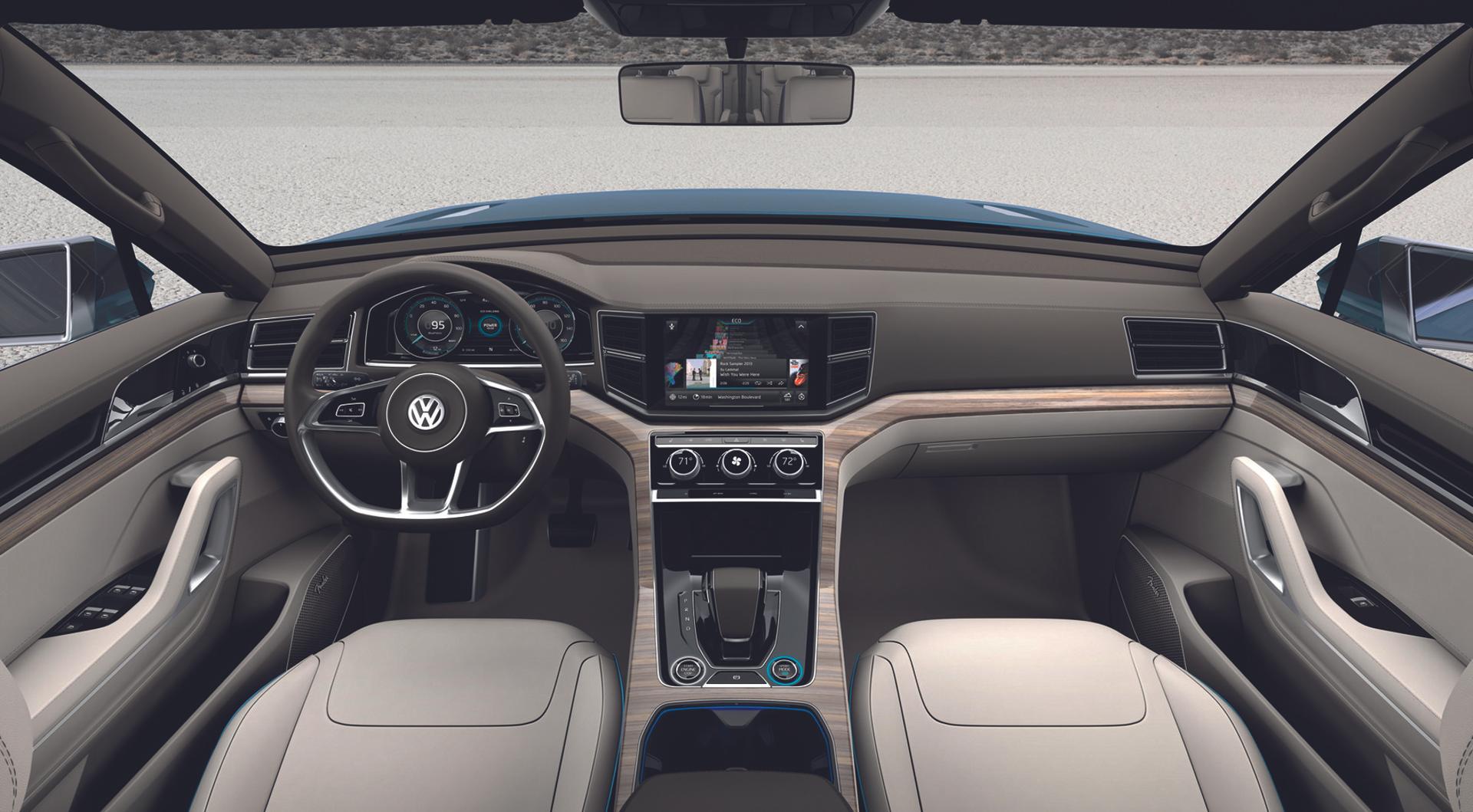
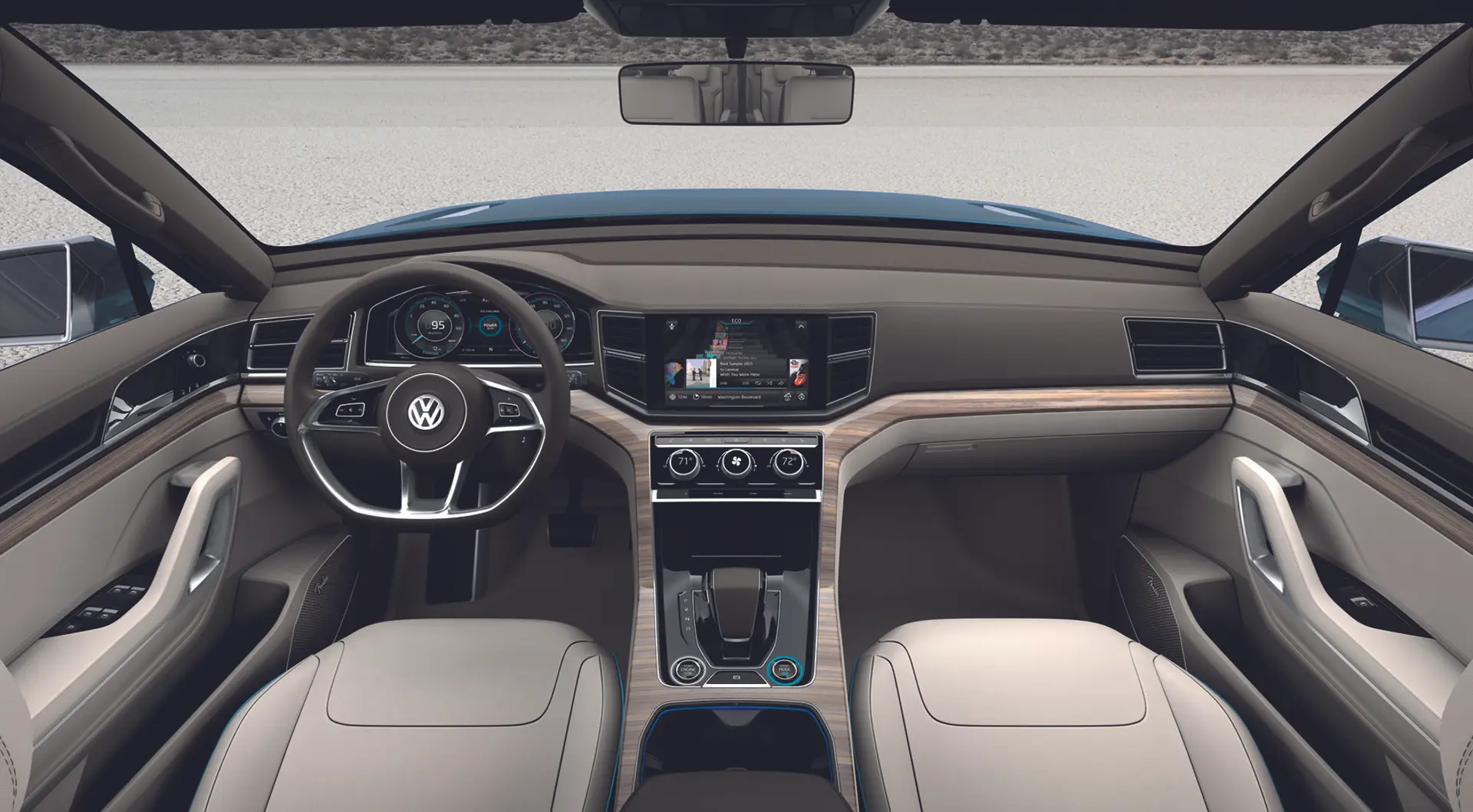
Sophisticated ambience. The CrossBlue is not only an extremely spacious and comfortable SUV; it is also a very sophisticated one. And that not only applies to the materials used in the interior, but simultaneously to its precise styling and unmistakable form language. In the process, the design team – together with the engineers and their technologies competence – created an interior that will likely set standards in this class.
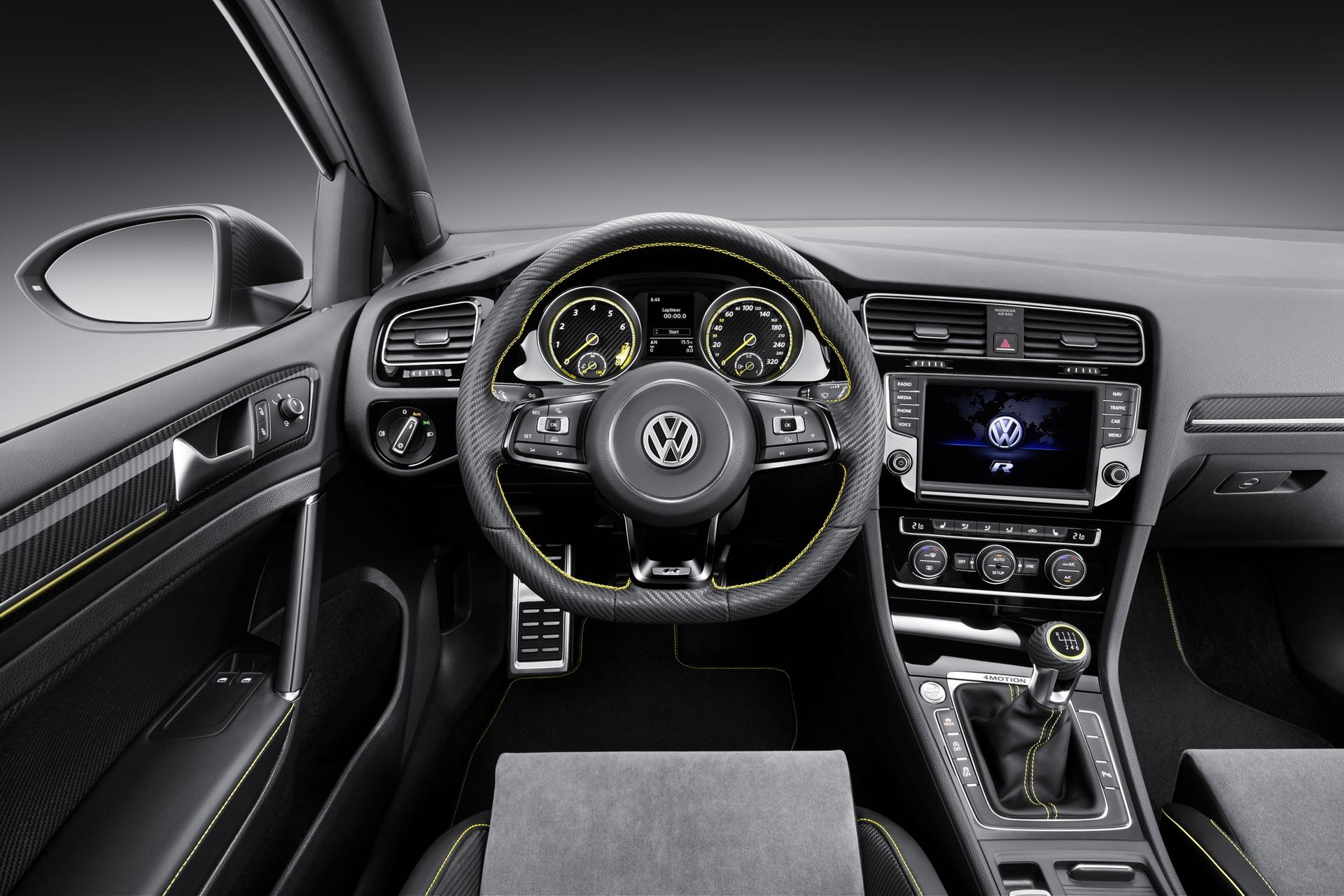
Controls that lift. As soon as the driver starts the ignition, the round-shaped controls for the lights, climate control and the four-wheel drive system emerge from their rest positions, which is flush with the cockpit surfaces. The controls have rugged aluminum surrounds – which fits the character of a large SUV and is also typical of the Touareg. The precious metal that is pleasing to the touch is one of the predominant materials in the interior; aluminum is used for the surrounds of the air vents and switch arrays as well as for such features as the inner steering wheel hub and the spokes of the steering wheel.
Timelessly clean forms. Leather and wood are also used to finish the interior. The wood accents are especially distinctive. As Head of Color & Trim, Oona Scheepers decided to use dark stained banana tree wood here. The lines of these wood accents “flow” from the sporty gear shift panel which opens in a downward direction – and ascend the center console and across the lower instrument panel to the door trim playing a large role in defining the front interior space. Above these wood accents, and in the area of the two-part center armrest, dark leather in the “Marble Grey” color is used. Meanwhile, Volkswagen uses leather, trim pieces and fabrics in the light beige color “St. Tropez” beneath the wood accents and as seat upholstery.
High-tech infotainment. The approach Volkswagen takes in integrating contemporary technologies in the refined material world of aluminum, wood and leather makes a clear design statement. Positioned centrally on the center console is a 10.2 inch touchscreen. The display is visually framed by an aluminum surround and central air vents. The large touchscreen is not only used to control all infotainment functions, but also to access the status of the hybrid system. Another new feature is 3D display of either the navigation route or media center contents – the landscape “rotates” – and the cover flow of the media center moves upward in space, creating a visual effect with extreme depth.
Quiet soft-touch switches. All significant switches in the passenger compartment (except for the hazard flasher switch) are designed as soft touch switches; their touch control is similar to that of a touchscreen. Gear shift travel is designed to be very short for the “shift by wire” 6-speed DSG.
Programmable instruments. The instruments are also high-tech. The instrument cluster is designed to be user programmable, offering a wide variety of functions and displays. One example: the CrossBlue can be driven in different powertrain modes; information related to the very efficient “Eco” mode is shown with a blue background, while the theme color switches to red for the dynamic “Sport” mode.
iPad mini in the head restraints. To ensure that guests in the rear seats can fully enjoy audio, video and online features, mini mobile iPads were integrated as monitors in each head restraint of the first seating row as part of the rear seat entertainment system. A Fender sound system creates a crystal clear world of sound.
Volkswagen CrossBlue Drive technology – combining efficiency and driving fun
MQB as high-tech alliance. The CrossBlue is technically based on the new Modular Transverse Matrix (MQB) of Volkswagen AG. Within the MQB, uniform parameters are maintained across model series and brands – such as the mounting orientations of all engines. The modular component system also offers variable parameters for optimal and individual implementation in a wide variety of models. They include the wheelbase (CrossBlue: 2.980 mm), track widths and wheel sizes. All new MQB models are designed so that – along with the classic types of drive systems (gasoline and diesel engines) – they can always be built as natural gas, hybrid or E-models as well.
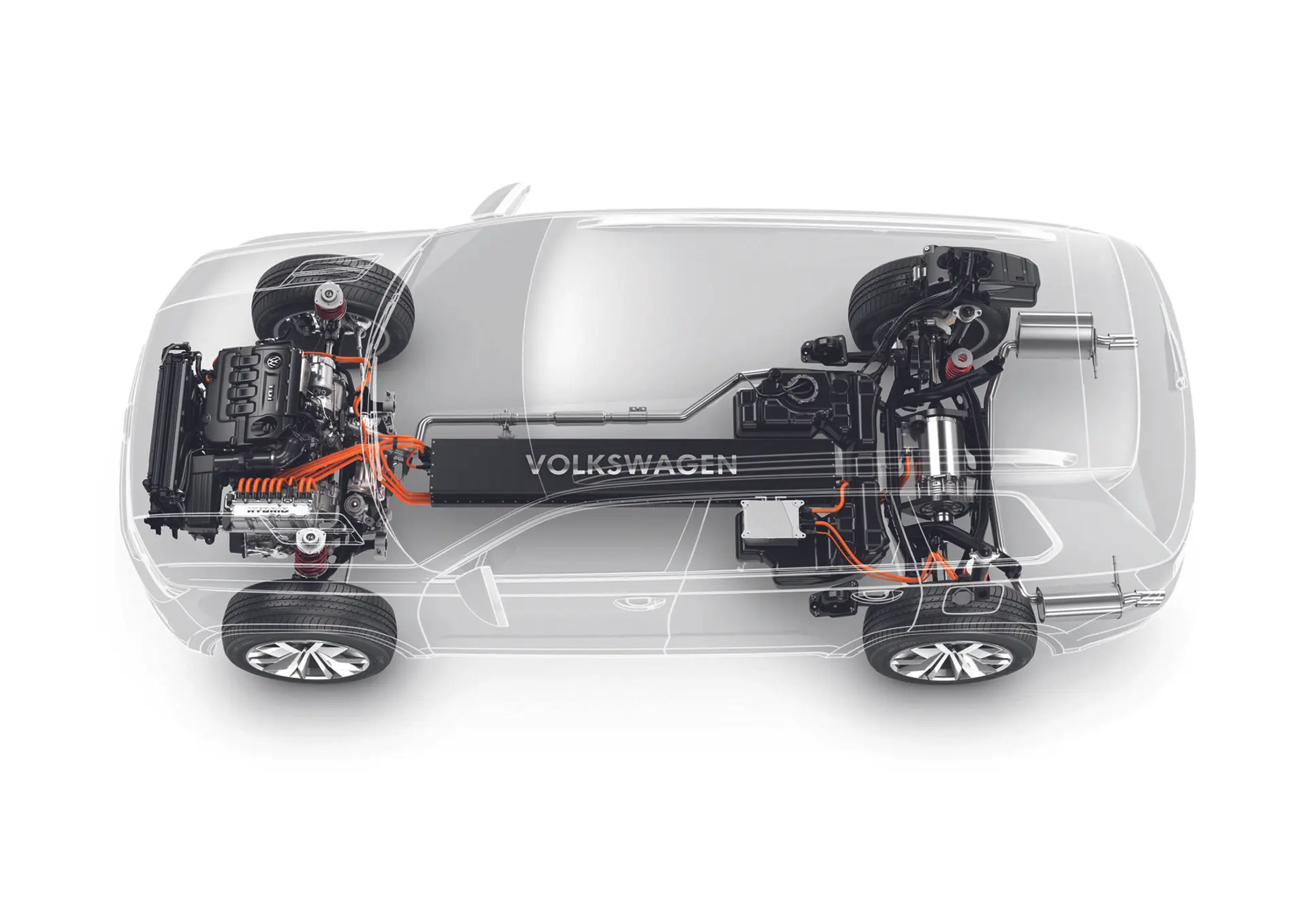
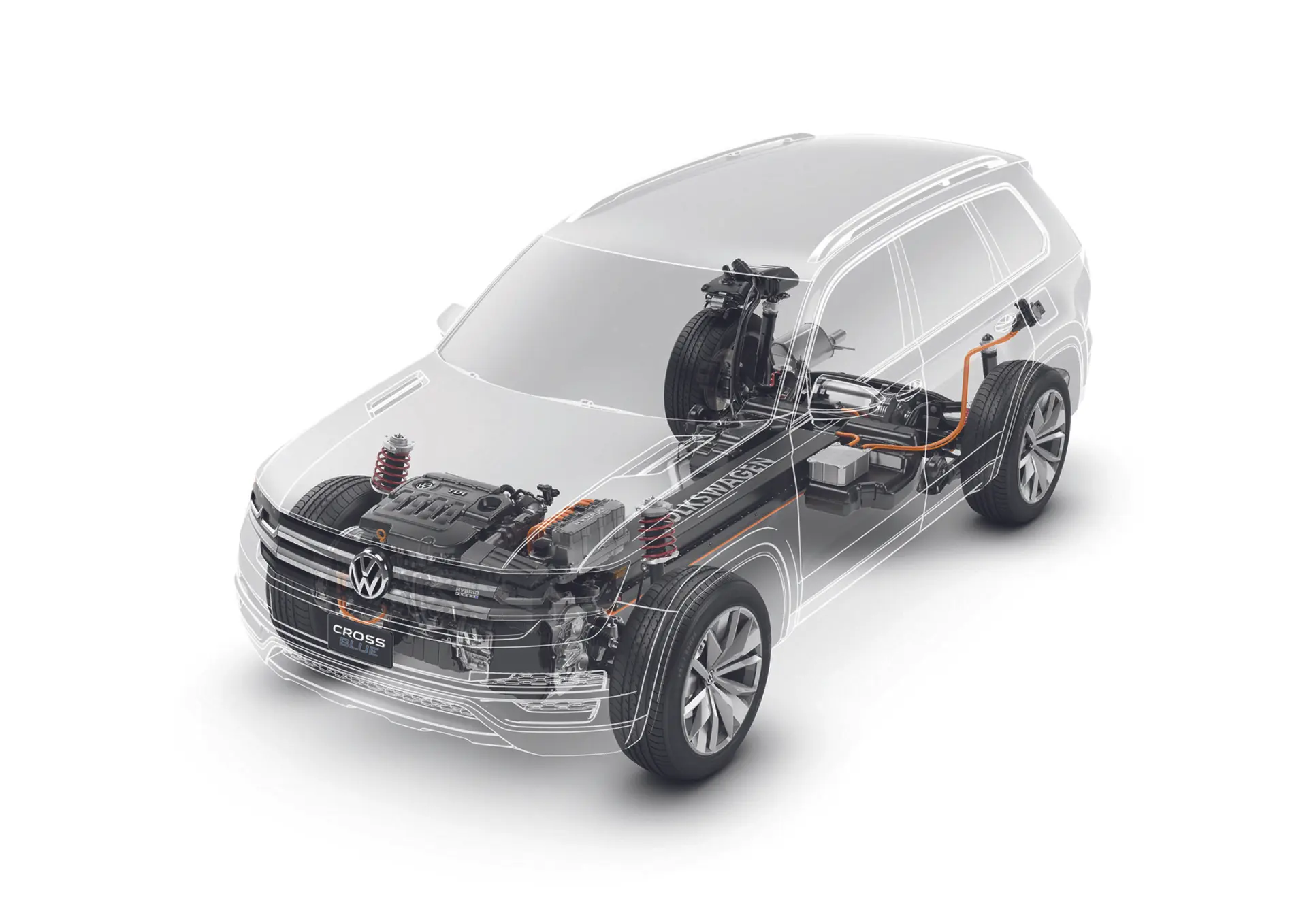
Efficient alliance of TDI and E-motor. The concept car being shown in Detroit brings together MQB elements of a future SUV generation – in this case, the MQB front and rear suspensions, the 140 kW / 190 PS TDI of the new EA288 diesel engine lineup and a 6-speed DSG. And they are combined with electrical components that are also “made by Volkswagen” – including the lithium-ion battery in the center tunnel as well as the front E-motor with 40 kW and the rear E-motor with 85 kW. The fact that Volkswagen already implemented this drive concept in the Cross Coupé – a compact SUV concept car of Tiguan dimensions – which was also presented in Detroit (in a US premiere), demonstrates just how modular the MQB is, in the truest sense of the word.
Maximum fuel economy. With its combination of pioneering fuel economy and high standard of dynamic performance, the CrossBlue – which can be driven to a top speed of 127 mph (204 km/h) – is an SUV that is as efficient as it is sporty. As already noted, thanks to one of the most innovative plug-in hybrid systems ever (TDI Clean Diesel + two E-motors + dual-clutch transmission + “propshaft by wire”), Volkswagen was able to achieve an estimated 89 MPGe in the four-wheel drive SUV (EPA standard fuel economy equivalent for hybrid vehicles in the USA with full utilization of battery charge; combined Highway and City cycles); in pure diesel operation, fuel economy is 35 MPG (combined Highway and City). In the test cycle of the R101 European ECE standard for electric hybrid vehicles, the concept vehicle attains an estimated fuel consumption of 2.1 liters of fuel per 100 km. As also previously noted, it is not possible to directly compare driving ranges and fuel economy values of the US and EU driving test cycles to one another, since the tests are configured differently.
Maximum dynamic performance. Despite its tremendous efficiency, the CrossBlue exhibits dynamic performance with a total system power of 225 kW. The midsize SUV completes the sprint from 0 to 60 mph in a short 7.2 seconds (0-100 km/h: 7.5 s). Its TDI develops a maximum torque of 400 Newton meters from low revs – starting at 1,750 rpm. The electric motors also make a powerful appearance. That is because E-drives output their maximum torque immediately – faster than any internal combustion engine. In the CrossBlue, the E-motors contribute 180 Newton meters (front) and 270 Newton meters (rear). In boosting – when the power potentials of the engine and electric motors are fully utilized – the drive system can produce a total system torque of up to 700 Newton meters.
Zero emissions whenever possible. The CrossBlue can be driven in various operating modes. The default mode, in which the Volkswagen is started, is the classic hybrid mode, which optimally manages use of the drive sources. The electric motors are used for propulsive power as often as possible here. The driver can also switch to Eco or Sport mode by pressing a button (to the right of the gear shift grip). In Eco mode, parameters such as the accelerator pedal characteristic and air conditioner are controlled for minimal fuel and electrical consumption. In Sport mode (that is selected by the same button as for Eco mode), the car exploits the drive system’s maximum power potential. Other available modes are an offroad mode (permanent four-wheel drive system), a charging mode and E-mode (zero-emissions driving at press of a button).
E-mode – driving with zero emissions. Powered by its lithium-ion battery, the CrossBlue can cover a distance of up to 14 miles (US test cycle) or 33 km (European NEDC testing) in all-electric driving; its top speed is reduced to 75 mph (120 km/h) here. In E-mode, only the 85 kW E-motor at the rear axle provides propulsion. In all-electric driving, the turbodiesel is decoupled from the drivetrain by opening the clutch, and the engine is shut off. The driver activates E-mode by pressing the EV (Electric Vehicle) mode button at the front of the center console. As soon as there is a need for TDI power, because of the battery charge state or other parameters, it is coupled to the drivetrain again, jolt-free, within fractions of a second.
E-mode – battery in the center tunnel. In all-electric driving, the E-motors are supplied with energy from one of the eight modules that make up the lithium-ion battery. The battery has an energy capacity of 9.8 kWh and is housed in the center tunnel. The power electronics unit integrated in the engine compartment in front – operating at a voltage level of around 370 Volt manages the flow of high-voltage energy to and from the battery and the electric motors. Meanwhile, a DC/DC converter supplies the body electrical system with the 12 Volt electrical power it needs. The electric drive system does not impose any limitations on interior space whatsoever. The battery can be charged either by external power sources (230 Volt connections) or by the TDI while driving.
Preparing for E-mode – charging at the press of a button. The driver can intentionally switch over to a charging mode (by pressing another button on the center console). This charges the battery via the TDI while driving, to store enough electrical energy in the battery for later zero-emissions driving at the destination in an urban area. In addition, there are various operating modes that are automatically set as a function of the specific driving situation:
Coasting. As soon as the driver releases the accelerator pedal, the engine and electric motors are decoupled from the drivetrain, provided that the battery is sufficiently charged. This is referred to as “coasting.” No emissions are generated here either.
Battery regeneration mode. Whenever the driver releases the accelerator pedal or applies the brakes, and the battery is insufficiently charged, the two electric motors act as generators and feed energy recovered from the brakes into the lithium-ion battery. In this case, the TDI is also shut off and decoupled from the drivetrain.
Boosting. When very sporty performance is called for, the E-motors form an alliance with the TDI. In the professional jargon of the hybrid world, this combining of forces is known as “boosting,” in which the CrossBlue is driven by all four wheels.
Offroad with “propshaft by wire”. All four wheels are also driven whenever the driver intentionally activates offroad mode (once again by pressing a button on the center console). In this case, and when the battery’s charge is low, the front electric motor – which is now supplied with energy by the TDI – operates exclusively as a generator and electrical power source for its counterpart at the rear axle. Since the energy for driving the rear wheels flows by wire and not mechanically, this is referred to as “propshaft by wire”. Due to the fact that the TDI drives the rear E-motor via the front E-motor in off¬road mode, the four-wheel drive system is still operational, even when the battery is in a low charge state.
Driving with the TDI. When the TDI is the sole source for propulsive power, the CrossBlue is a pure front-wheel drive vehicle. Thanks to the efficient technology of the turbocharged four-cylinder engine with common rail direct fuel injection, the concept car is still very fuel efficient here. Based on estimates, the TDI of the CrossBlue would attain a fuel economy of 37 MPG in the Highway cycle of the US-EPA standard, while fuel economy in the City test cycle would be 33 MPG. Another indication of the TDI’s efficiency is what is known as “hybrid fuel consumption” that is measured in a sub-cycle of the European ECE-R101 standard, in which the CrossBlue is driven with a fully discharged battery, so that it is essentially only powered by the TDI engine. This test yields an excellent combined fuel consumption of 4.9 l/100 km.
Volkswagen CrossBlue Facts overview
- Name: CrossBlue
- Character: Midsize SUV with diesel plug-in hybrid for six persons
- World premiere: January 14, 2013, Detroit
- Fuel economy (EPA for plug-in hybrid vehicles): 89 MPGe
- Fuel consumption (NEDC for plug-in hybrid vehicles): 2.1 l/100 km
- Driving performance: V/max 127 mph / 204 km/h
- V/max, electric 75 mph / 120 km/h
Volkswagen CrossBlue Dimensions:
- Length 4,987; width 2,015 mm; height 1,733 mm;
- Track widths, front/rear 1,686 mm/1,696 mm
Drive units / power / transmission:
- Turbodiesel 140 kW; E-motors: front 40 kW, rear 85 kW; System power (TDI + battery) 225 kW; 6-speed DSG
Battery:
- Eight lithium ion modules; energy capacity 9,8 kWh
Drivetrain:
- Front-wheel drive (via TDI and front E-motor); four-wheel drive (via TDI and E-motor(s)); rear-wheel drive (via rear E-motor)
Driving modes:
E mode, Eco mode, Sport mode, Offroad mode, Charge mode