



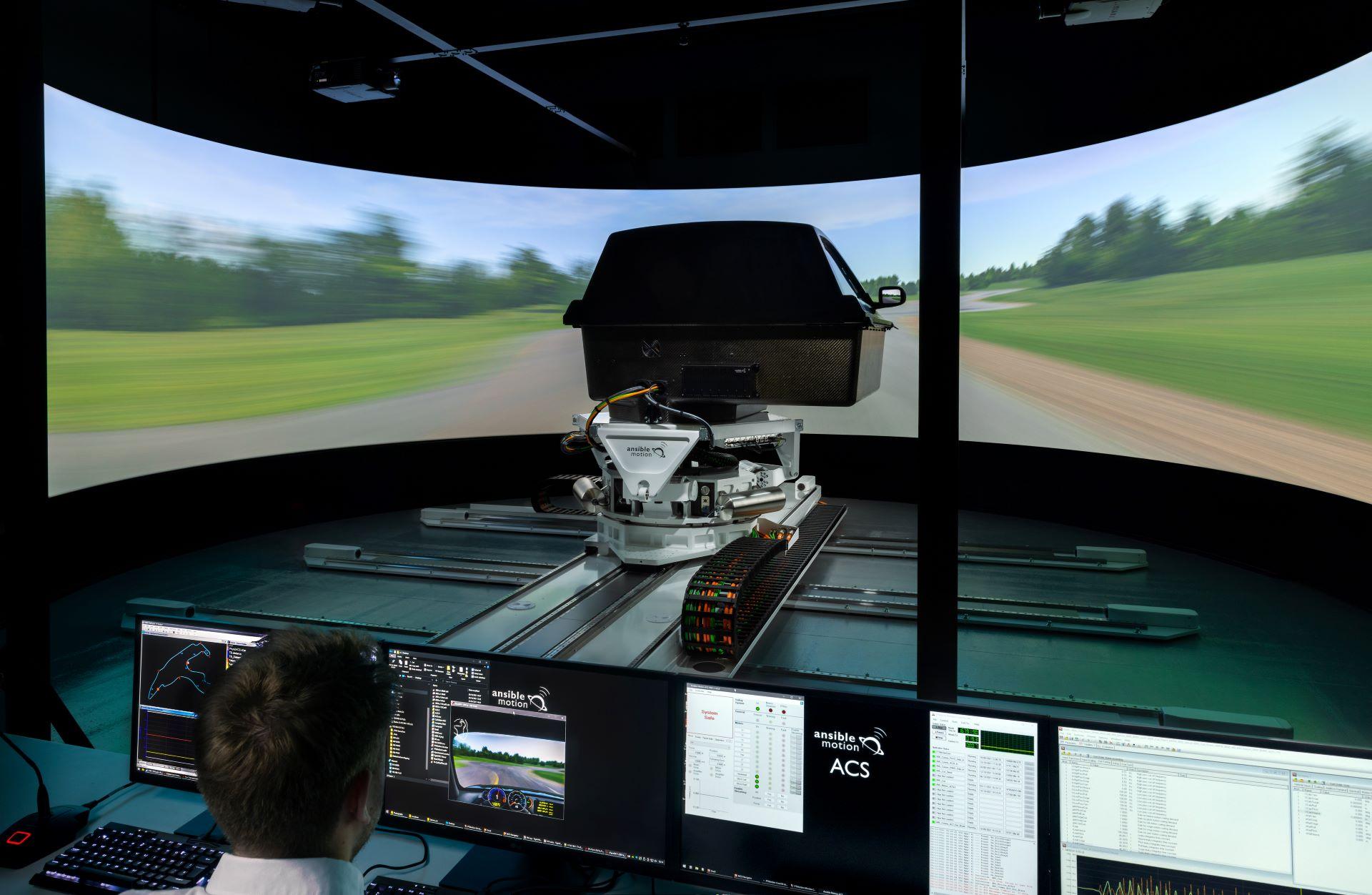
PhD study funded by Toyota Motor Europe explores driver responses to extreme manoeuvres using Ansible Motion’s state-of-the-art simulator
In a cutting-edge collaboration between academia and industry, the University of Cambridge’s Department of Engineering has partnered with leading simulator manufacturer Ansible Motion to delve deeper into the nuances of human driver behaviour. Backed by Toyota Motor Europe, the research project explores how novice and expert drivers steer during high-intensity vehicle manoeuvres – a study that could ultimately reshape the design of future driver assistance systems and enhance automotive safety.
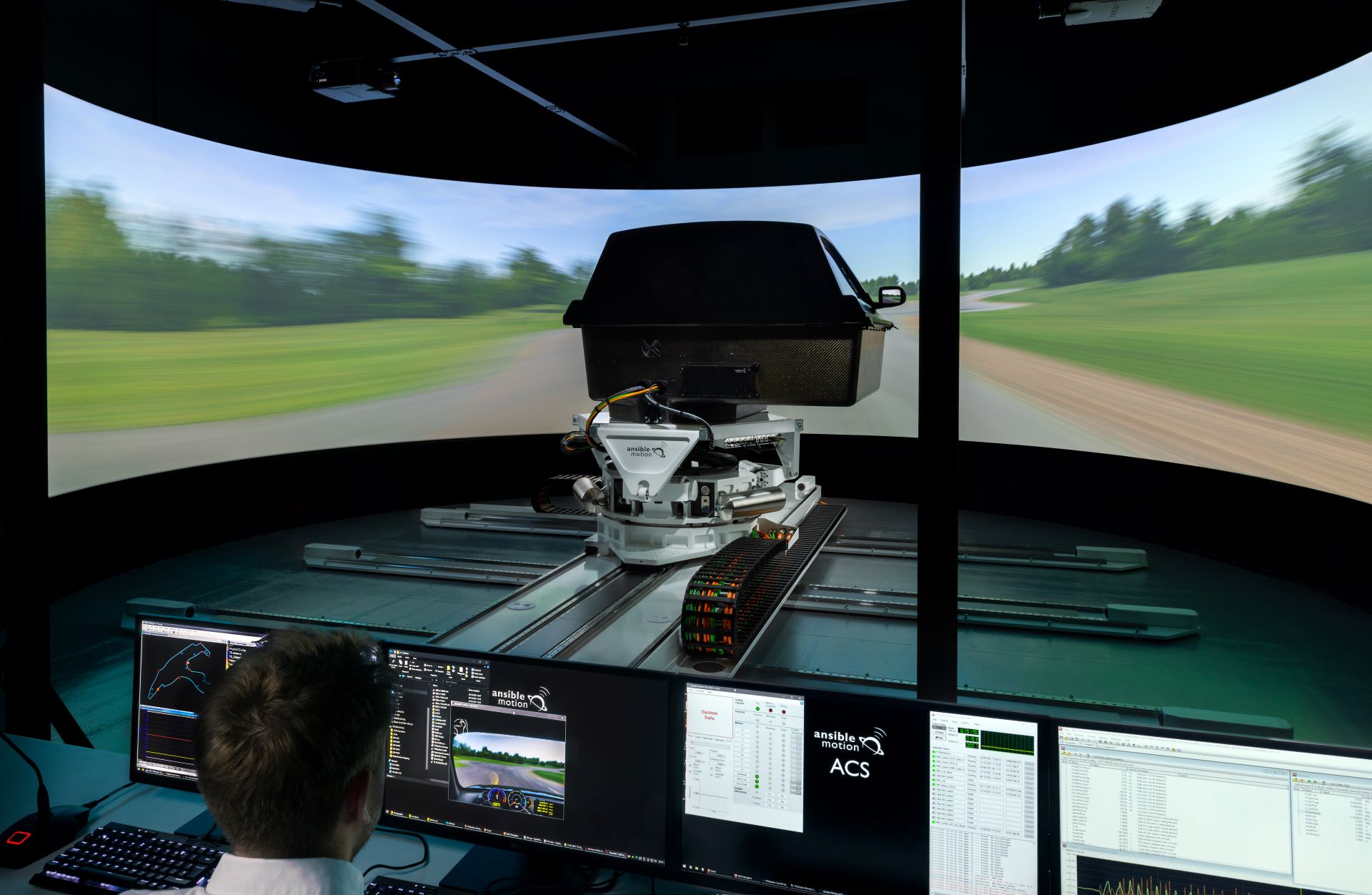
At the heart of the research is Ansible Motion’s Delta S3 Driver-in-the-Loop (DIL) simulator – a dynamic, immersive platform equipped with a patented six-degree-of-freedom Stratiform motion system, wrap-around projection graphics, and a real-car cabin environment. This sophisticated simulator enables engineers and researchers to analyse driver reactions to virtual but highly realistic driving conditions without compromising safety or repeatability.
Pioneering Human-Vehicle Interaction Research
For more than 25 years, the Cambridge University Engineering Department (CUED) has been at the forefront of driver-vehicle dynamics research. This latest PhD study, led by researcher Harry Fieldhouse, sought to understand the learning processes and control strategies adopted by novice and expert drivers when confronted with challenging driving scenarios.
Initial experiments were based on real-world test track data, where drivers were asked to execute identical obstacle avoidance manoeuvres multiple times. While this provided a foundational understanding of control patterns, the scope for tracking behavioural evolution over time was limited. To overcome this, the research team transitioned to a virtual testing environment using Ansible Motion’s Delta S3 simulator.
Inside the simulator, twenty participants were tasked with navigating randomly curving paths, allowing for more varied and unpredictable scenarios. This environment provided a deeper lens into how drivers adapt their steering strategies over time. The incorporation of rFPro software – an ultra-realistic, engineering-grade visual simulation tool developed by Ansible Motion’s sister company – helped generate early results that confirmed distinct learning rates between individuals, validating the efficacy of the virtual approach.
Bridging the Gap Between Academia and Industry
The study exemplifies how advanced simulation technology is becoming indispensable to both academic research and automotive development. The Delta S3 simulator’s large excursion capabilities, ultra-low latency response, and open architecture make it a flexible and powerful tool for studying nuanced human behaviours in a safe yet rigorously controlled setting.
David Cole, Professor of Mechanical Engineering at CUED, commented:
“Cambridge University Engineering Department has been researching driver-vehicle dynamics for over a quarter of a century, aiming to improve vehicle design, performance and safety. Our most recent work, with funding from Toyota Motor Europe, is analysing how novice and expert drivers learn steering control.”
“To collect data in a safe and consistent environment, we opted for a driving simulator with immersive motion and graphics. We’re incredibly grateful to Ansible Motion for their in-kind contribution, providing access to their simulator and technical expertise. The experiment ran smoothly at their R&D Centre under the guidance of PhD researcher Harry Fieldhouse.”
Dan Clark, Managing Director of Ansible Motion, added:
“Studies like this bridge the gap between academia and industry, and we’re proud to support Cambridge’s ground-breaking research. It highlights the crucial role of simulation in understanding human behaviour and shaping the future of vehicle design and engineering.”
Looking Ahead
The final analysis of the study, comparing real-world data and simulation outputs with theoretical models, is expected to be completed by late 2025. The insights gained are poised to inform not only the next generation of advanced driver assistance systems (ADAS) but also the development of autonomous technologies that must account for diverse and evolving human behaviours behind the wheel.
With a client list that includes major OEMs such as Honda, Ford, BMW, and General Motors, as well as elite motorsport teams from Formula 1 to WRC, Ansible Motion’s simulation platforms are playing an ever-growing role in the automotive industry’s pursuit of safer, smarter vehicles.


