


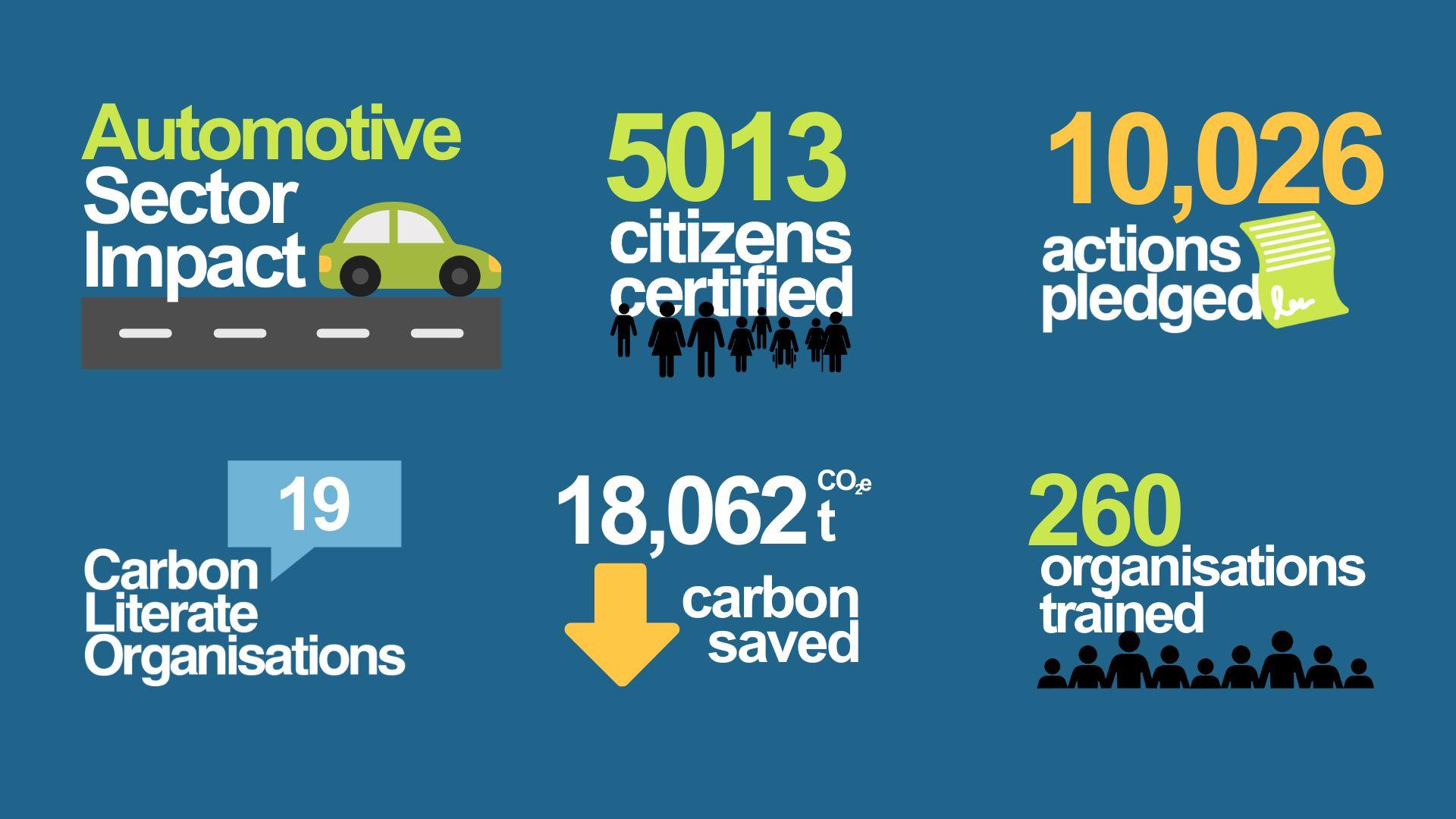
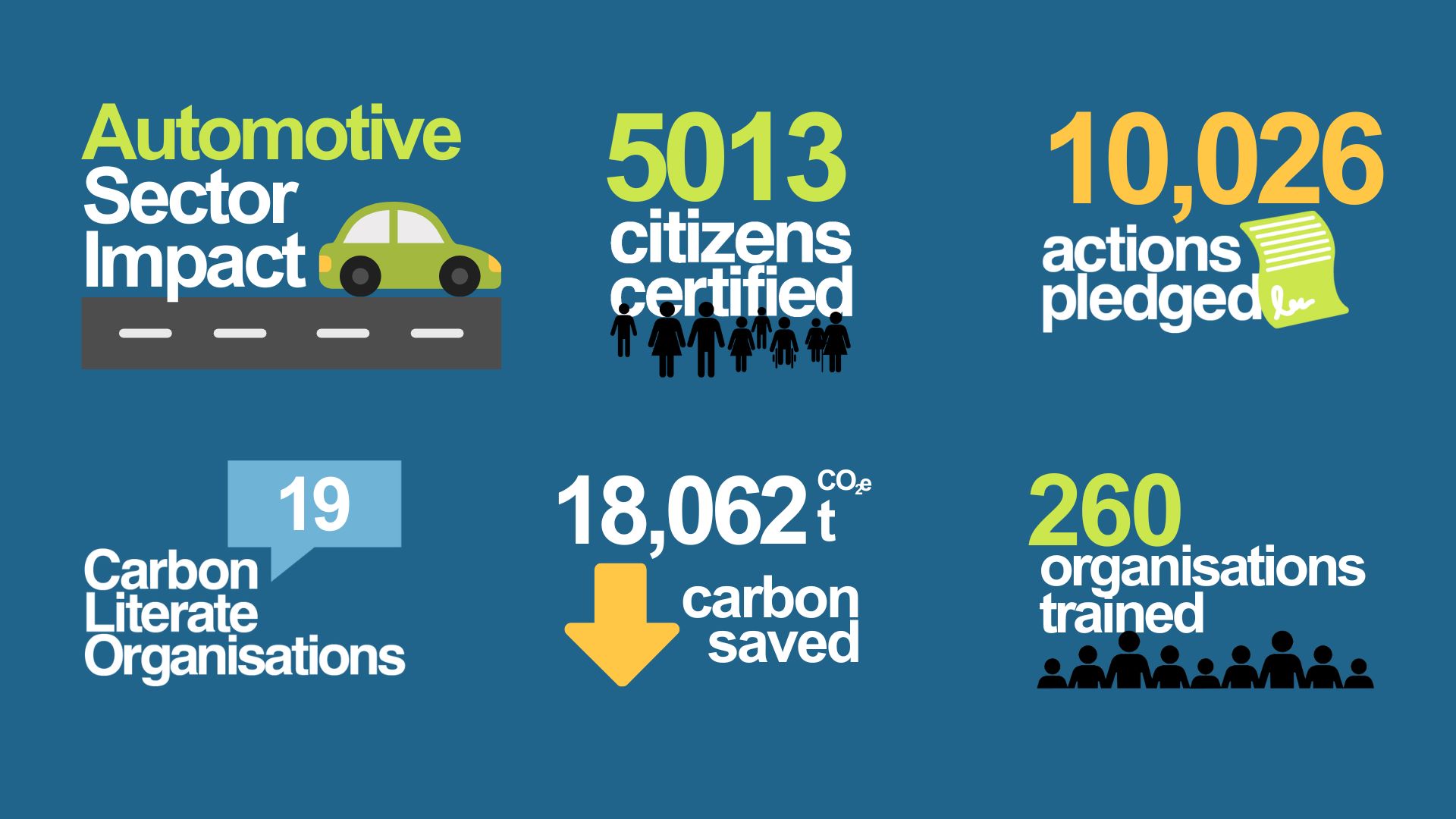
12 November 2024, London – The automotive industry is making significant strides towards sustainability, as over 5,000 individuals from 260 businesses have now achieved Carbon Literate status, thanks to the pioneering Automotive Carbon Literacy Toolkit. Launched at COP26 in November 2021, the toolkit, developed in partnership between Auto Trader and The Carbon Literacy Project, was the first of its kind for the automotive sector, aiming to educate and empower industry professionals to take action against climate change.
The Automotive Carbon Literacy Toolkit has rapidly gained traction, with individuals from across the automotive spectrum—including retailers, manufacturers, finance houses, leasing companies, parts suppliers, and EV charge point operators—being trained and certified as Carbon Literate. This achievement marks a critical milestone in the industry’s broader efforts to reduce its carbon footprint and work towards a more sustainable future.
Since its launch, the toolkit has empowered businesses and individuals to better understand the environmental impacts of their operations and take actionable steps towards sustainability. Notable brands such as Lookers, Nissan, Marshall Motor Group, and Motorpoint, alongside manufacturers like Audi, BMW, and Jaguar Land Rover, have been instrumental in its uptake, driving the adoption of Carbon Literacy training throughout the industry.
A Collaborative Effort Across the Industry
The toolkit’s success is rooted in its collaborative approach, with more than 5,000 individuals trained, spanning a diverse range of companies. From major automotive retailers like TrustFord, Sinclair Group, and Snows, to finance giants like Lloyds Banking Group and Toyota Financial Services, the initiative has gained wide industry support. In addition, parts suppliers such as SYNETIQ and parts of the EV ecosystem like Co Charger and Zest have also embraced the toolkit to help achieve their sustainability objectives.
According to Ian Plummer, Auto Trader’s Commercial Director, the rapid adoption of the toolkit highlights the automotive sector’s growing commitment to sustainability. He stated, “Since the creation of the first of its kind Automotive Toolkit three years ago, we remain committed to supporting the wider automotive industry on our shared sustainability journey. We’re delighted that through industry-wide collaboration, more individuals and organisations have leveraged Carbon Literacy to help achieve their sustainability goals, especially as the industry continues to rapidly evolve.”
However, Plummer also pointed out that while the milestone of 5,000 individuals trained is impressive, the industry has much further to go. “5,000 people and 260 organisations is brilliant from a standing start, but a drop in the ocean when you consider the size of our industry,” he said. “There’s more work to be done, and we need as many people as possible to come on board so we can drive change together responsibly.”
Training for Change: A Flexible and Comprehensive Approach
The Automotive Carbon Literacy Toolkit is designed to be flexible and accessible, offering a range of training materials to accommodate different learning styles and organizational needs. The training is typically delivered in a one-day seminar, which can be conducted virtually or face-to-face, and it covers a broad range of topics related to climate change and its specific impacts on the automotive industry. Participants gain valuable insights into the science of climate change, the latest policy developments, and actionable strategies for reducing carbon emissions within the automotive sector.
What makes the toolkit particularly effective is its ability to be tailored to the unique needs of individual businesses. Companies can adapt the training to suit their specific sustainability goals and the role of each employee in achieving them. This customization allows for a more personalized learning experience and has proven essential in driving meaningful change within organizations.
Global Impact: Empowering Employees for a Sustainable Future
One of the standout examples of the toolkit’s impact is Nissan’s widespread engagement with its workforce across the UK and beyond. As part of its efforts to achieve carbon neutrality by 2050, Nissan has enrolled more than 3,000 employees in the UK alone, with staff across its global Africa, Middle East, India, Europe, and Oceania (AMIEO) regions also completing the training. The company views Carbon Literacy as a key element of its sustainability strategy, particularly as it moves forward with the development of the EV36Zero hub at the Nissan Sunderland Plant.
“Educating and empowering our teams on the big differences small changes can have in helping achieve these ambitions is critical,” said a representative from Nissan. “With the skills and knowledge gained through Carbon Literacy, we are moving forward in our journey towards a sustainable future and creating the cars of tomorrow.”
A Growing Movement for Sustainability
Ruth James, Automotive Coordinator at The Carbon Literacy Project, highlighted the rapid growth of the initiative, noting that the number of learners surpassed 5,000 in just three years. The toolkit’s success can be attributed to increasing consumer interest in sustainability and the growing demand for businesses to demonstrate their environmental credentials.
“The Automotive Toolkit provides a way for each employee in the organisation to engage in and contribute to the sustainability strategy,” said James. “It allows businesses to extend their strategy beyond their sustainability team while providing a tangible way to demonstrate continued progress.”
As sustainability continues to shape the future of the automotive industry, the success of the Automotive Carbon Literacy Toolkit stands as a testament to the power of education and collaboration. With the support of key industry players and a growing number of certified individuals, the automotive sector is well on its way to meeting its carbon reduction targets, one lesson at a time.
For more information on the Automotive Carbon Literacy Toolkit, visit The Carbon Literacy Project.


