



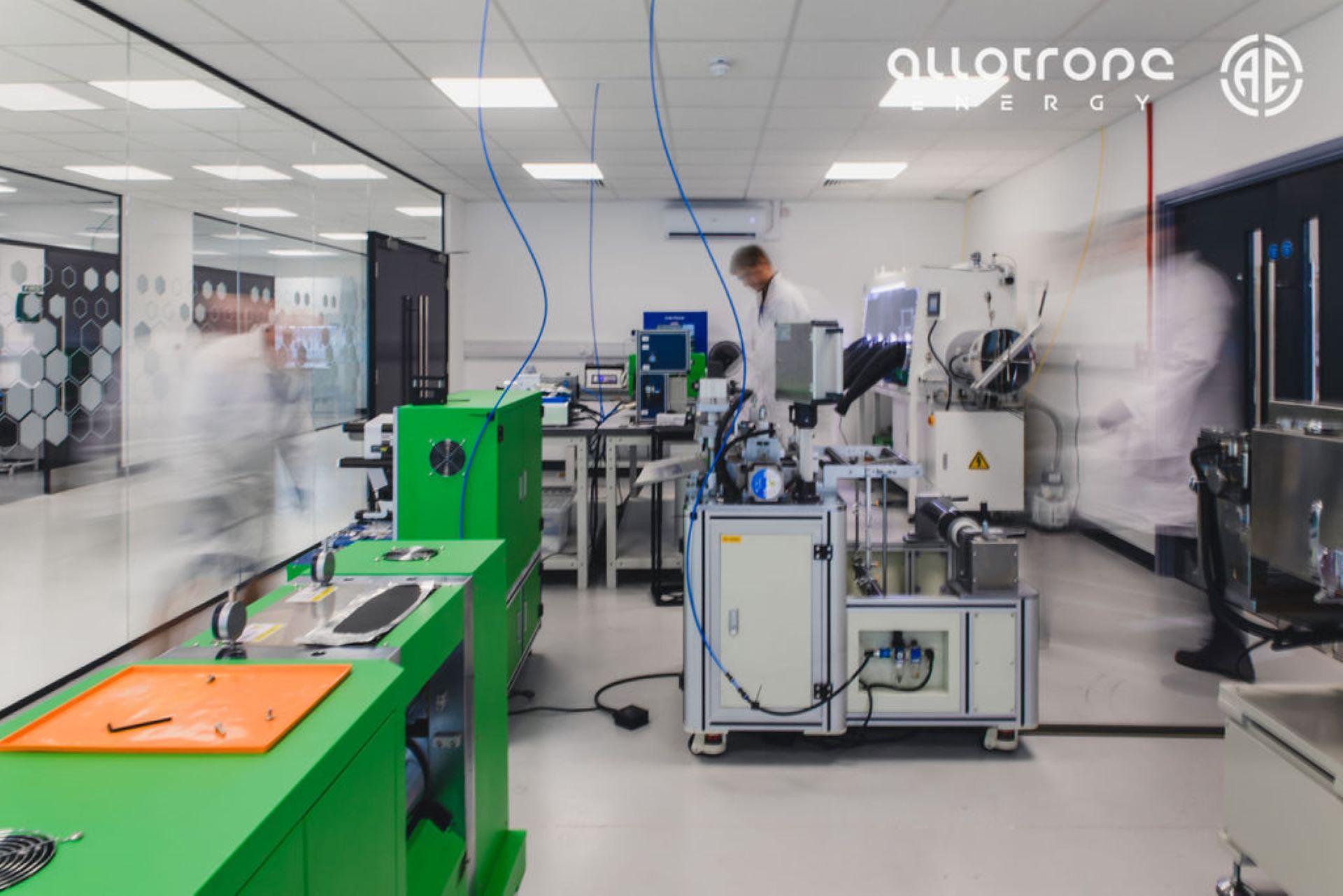
In a development poised to reshape the hybrid mobility landscape, UK-based Allotrope Energy has unveiled a next-generation supercapacitor that promises to double the energy density of existing solutions while slashing weight, volume, and cost. At the heart of this leap forward is Lignavolt—a sustainably sourced, nano-porous carbon material that is set to redefine energy storage and recovery in hybrid-electric vehicles.
For years, supercapacitors have offered tantalising advantages over conventional lithium-ion batteries—chief among them the ability to rapidly charge and discharge. These attributes make them ideal for regenerative braking systems, where fast energy capture and release are critical. However, adoption has remained limited, largely due to their comparatively low energy density. That ceiling has now been shattered.
Allotrope’s breakthrough supercapacitors, verified by third parties, offer an energy density of 14–15 Wh/kg—nearly double the industry standard of 7–8 Wh/kg. It’s a development that Dr Peter Wilson, Founder of Allotrope Energy, believes could enable a radical rethinking of how energy is managed and deployed in modern hybrid vehicles.
“Harvesting 100% of the energy available during even moderate braking would require a lithium-ion battery so large that it would be both impractical and cost-prohibitive,” says Wilson. “By contrast, a Lignavolt-based supercapacitor could recover all of that energy instantly using a pack the size of a shoebox weighing only a few kilos.”
This compact, lightweight footprint not only makes the technology more practical but also opens the door to significantly more powerful electric assistance. A 1kg Lignavolt supercapacitor can deliver up to 75bhp of electrical boost—50 times more than an equivalent lithium-ion unit—allowing for dynamic hybrid powertrains that rely more heavily on electric propulsion.
The implications for vehicle design are profound. Smaller, lighter internal combustion engines could be paired with these high-output supercapacitors, resulting in dramatic fuel economy improvements and emissions reductions. According to Allotrope, a modest 4kg supercapacitor is all that’s needed to double the electric torque support of an average family SUV.
Sustainability Without Compromise
In a sector increasingly scrutinised for its environmental footprint, Allotrope’s technology delivers not just performance gains, but sustainability at scale. Unlike lithium-ion batteries, which often rely on rare earth elements and energy-intensive production processes, Lignavolt is derived from a co-product of the pulp and paper industry. It requires no toxic chemicals or controversial materials and is both scalable and environmentally benign.
“Supercapacitors are inherently more stable, they don’t require active thermal management, and they’re capable of millions of charge cycles,” adds Wilson. “It’s a far more durable solution, particularly in high-demand applications like automotive.”
Beyond durability, their simplicity also reduces the complexity and cost of integration—another key barrier that has limited the widespread uptake of advanced energy recovery systems in mainstream vehicles.
Road to Real-World Application
Having completed successful lab trials and third-party validation, Allotrope Energy has already begun supplying evaluation units to OEMs and Tier 1 suppliers. Early industry feedback is highly encouraging, with several partners now exploring how Lignavolt-based systems could be integrated into future platforms.
Whether in mild-hybrid city cars or performance-oriented electrified powertrains, Allotrope’s next-gen supercapacitors appear ready to challenge entrenched norms—and potentially reshape the blueprint for energy-efficient mobility.


